WorkBuddy Complete 256-Episode Hands-On Course: Master Agent Automation from Zero in 7 Days

Analyzing the capability system, nine-chapter learning path, and efficient absorption advice of the complete 256-episode WorkBuddy course.
This article introduces a complete 256-episode WorkBuddy hands-on course on Bilibili that can be learned for free. WorkBuddy is an AI office workbench launched by Tencent that understands natural language, autonomously plans tasks, and operates local files, generates documents and spreadsheets, and creates PPTs. The course is divided into foundation, advanced, and practical parts across nine chapters: the foundation part covers AI Agent principles and installation/configuration; the advanced part covers Excel analysis, PPT generation, PDF batch processing, the Skill mechanism, and connectors to platforms such as Feishu; the practical part involves scheduled automation, knowledge base integration, AI design and new media operations, and no-code development of an online course platform. The article notes that the course's value lies in its systematic progression, suitable for practitioners in self-media, e-commerce, marketing, and education, as well as professionals pursuing efficiency, and recommends splitting goals by part and practicing along with the cases.
WorkBuddy Complete 256-Episode Hands-On Course: Master Agent Automation from Zero in 7 Days
With AI tools emerging endlessly, how to make AI truly "do the work" for us rather than just "chat" has become a focus for many professionals. On Bilibili, there is a complete WorkBuddyAd course that is paid but allows free learning, claiming to take zero-basis users from beginner to mastery of agent automation in 7 days. Based on this course's content, this article deeply analyzes WorkBuddy's capability system and learning path to help you decide whether this course is worth your time.
What Is WorkBuddy? Why Is It Worth Learning
WorkBuddy is not an ordinary conversational AI but an AI office workbench launched by Tencent. It can understand natural language instructions, autonomously plan tasks, and within authorized scope operate local files, generate documents and spreadsheets, create PPTs, and even assist in developing applications. After spending a month researching various Bilibili tutorials, the course author found that most content only explains features without principles, or only shows results without the operating process, leaving beginners unsure how to get started after learning. To address this, the author integrated core knowledge points, combined real cases, and spent three months polishing this course.
Course System: Three Major Parts and Nine Chapters
The entire course adopts a "theory + practice" model, divided into a foundation part, an advanced part, and a practical part, totaling nine chapters, covering the full process from installation and configuration to complete project implementation.
Foundation Part: Building Understanding and Getting Started
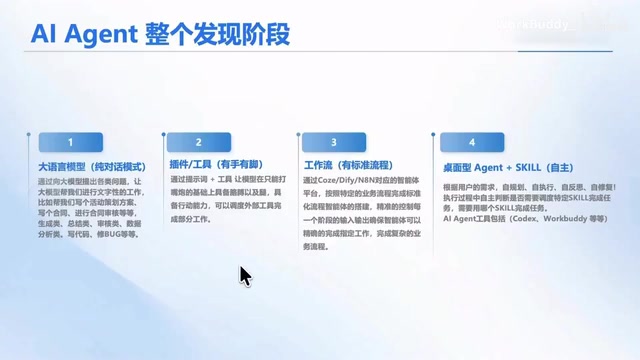
Chapter 1 focuses on the development stages and working principles of AI Agents, helping students understand how WorkBuddy parses requirements. Chapter 2 enters hands-on practice, walking through installation and configuration step by step, and clarifying core concepts such as experts, skills, connectors, and automated tasks. After completing it, you can start batch processing local files.
AI Agent is a key concept for understanding WorkBuddy's positioning. Unlike traditional conversational AI (such as chatbots that can only answer questions), an AI Agent has goal-oriented autonomy: after receiving high-level instructions from the user, it can break down tasks, plan steps, call tools (such as reading and writing files, accessing the network, executing code), and adjust strategies based on feedback during the process until the task is completed. Its core capabilities usually include task planning, tool calling, and memory and context management. WorkBuddy is precisely the product that brings this paradigm into office scenarios—when the user says "organize this sales data and generate a weekly report," the Agent autonomously completes the entire chain of reading Excel, analyzing data, writing documents, and even formatting the output, rather than merely returning a text suggestion. Understanding how Agents work helps students understand why authorization scope is needed and why clearer task descriptions lead to better execution results.
Advanced Part: Deepening File Processing and Skill Extension
Chapter 3 covers daily office scenarios, using real files such as sales data, contracts, and invoices to practice Excel analysis, PPT generation, PDF batch processing, and information extraction. Chapter 4 goes deep into the Skill mechanism, understanding it as a "work instruction manual." Students can not only call Skills created by others but also distill repetitive processes into exclusive skills and share them with the team. Chapter 5 explains connectors, connecting platforms such as Feishu, Tencent Docs, Tencent Meeting, and Amap to achieve cross-tool business process automation, such as automatically generating questionnaires, syncing documents, resume scoring, and team-building planning.
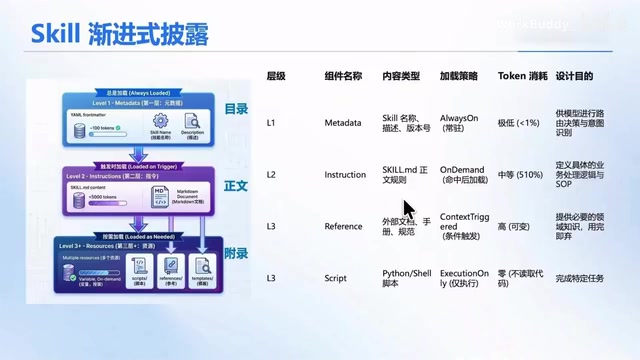
The Skill mechanism is the mainstream design approach for extending Agent platform capabilities, analogous to installing "plugins" or "work instruction manuals" for the intelligent agent. A Skill usually encapsulates the execution logic, required tools, input/output specifications, and prompt templates for a specific task, enabling the Agent to execute stably according to the established process when encountering the corresponding scenario, rather than reasoning from scratch each time. Compared with relying solely on the large model's free-form output, this can significantly improve the reliability and consistency of repetitive tasks. The value of the Skill ecosystem lies in reuse and collaboration: users can directly call skills shared by others to quickly gain capabilities, and can also distill their own high-frequency processes (such as fixed-format invoice organization and weekly report generation) into exclusive skills and distribute them within the team, forming organization-level efficiency assets. Understanding the encapsulation boundaries and invocation conditions of Skills is the core of the advanced stage.
Practical Part: Automation, Knowledge Base, and Content Production
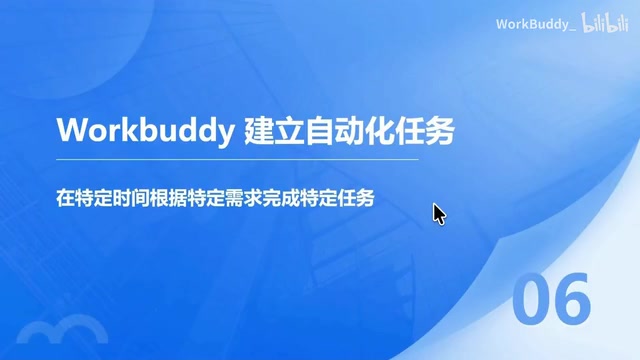
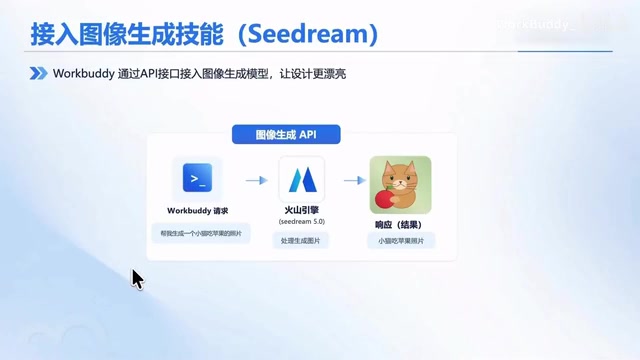
Chapter 6 teaches how to set up scheduled automated tasks and build daily industry report and weekly work report cases, letting AI work for you continuously. Chapter 7 introduces the integration of resource libraries and knowledge bases, supporting the import of local documents, PDFs, web pages, and notes to build personal or enterprise knowledge bases. Chapter 8 focuses on AI design and new media operations, covering poster design, e-commerce image generation, integration of image generation models, and automatic collection of information from platforms such as Bilibili, Douyin, and Xiaohongshu, forming a closed loop from product analysis to content promotion. Chapter 9 uses the development of an online course platform as an example to demonstrate the entire process from requirements analysis to deployment and launch, showing that even without a programming background, you can turn ideas into usable applications.
RAG (Retrieval-Augmented Generation) is the typical technical path behind the resource library and knowledge base functions. The knowledge of the large model itself stops at the cutoff point of its training data and is prone to "hallucinations." The idea of RAG is: first slice local documents, PDFs, web pages, notes, and other materials and convert them into vector indexes for storage; when the user asks a question, the system first retrieves the fragments most relevant to the question, then passes them as context to the large model to generate an answer. This allows AI to answer based on private, up-to-date professional materials while reducing the risk of fabrication. WorkBuddy supports importing multi-source documents to build personal or enterprise knowledge bases, which essentially means building a RAG retrieval layer that can be called by the Agent, so that subsequent Q&A, report generation, and content creation are all based on credible materials.
Course Highlights and Target Audience
The greatest value of this course lies in its systematization: it does not pile up features but progresses along the path of "cognition—operation—automation—creation." The author also provides a blue book, courseware, study notes, and material packages to lower the learning threshold. The course is especially suitable for practitioners in self-media, e-commerce, marketing, and education and training, as well as professionals who want to improve office efficiency. Note that the course emphasizes hands-on practice; students need to follow the cases and practice, otherwise it is difficult to truly master it.
Learning Advice: How to Efficiently Absorb 256 Episodes
Faced with the long length of 256 episodes, it is recommended to split goals by part: complete the foundation part and the first half of the advanced part in the first week, mastering installation, file processing, and Skill basics; tackle connectors and automated tasks in the second week; then invest time in the practical part, reproducing cases in combination with your own business scenarios. When encountering difficulties, prioritize reviewing the principle explanations in the corresponding chapters rather than blindly searching for external tutorials. Although the course is free, the time cost is not low; investing after clarifying your goals will yield better results.
Overall, this WorkBuddy course provides a rare complete framework for learning agent automation. If you are looking for a from-zero-to-one practical guide, it is worth adding to your learning list.
One-line Summary
Analyzing the capability system, nine-chapter learning path, and efficient absorption advice of the complete 256-episode WorkBuddy course.
Paragraph Summary
This article introduces a complete 256-episode WorkBuddy hands-on course on Bilibili that can be learned for free. WorkBuddy is an AI office workbench launched by Tencent that can understand natural language, autonomously plan tasks, operate local files, and generate documents, spreadsheets, and PPTs. The course is divided into three major parts—foundation, advanced, and practical—totaling nine chapters: the foundation part covers AI Agent principles and installation/configuration; the advanced part covers Excel analysis, PPT generation, PDF batch processing, the Skill mechanism, and connectors to platforms such as Feishu; the practical part involves scheduled automation, knowledge base integration, AI design and new media operations, and no-code development of an online course platform. The article points out that the course's value lies in its systematic progression, suitable for practitioners in self-media, e-commerce, marketing, and education, as well as professionals pursuing efficiency, and recommends splitting goals by part and practicing along with the cases.
Related articles

Amphibious Transforming Drone: Beyond 100x Power Savings, What Are the Real Needs?
Is the amphibious transforming drone just a gimmick? Starting from the 100x power difference of the M4 Morphobot, explore real application scenarios and thesis topic ideas, analyzing boundary conditions where pure drones and pure ground robots both fail.

Warhound Raises $200 Million: Genetically Engineered "War Dogs" Paired with Anduril Gear
Warhound raises $200M, backed by Ben Lamm and Palmer Luckey, to genetically engineer dogs for military and law enforcement use and equip them with Anduril gear. This article analyzes its technology direction, funding logic, and ethical controversy.

Claude API Comes to Google Cloud: IAM Integration and SDK Access Guide
Anthropic hosts the full Claude API on Google Cloud with IAM-controlled permissions and unified billing. This guide covers the Vertex AI and Anthropic-hosted entry points, IAM role configuration, and SDK access.