Xbox Prices Up to 43% Higher: Microsoft's Console Strategy Is Undergoing a Fundamental Shift

Microsoft raises Xbox prices up to 43%, signaling a strategic pivot from hardware sales to Game Pass subscriptions.
Microsoft announced Xbox console price increases of up to 43%, reflecting a fundamental shift in its gaming strategy. Driven by rising semiconductor costs, tariff pressures, and a deliberate pivot toward Game Pass subscriptions and cloud gaming, Microsoft no longer views console hardware as a loss-leader for market share. The move may push price-sensitive consumers toward PCs and cloud gaming while potentially triggering industry-wide pricing adjustments.
Microsoft Suddenly Raises Xbox Prices Significantly
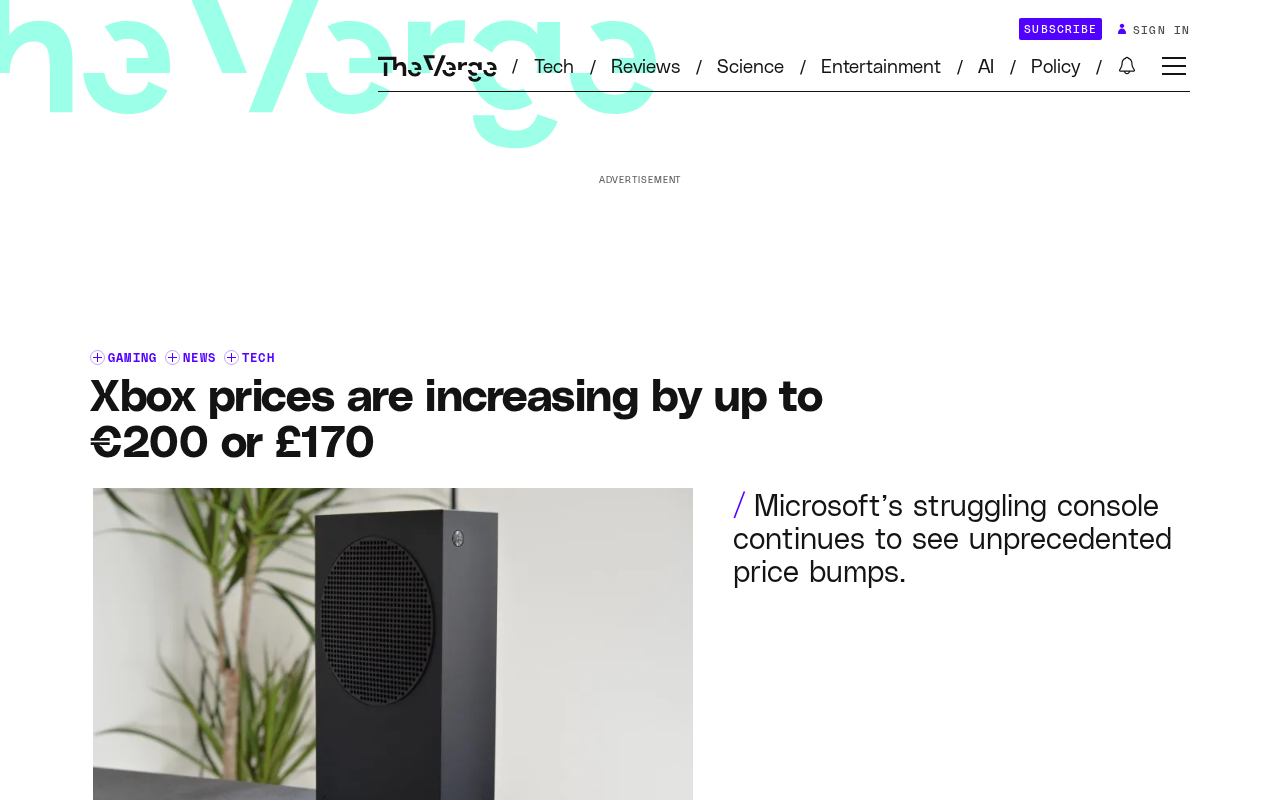
Recently, Microsoft announced price adjustments for Xbox gaming consoles and related products, with some items seeing increases of up to 43%. The news has sparked widespread discussion on tech communities like HackerNews. For those who have long followed the gaming console market, such a dramatic price hike is far from routine market behavior—it looks more like a signal of strategic transformation.
Conventionally, gaming consoles are sold at or near cost—sometimes even below cost—with manufacturers relying on subsequent game sales, subscription services, and digital content revenue sharing to turn a profit. This "razor and blades" business model has been a proven playbook repeatedly validated by Sony, Microsoft, and Nintendo over the past two decades. The model originated from Gillette's early strategy of offering razor handles at low or no cost while profiting from the ongoing sale of high-margin replacement blades. In the gaming industry, this approach dates back to the Atari era but truly matured during the Sony PlayStation 3 generation, when each PS3 was sold at a loss exceeding $200, with Sony recouping costs through a 30% platform cut on every game sold. However, as cross-platform gaming has become widespread and subscription services have risen, the hardware lock-in effect is weakening, making the return on investment from selling hardware at a loss increasingly uncertain. Microsoft's dramatic price increase may signal that this long-standing logic is being fundamentally reassessed.
Multiple Pressures Behind the Price Increase
Supply Chain and Rising Costs
In recent years, the global semiconductor supply chain has been under sustained pressure. Combined with inflation driving up raw material, logistics, and labor costs across the board, hardware manufacturers' profit margins have been continuously squeezed. Gaming console core processors (APUs) are typically designed by AMD and manufactured by TSMC. Since 2020, global semiconductor capacity has remained tight. Although consumer-grade chip supply eased somewhat after 2023, advanced process nodes (7nm and below) remain expensive. TSMC has raised foundry prices multiple times, with cumulative increases exceeding 20%. The Xbox Series X uses a custom AMD Zen 2 + RDNA 2 APU based on TSMC's 7nm process, meaning its manufacturing cost is directly affected by wafer foundry price fluctuations. Additionally, key components such as GDDR6 memory, NAND flash, PCB substrates, and passive components have all seen significant price increases in the inflationary environment. For gaming consoles that were already sold at razor-thin margins or at a loss, the impact of rising costs is particularly acute.
Moreover, changes in tariff policies are a factor that cannot be ignored. The global supply chain for consumer electronics is highly distributed—chips may be manufactured in Taiwan, packaged in Malaysia, and final assembly completed in mainland China or Vietnam. U.S. tariff rates vary significantly by country of origin. In early 2025, the U.S. government's policy changes imposing additional tariffs on certain Chinese imports directly affected the import costs of consumer electronics like gaming consoles. Xbox consoles are primarily assembled at Foxconn and Flex factories in mainland China, meaning any tariff adjustments targeting Chinese-manufactured goods translate directly to end-product pricing. Microsoft's decision to partially pass these costs on to consumers is financially understandable, but a 43% increase still appears quite aggressive—tariff factors likely account for a significant portion, which explains why the increase far exceeds typical inflation-level adjustments.
A Fundamental Shift in Hardware Sales Strategy
The deeper reason lies in Microsoft's overall gaming strategy transformation. In recent years, Microsoft has consistently emphasized the "Xbox everywhere" philosophy, shifting focus from pure console sales to an ecosystem centered on the Game Pass subscription service and cloud gaming.
Xbox Game Pass is a gaming subscription service launched by Microsoft in 2017, similar to Netflix for games. Users pay a monthly fee to access a library of hundreds of games, including Microsoft first-party titles available on day one. As of 2024, Game Pass has over 34 million subscribers. At $10-17 per month, this translates to annualized revenue of approximately $4-7 billion. More critically, subscription services deliver predictable recurring revenue, which commands a far superior valuation multiple in capital markets compared to one-time hardware sales. Microsoft's $68.7 billion acquisition of Activision Blizzard in 2023 was driven in part by the goal of injecting heavyweight IPs like Call of Duty and World of Warcraft into Game Pass, further strengthening the subscription service's appeal.
Under this strategy, the importance of the console as the sole entry point is declining. When Microsoft no longer needs low-priced consoles to capture market share, maintaining a "sell at a loss for volume" hardware strategy loses its rationale. In other words, the price increase reflects that Microsoft no longer views console hardware as a traffic funnel, but rather expects it to be profitable on its own.
Impact on the Gaming Console Market
The Dilemma Facing Consumers
For average gamers, the Xbox hardware price increase undeniably raises the barrier to entry. In an era where gaming consoles coexist with high-performance PCs, cloud gaming, mobile gaming, and other entertainment options, console pricing competitiveness directly affects market appeal. Traditionally, gaming consoles offered far lower prices than PCs at equivalent performance levels—a core advantage enabled by manufacturers' loss-leader sales strategy. Taking the Xbox Series X's original price of $499 as an example, the cost of separately purchasing a GPU and CPU equivalent to its custom AMD APU on the PC market would already exceed that price. However, when console prices rise to the $700 range, the calculus fundamentally changes—at that price point, consumers can build a PC with an RTX 4060 or RX 7600 graphics card that not only plays games but also serves for work, content creation, and other purposes. Furthermore, Steam's PC gaming store frequently offers deep discounts, potentially making long-term ownership costs lower. This reversal in value proposition could drive some price-sensitive users from the console market toward PC gaming.
Interestingly, Microsoft has been actively promoting Game Pass subscriptions and its xCloud cloud gaming service in recent years. Xbox Cloud Gaming (project codename xCloud) is a game streaming service built on Microsoft's Azure cloud computing infrastructure. Its technical principle involves running games in remote data centers and transmitting the rendered frames as a video stream to user devices. The user's device only needs to be capable of playing video streams—a phone, tablet, browser, or even a smart TV will suffice. Microsoft has deployed custom Xbox blade servers across more than 60 Azure regions worldwide, with each server capable of simultaneously serving multiple cloud gaming users. The core technical challenge is latency—the time from user input to visual response must be kept under 60 milliseconds to ensure an acceptable gaming experience. Microsoft addresses this through edge computing node deployment and adaptive video encoding technology. Theoretically, players can experience games through the cloud without purchasing a high-end console. The price increase may further steer users toward subscriptions and cloud gaming, aligning with Microsoft's long-term strategic objectives.
Industry Chain Reactions Are Inevitable
Microsoft's price increase decision may also trigger industry-wide chain reactions. If cost increases are universal, competitors like Sony and Nintendo face similar pressures. In fact, multiple manufacturers in the industry have already adjusted product pricing in recent years. Microsoft's move could serve as a signal for an industry-wide upward pricing trend.
For game developers and publishers, changes in console installed base directly affect market size assessments. When deciding which platforms to support, installed base is one of the most critical reference metrics for game developers. A AAA game typically costs $100-300 million to develop, and developers need to ensure a sufficiently large potential user pool to recoup their investment. As of late 2024, PlayStation 5 global sales exceeded 60 million units, Xbox Series X|S stood at approximately 30 million units, and active PC gaming users (on Steam) numbered around 35 million concurrent online. If Xbox console sales further slow due to price increases, its installed base disadvantage will become even more pronounced, potentially leading some third-party developers to reduce investment in Xbox-exclusive content and prioritize PlayStation and PC platforms instead. This creates a negative feedback loop: fewer games → fewer users → developers even less willing to invest. Microsoft is clearly aware of this risk, which is one reason it has been aggressively pushing cross-platform and PC releases—unbinding the Xbox gaming ecosystem from hardware so it no longer depends on a single console's installed base to attract developers.
From Hardware to Services: A Deep Trend in the Gaming Industry
Microsoft's price increase fundamentally reflects the profound transformation the entire gaming industry is undergoing. The shift from one-time hardware sales to ongoing subscription services, and from closed console ecosystems to cross-platform, cloud-first open models, represents a shared direction for multiple companies including Microsoft.
In this context, the role of console hardware is being redefined. It is no longer the sole, must-be-sold-cheaply gateway to acquiring users, but rather one of many access points. When Microsoft has the confidence to raise hardware prices, it precisely demonstrates that it has already built a sufficient moat at the software and services level—a subscriber base exceeding 34 million and the backing of top-tier IPs like those from Activision Blizzard mean that Microsoft's gaming business revenue is no longer highly dependent on hardware sales volume.
Of course, whether a 43% price increase will trigger strong consumer backlash remains to be verified by the market. While the HackerNews discussion has been modest in scale, it already reflects the tech community's attention and concerns regarding this decision. For Microsoft, striking a balance between profitability goals and user experience will be an unavoidable challenge going forward.
Conclusion
Microsoft raising Xbox prices by up to 43% may appear to be a simple pricing adjustment, but it actually reflects a deep transformation in the gaming console business model. Under the combined forces of cost pressures, strategic transformation, and industry trends, the traditional strategy of trading low prices for volume is being reassessed. In the future, gaming consoles may no longer be the core battlefield where manufacturers compete for users—Game Pass subscriptions and ecosystem development are where the real value lies. This shift deserves ongoing attention from the entire industry and gamers alike.
Related articles

Bilibili's Hit Dify Tutorial: A Practical Guide to Building 20+ AI Apps from Scratch
A distilled guide to Bilibili's top-rated Dify tutorial: Windows + Docker deployment, MySQL connection, five app types, model integration strategy, and publishing.

Agent Skills Beginner's Guide: From Concepts to Multi-Agent Collaboration in Practice
A comprehensive guide to Agent Skills: core concepts, components, the importance of Description, standardization, beginner learning paths, and multi-agent collaboration.

One Neuron Detects Both Cats and Cars? We Reproduced It and Found a New Explanation
The cat-car neuron reinterpreted: researcher Cammarata argues it distinguishes pointy from round, not cats from cars. We reproduced the experiment and found the new explanation holds on most inputs—but cars are the exception. The interpretability debate continues on language models.