XiaoWu Voice Input Method: Powered by Local LLMs for Accurate Offline Speech Recognition

XiaoWu is a privacy-first voice input method powered by local LLMs for accurate offline speech recognition.
XiaoWu is a local AI voice input method that runs entirely on-device using large language models. It delivers near-real-time speech recognition with accurate automatic punctuation, requires no internet connection, and features a minimalist one-key interaction design. With one-click installation and strong contextual understanding, it offers a privacy-safe alternative to cloud-based voice input solutions.
When Voice Input Meets Local Large Language Models
Voice input methods are nothing new, but most products either rely on cloud services with inherent privacy risks or deliver underwhelming recognition accuracy. Traditional Automatic Speech Recognition (ASR) primarily depends on cloud computing — services like Google Speech-to-Text and iFlytek require voice data to be uploaded to remote servers for processing. While this approach leverages massive computational resources for high accuracy, it comes with issues like network latency, privacy exposure, and complete unavailability when offline. In recent years, the emergence of high-quality local models like Whisper (OpenAI's open-source speech recognition model) has brought local speech recognition accuracy remarkably close to cloud-based solutions, making fully offline voice input a real possibility.
I recently came across a local AI voice input method called XiaoWu on Bilibili. Its core value proposition is crystal clear: a fully local large language model + minimalist interaction design. Based on the demo, this voice input tool shows impressive highlights in both recognition accuracy and user experience — well worth a deeper look.
XiaoWu's Recognition Accuracy: Even Punctuation Gets It Right
In the demo video, the creator tests with an everyday conversational sentence — "My daughter asked me today, 'Mom, where are we going for summer vacation?'" The results reveal two standout qualities:
- Extremely low recognition latency: Voice input converts to text almost in real time, with no noticeable waiting
- Automatic and accurate punctuation: This is particularly impressive, as punctuation handling is a weak spot for many voice input methods. XiaoWu automatically adds correct punctuation based on semantics and pauses
Behind this precise punctuation handling is the local large language model at work. Speech recognition typically involves two stages: an acoustic model and a language model. The acoustic model converts audio waveforms into phoneme or text sequences, while the language model handles error correction, sentence segmentation, and punctuation insertion. In traditional approaches, the language model is usually a lightweight N-gram model or a small RNN with limited capabilities. XiaoWu introduces a local LLM as a post-processing layer — essentially having a GPT-level model "proofread" and "polish" the recognition output. Its contextual semantic understanding far surpasses traditional language models, enabling more accurate judgment of sentence structure and appropriate punctuation placement.
This dual-layer architecture of "recognition + understanding" is what fundamentally sets it apart from ordinary voice input methods.
Minimalist Interaction Design: One Button Does It All
In terms of interaction design, XiaoWu takes an extremely minimalist approach. The demo showcases two usage scenarios, both embodying a "minimum operations" design philosophy.
Keyboard Mode: One Key for Recording and Sending
In keyboard mode, all operations — recording, stopping, and sending — are mapped to a single key. The creator describes it vividly: "You can literally chat with your eyes closed." This design is incredibly friendly for high-frequency text input scenarios (like instant messaging), eliminating the cognitive overhead of switching between multiple buttons.
Mouse Mode: Click Where You Want to Chat
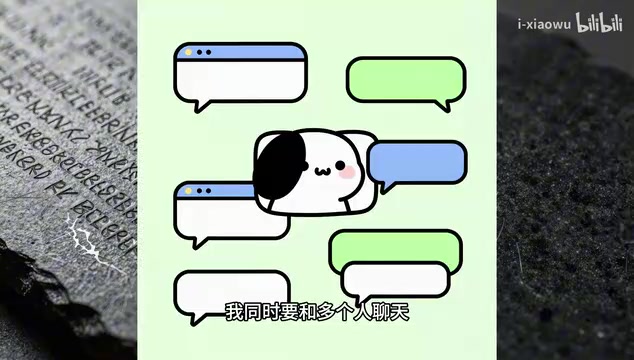
For users who prefer mouse operation, XiaoWu offers an equally minimalist solution: everything is done with just the left mouse button. Want to chat with someone? Just click their chat window, and the input method automatically follows the focused window. This is especially practical when chatting with multiple people simultaneously — no extra window-switching operations needed.
Local LLM Architecture: Privacy and Intelligence Combined

XiaoWu's most noteworthy technical feature is its fully localized large language model architecture. As data privacy increasingly becomes a core issue in the global tech industry — with regulations like the EU's GDPR and China's Personal Information Protection Law imposing strict requirements on user data collection and transmission — the "Local-first" architectural philosophy is gaining momentum. Apple's Core ML framework, Google's MediaPipe, and others are all driving the development of on-device AI. XiaoWu's fully localized approach aligns perfectly with this trend, processing highly sensitive biometric data like voice locally and fundamentally eliminating the risk of data leakage.
This means:
- No internet dependency: All speech recognition and text processing happens locally, functioning normally even when offline
- Guaranteed privacy: Voice data is never uploaded to any cloud server — a core advantage for privacy-conscious users
- Strong contextual understanding: The local LLM can intelligently understand conversational context, improving recognition quality
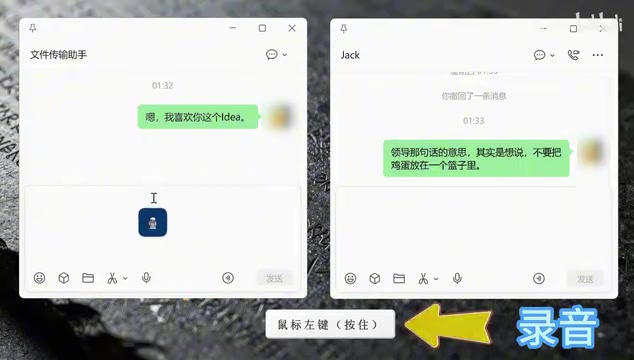
The demo includes a notable example: the system correctly transcribes a complex sentence containing metaphor and indirect speech — "What the boss actually meant by that was 'don't put all your eggs in one basket.'" This demonstrates that the underlying local LLM possesses genuine semantic understanding depth, rather than performing simple speech-to-text mapping.
Installation and Barrier to Entry
According to the introduction, XiaoWu supports one-click installation, which is a significant plus for a local LLM application. Deploying large models locally typically involves a series of tedious steps — environment configuration, model downloading, dependency installation, and more. Achieving one-click installation shows that the developer has invested considerable effort in engineering and user experience.
Running large language models smoothly on personal computers relies on a range of model compression and optimization techniques. Quantization is the most critical method, compressing model weights from 32-bit floating point to 4-bit or 8-bit integers, reducing memory usage by 4-8x. Additionally, Knowledge Distillation allows smaller models to learn from larger ones, maintaining strong task performance despite dramatically reduced parameter counts. Combined with pruning and sparsification techniques, models in the 1B-7B parameter range can now run at acceptable speeds on ordinary laptops. Current mainstream on-device LLM inference approaches include: running quantized models in GGUF format via llama.cpp on CPU (typically requiring 8GB+ RAM), or leveraging GPU acceleration (such as NVIDIA's CUDA or Apple Silicon's Metal). The maturity of these technologies provides a viable technical pathway for local AI applications like XiaoWu and forms the technical foundation enabling "one-click installation" and smooth operation on consumer-grade devices.
However, the video doesn't detail specific hardware requirements. Running local LLMs typically requires a certain amount of GPU VRAM or substantial RAM, which potential users may want to investigate beforehand. I'd recommend interested readers visit the creator's Bilibili homepage and check the pinned video for complete feature introductions and system requirements.
Summary: A Pragmatic Exploration of Local AI Input Methods
In an era overflowing with AI tools, XiaoWu has chosen a remarkably pragmatic entry point — injecting local LLM capabilities into the most everyday voice input scenario. Rather than pursuing flashy feature bloat, it focuses on two core experiences: "accurate recognition" and "minimalist interaction." This product philosophy deserves recognition.
The direction of local LLM-powered input methods itself holds tremendous potential. As on-device AI computing power continues to improve and model compression techniques advance, we'll likely see more "local AI + everyday tools" combinations in the future. XiaoWu stands as a noteworthy early practitioner in this trend.
Key Takeaways
Related articles
Osprey: General-Purpose Pretraining Makes Speculative Decoding Draft Models More Efficient
Osprey treats pretraining as a reusable, target-agnostic asset. Through pruning and lightweight adaptation, a single draft model transfers across multiple LLMs, boosting mean acceptance length by 16%-22%.
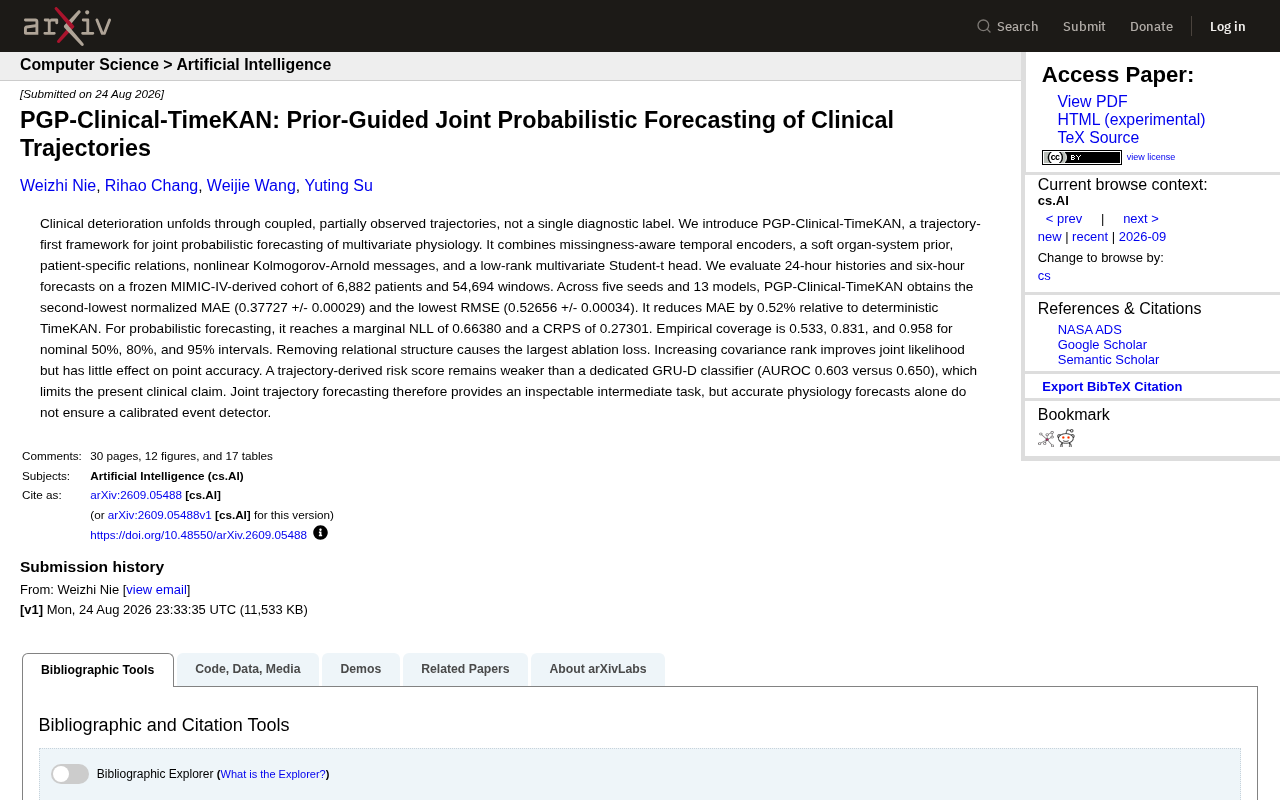
PGP-Clinical-TimeKAN: A Detailed Guide to the Multivariate Physiological Indicator Joint Prediction Framework
An in-depth analysis of the PGP-Clinical-TimeKAN framework for joint probabilistic prediction of multivariate physiological indicators, covering trajectory-first paradigm, KAN message passing, MIMIC-IV validation, and ablation studies.
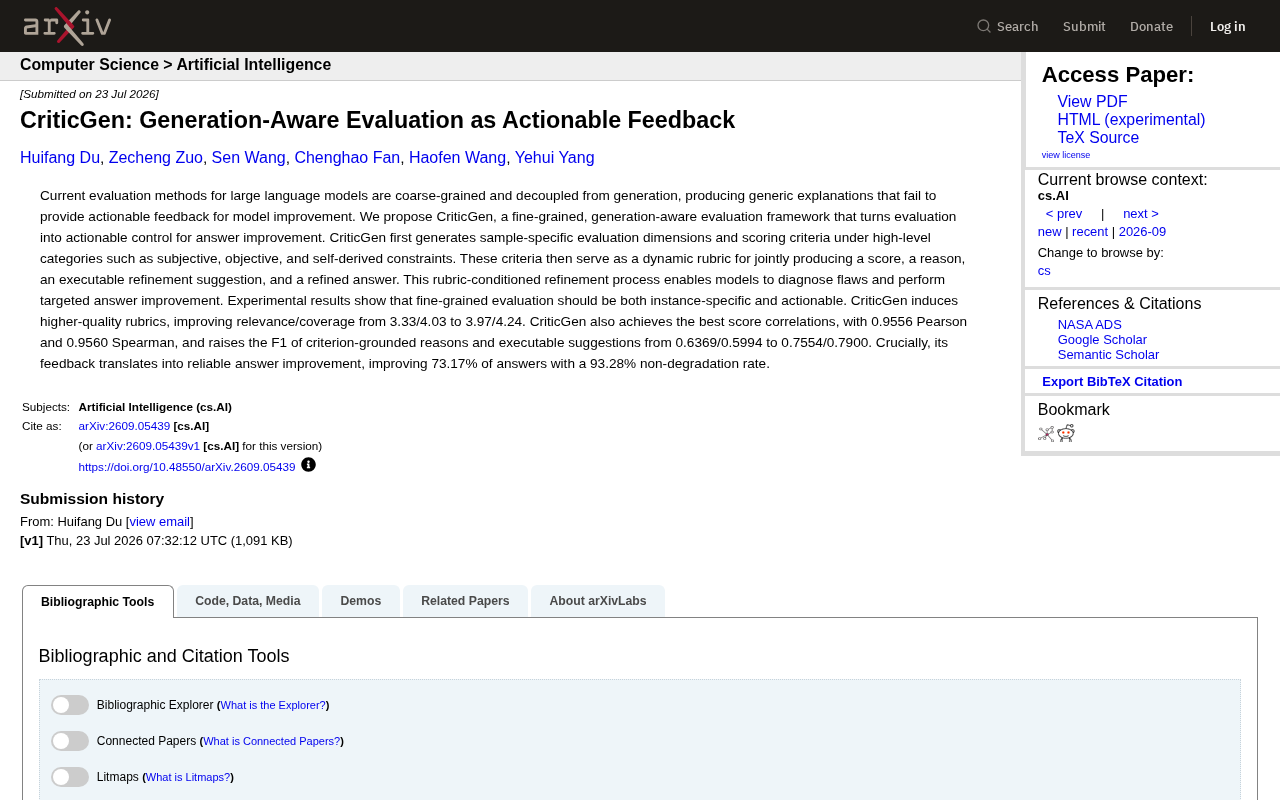
CriticGen: A New Framework That Transforms AI Evaluation into Actionable Improvement Feedback
CriticGen proposes a generation-aware evaluation framework that transforms AI assessment from passive scoring to an active optimization loop, achieving 73.17% answer improvement and 93.28% non-degradation rate.