#local voice input method
90 related articles

·2 min
XiaoWu Voice Input Method: Powered by Local LLMs for Accurate Offline Speech Recognition
XiaoWu is a fully local AI voice input method powered by on-device LLMs for accurate offline speech recognition, smart punctuation, and minimalist interaction — no internet required.
Read more →

·4 min
Deep Dive into AI Short Drama "Nido de Villanas": How AIGC Mass-Produces Binge-Worthy Content
Using AI-generated Spanish short drama Nido de Villanas as a case study to analyze AIGC script generation, character consistency, multilingual dubbing, and the commercial logic of scaled AI drama production.
Read more →

·4 min
Deep Dive into AI Short Drama "Nido de Villanas": How AIGC Mass-Produces Binge-Worthy Content
Using AI-generated Spanish short drama "Nido de Villanas" as a case study, this deep dive analyzes AIGC script generation, character consistency, multilingual dubbing, and the industry trends of scaled AI drama production.
Read more →
·3 min
The Computer Is Being Redefined in the AI Era — Has Your Understanding Kept Up?
Generative AI is profoundly redefining the personal computer — from passive tool to intelligent collaborator. This article examines the core shifts of the AI PC era and the productivity gap created by cognitive lag.
Read more →

·3 min
How Hidden Layers Solve the XOR Problem: A Complete Walkthrough from Math to Geometry
A deep dive into how neural network hidden layers solve the XOR problem through feature space transformation, with math, geometry, and concrete examples.
Read more →
·3 min
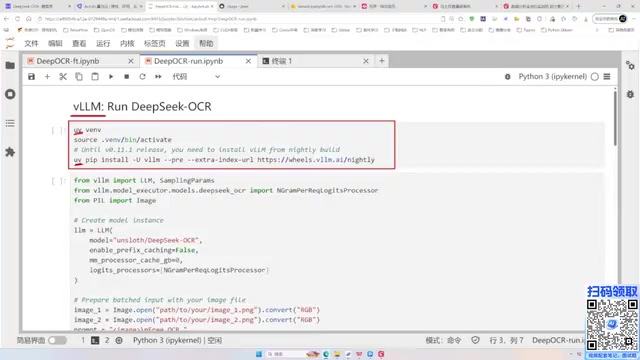
DeepSeek-OCR Deployment & Fine-Tuning in Practice: From vLLM Inference to Unsloth Fine-Tuning
Complete guide to DeepSeek-OCR from vLLM inference deployment and Unsloth model loading to fine-tuning, covering cloud server setup, GPU selection, and code examples — all on a single 4090 GPU.
Read more →
·3 min
Computers Are Being Redefined in the AI Era — Has Your Understanding Kept Up?
Generative AI is profoundly redefining personal computers — from passive tools to intelligent collaborators, from deterministic computation to probabilistic reasoning. Explore the core shifts of the AI PC era.
Read more →

·5 min
From Chat to Agent: Automating Your Entire Business Workflow with AI Agents
Veteran AI practitioner Remy breaks down the leap from chat models to AI agents: how agents work, the three pillars of context, tools, and skills, MCP connections, and hands-on architecture to make you a 100x employee.
Read more →

·1 min
Google Gemini 3.6 Flash Hands-On: Leading in Speed and Cost, But With Notable Coding Weaknesses
Google released three models at once: Gemini 3.6 Flash, 3.5 Flash Lite, and 3.5 Flash Cyber. Testing shows 3.6 Flash is fast and cheap, but underperforms 3.5 Flash in coding tasks.
Read more →

·3 min
Jensen Huang Backs Chinese Open-Source AI: Great Models Deserve to Be Widely Used
NVIDIA CEO Jensen Huang says US companies should absolutely be allowed to use Chinese open-source AI models like DeepSeek and Kimi, calling backdoor fears a misunderstanding and arguing great models drive more compute demand.
Read more →

·3 min
Qwen3.8 Deep Dive: How Does a 2.4 Trillion Parameter MoE Model Claim Second Place?
Alibaba's Qwen3.8 challenges larger models with a 2.4T-parameter MoE architecture, claiming second only to Gemini. A deep dive into MoE mechanics, continuous updates, two-speed release strategy, and real local deployment requirements.
Read more →
Human-Centered AI: Real-World Implemen…
·6 min
Human-Centered AI: Real-World Implementation in Healthcare and Design
An MSR workshop reveals the truth about AI deployment: from a $20 corneal diagnostic device to expert-in-the-loop chatbots, researchers share real-world experiences of AI in healthcare and design within resource-scarce environments.
Read more →

·4 min
Pi Agent Deep Dive: Four Core Advantages of a Minimalist Open-Source Framework
Pi is a minimalist open-source Agent framework with just 4 default tools and under 1,000 tokens in its system prompt, with 70K GitHub stars. Deep dive into its 4 core advantages vs. Claude Code and Codex.
Read more →
GitHub Daily · July 20: AI Agent Infra…
·3 min
GitHub Daily · July 20: AI Agent Infrastructure Explodes Across the Board
AI Agent infrastructure explodes across GitHub Trending: OmniRoute unifies 268+ providers, cognee adds long-term memory, and self-hosted openship tops growth with +1719 stars.
Read more →

·2 min
The Truth Behind Anthropic's Account Bans: Client Detection Logic and a Wave of AI Model Launches
Unpacking the technical truth behind Anthropic's account bans: hidden timezone and proxy detection logic sparks privacy debate. Plus Claude Sonnet 5, Linux support, and new releases from OpenAI, NVIDIA, and Google DeepMind.
Read more →

·4 min
GPT-5.6 + Codex Tested: 3 Prompts to Edit a 15-Minute Video, Efficiency Doubled
OpenAI's GPT-5.6 and Codex integration tested: 3 prompts to edit a 15-min video in just 20 minutes. Full breakdown of performance, Token costs, GPT Work automation, and Chat Card real-world results.
Read more →

·3 min
OpenAI Merges ChatGPT and Codex: The Birth of an AI OS and Four Core Strategies
OpenAI merges ChatGPT and Codex into a Super App, unveiling the early blueprint of an AI OS. A deep-dive into four core strategies: Loop workflows, tool stack economy, multi-threading, and Sites.
Read more →

·3 min
Waku Agent Deep Dive: The Four Core Pillars of a Local-First AI Assistant
A deep dive into Waku Agent's four pillars: Loop Engineering, three-tier Memory system, Eval assessment, and the Harness scaffold. Full walkthrough of a local-first AI assistant from task execution to memory consolidation.
Read more →

·6 min
OpenAI Merges ChatGPT and Codex: The Super App for the AI Agent Era Is Here
OpenAI merges ChatGPT and Codex into a super app and releases three new GPT-5.6 models: Sol, Terra, and Luna. A deep dive into four hands-on workflows—Computer Use, Loops, and multi-threading—for the AI agent era.
Read more →

·4 min
Hands-On with GPT-5.6: A Single Prompt Builds a Real-Time Voice Anime App
Hands-on with GPT-5.6 Sol: auto-generate real-time voice anime characters from one prompt, write physics engines from scratch, and build unfamiliar toolchains autonomously. In-depth review of coding, agentic tasks, benchmarks, and its hallucination weakness.
Read more →