Your AI Teammates Have Arrived: Managing Your Digital Workforce on iOS and Android
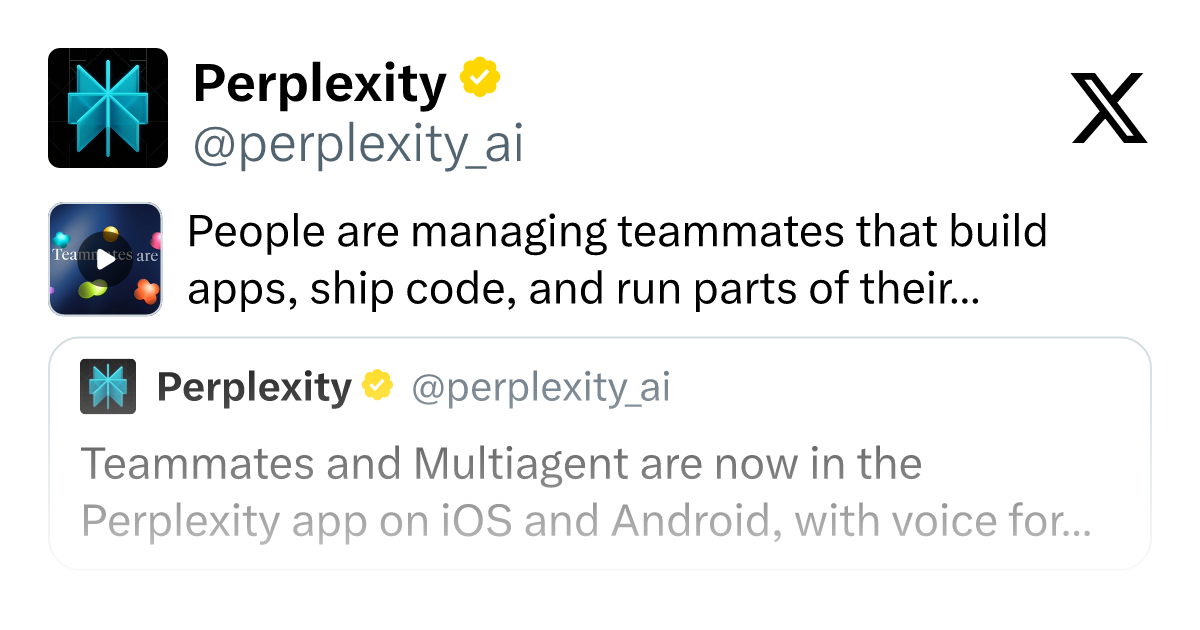
AI is shifting from a passive tool to a manageable "teammate," and product competition is turning toward manageability.
Starting from a social platform message, the article notes that AI applications are shifting from "chat box" to "management console": users manage AI teammates that build apps, commit code, and run business operations like colleagues. iOS and Android teammate launches take management beyond the desktop, while in-app "calling teammates" blurs the tool-communication boundary. The real difficulty isn't technology but defining task boundaries, verifying quality, and correcting course in time—so competition is shifting from capability to manageability.
From Tool to Teammate: The Role of AI Is Shifting
A short message from a social platform captures a key shift in today's AI applications: people are starting to manage AI the way they manage colleagues. According to the original post, users are "managing teammates who can build apps, commit code, and run parts of the business." There isn't much information in that sentence, but the trend it points to is clear—AI is no longer just a tool that passively responds to instructions, but a "teammate" that's given ongoing tasks and takes on specific functions.
This change in phrasing isn't just wordplay. When AI can build apps, deliver code, and participate in business operations, the collaboration interface between humans and AI must upgrade from a "chat box" to a "management console." What you need isn't to ask questions over and over, but to assign tasks, check progress, and adjust direction. That's also why mobile support matters: management happens in fragmented moments, not only when you're sitting at a computer.
In a technical context, an "AI teammate" usually refers to an AI system with agentic capabilities—distinct from a chatbot that only handles single-turn Q&A. Such systems generally include goal decomposition, tool calling (such as code execution environments and version control interfaces), memory and state tracking, and human approval/interruption mechanisms. What the industry often calls an "AI Agent" or "autonomous agent" is exactly this category. What matters isn't how powerful the model itself is, but the surrounding orchestration layer: task queues, permission control, log auditing, and rollback capabilities. It's these engineering components that make "assigning tasks, checking progress, and adjusting direction" possible—and that explain why the product form is shifting from a chat box to a management console.
Mobile Fills the Gap: iOS and Android Launch Together
The original post mentions that the team announced "teammates" features for iOS and Android the day before, and that you can call teammates directly within the app. These two points deserve separate consideration.
The mobile launch means management breaks free from the desktop scenario. When AI teammates execute builds, commit code, or handle business tasks in the background, users need to track status and step in on anomalies anytime, anywhere via their phones. This is similar to the mobile adaptation logic of traditional SaaS, except the object shifts from "processes" to "executors."
In-app calling further blurs the boundary between tool and communication. The act of calling a teammate sounds more like pulling a colleague into a group chat in a messaging app than configuring a bot in a settings panel. The choice of product language often reflects the designer's assumptions about the working relationship.
In technical implementation, "calling a teammate in-app" typically corresponds to human-in-the-loop interruption and takeover mechanisms. When a background task hits an anomaly, requires authorization, or touches a risky operation, the system proactively notifies the user or starts a conversation, and the user can immediately reply with instructions, approve actions, or terminate execution. Unlike traditional alerts, calling emphasizes two-way interaction and context continuity, so it's often combined with push notifications, conversation threads, and approval flows. The value of this mechanism lies in turning "supervision" from periodic inspection into event-driven response, reducing the risk of long unattended periods and making mobile a necessary access point.
Managing AI Teammates: The Hard Part Isn't Technology
There are already many technical paths for getting AI to write code and build apps. The real challenge is at the management level: how to define task boundaries, how to verify delivery quality, and how to stop AI in time when it goes off track. The original post's use of the word "managing" hits the nail on the head.
Traditional software behaves predictably—deterministic input yields deterministic output. AI teammates, however, have a degree of autonomy, and their output needs to be reviewed, corrected, and held accountable. This means users need a new mental model: you're not operating software, you're leading a collaborator that executes fast but needs clear instructions. The mobile calling feature matters because correction is often time-sensitive—wait until you're back at your desk, and it may already be too late.
The article's mention that "traditional software has deterministic input and output" corresponds to the difference between deterministic and probabilistic systems. The output of LLM-driven AI teammates is non-deterministic: the same instruction may produce different results, and errors often aren't crashes but "looks reasonable but is wrong." So quality verification can't rely solely on unit-test-style assertions; it requires evaluation sets, automated review, manual spot checks, and traceable execution logs. Task boundaries also need to be constrained through permissions and tool whitelists to prevent AI from overstepping. Together, these management measures constitute what's called "manageability"—the key threshold for AI products moving from demo to production.
Who's Actually Using These Capabilities
From the original post, users are already having AI teammates take on substantive work like "building apps, committing code, and running parts of the business." This isn't a demo scenario—it's a production scenario. You may not have noticed that these tasks originally corresponded to the responsibilities of developers, engineers, and operations staff, and are now consolidated into a single entity that can be "managed."
The direct consequence of this consolidation is role blurring. When one person manages multiple AI teammates responsible for different functions at once, their identity is closer to a coordinator than an executor. The original post doesn't elaborate on the specific management mechanisms, but from the "calling" interaction, we can infer that real-time intervention and status synchronization are the current focus of product design.
Commentary
The message itself contains limited information, but it captures a shift that's already happening: the competitive focus of AI products is moving from "how powerful is it" to "how easy is it to manage." The mobile launch and calling features may look like feature completion, but they're actually building infrastructure for the new behavior of "managing AI." Whether this infrastructure can support the promise of "running parts of the business" still needs more real-world validation.
For readers following AI application adoption, what's worth noting is the change in product language—when vendors start describing AI with "teammate," "calling," and "managing," they're no longer selling a tool, but an entry point to a new kind of working relationship.
One-line Summary
AI is shifting from a passive tool to a manageable "teammate," and product competition is turning toward manageability.
Paragraph Summary
Starting from a social platform message, the article points out that AI applications are shifting from "chat box" to "management console": users are starting to manage AI teammates that can build apps, commit code, and run parts of the business the way they manage colleagues. The simultaneous iOS and Android launch of teammate features takes management beyond the desktop; in-app "calling teammates" blurs the boundary between tool and communication, reflecting the product's assumptions about the working relationship. The article stresses that the real difficulty in managing AI teammates isn't technology, but defining task boundaries, verifying delivery quality, and correcting course in time—which requires users to build a new mental model. The conclusion is that the competitive focus of AI products is shifting from "how powerful is it" to "how easy is it to manage," and vendors are no longer selling tools, but an entry point to a new kind of working relationship.
Related articles
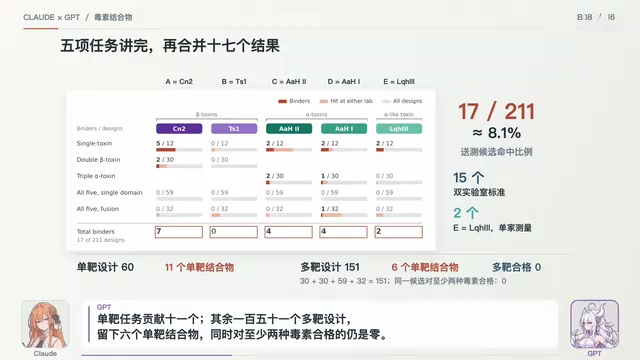
Claude Designs Scorpion Venom-Neutralizing Proteins: With 17 Binders, How Far Are We From an Antidote?
Anthropic's Claude helped design scorpion venom-neutralizing proteins: only 17 of 211 candidates passed, multi-target coverage failed, and channel function and animal testing remain absent.
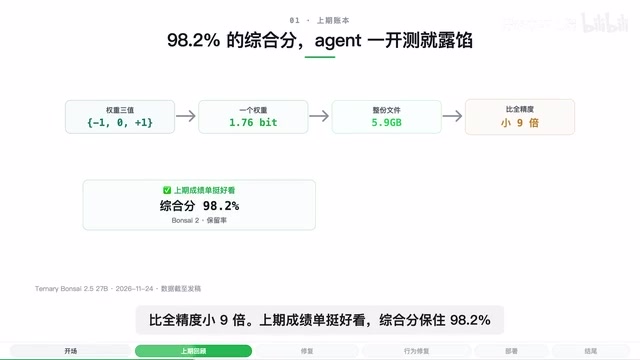
Fitting a 27B Model into 5.9GB: Ternary Bonsai 2.5 Fixes Its Agent Weaknesses
Prism ML releases Ternary Bonsai 2.5: a 27B model in just 5.9GB, with ternary quantization compressing weights to 1.76 bits. The new version focuses on fixing Agent capabilities, raising Tao3Bench Verify to 75.6 and Upworld from 51.2 to 90.5, hitting 291 tokens/s on a single A700, open-sourced under Apache 2.0.
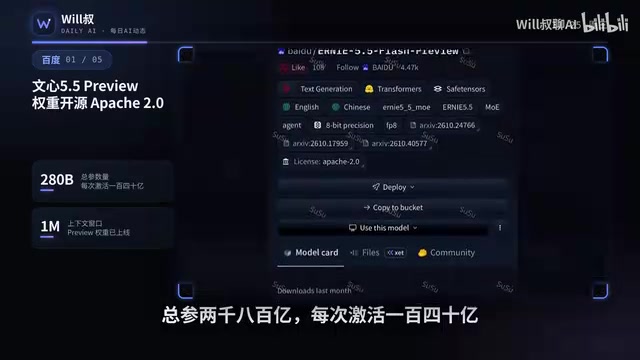
GPT-6-Designed Proteins Validated in Lab; ERNIE 5.5 Preview Open-Sourced
GPT-6 designed proteins using reasoning and code alone, with lab binding evidence across five targets; Baidu open-sourced ERNIE 5.5 Flash Preview under Apache 2.0 with 280B parameters and 1M context.