#AI agent loops
562 related articles

·4 min
Self-Healing Agent Loops: Using AI to Automatically Discover and Fix Programming Language Bugs
How Boundary built a self-healing AI Agent loop that automatically writes BAML code, discovers bugs, and generates fix PRs — a practical software factory with deduplication, human-in-the-loop leverage points, and extensible multi-loop design.
Read more →

·3 min
AI Agent Core Principles Fully Explained: Decision Loops and the Three Key Components in Practice
A deep dive into AI Agent core principles: the Perceive-Plan-Act-Observe decision loop, plus Planning, Memory, and Tools — the three key components explained with practical examples.
Read more →

·3 min
Loop Engineering Explained: An Engineering Approach to Making AI Coding Agents Run Autonomously in Loops
A deep dive into Loop Engineering and the Rhythmic framework: how closed-loop systems replace repetitive prompting to enable autonomous AI coding agents with state management and budget control.
Read more →

·3 min
AI Agent Loops in Practice: Four PRs Auto-Merged While I Slept
From manual AI prompting to building automated loops — let Agents prompt, review, and merge code themselves. A real-world case: one message triggers four PRs auto-reviewed and merged overnight.
Read more →

·2 min
Replit's AI Loops Workflow Explained: Multi-Agent Collaboration Replaces Prompt Engineering
Deep dive into Replit's AI Loops workflow: how orchestrators, parallel agents, and Computer Use Verifiers build automated closed-loop systems through multi-agent collaboration.
Read more →

·3 min
Codex Loop Patterns: The Paradigm Shift of AI Agents from One-Shot Tasks to Continuous Loops
Deep dive into Boris Cherny's AI agent loop patterns: loop workflow elements, loop contracts, four practical loops (PR Babysitter, CI Health, Deploy Verification, Feedback Clustering), and failure prevention strategies.
Read more →

·4 min
Feedback Loops in Coding Agents: How Failure Becomes Fuel for Fixes
Deep dive into coding Agent feedback loops: how AI tools turn errors and test failures into correction signals. Covers context management, root cause analysis, death loop avoidance, and more.
Read more →

·2 min
Three Major Updates to Gemini API Managed Agents: Free Tier, Cost Controls, and Scheduled Triggers
Google Gemini API Managed Agents launches three key updates: Free Tier for universal access, Cost Controls for budget safety, and Scheduled Triggers for automated execution.
Read more →

·3 min
AI Game Development Showdown: Claude, Kimi K3, and ChatGPT Recreate Classic Games — Who Wins?
Bilibili creator tests Claude Fable 5, Kimi K3, and ChatGPT Codex recreating Hollow Knight, Cuphead, and Zelda — comparing code quality, collision detection, and Boss design.
Read more →

·2 min
GPT-5.6 Hands-On Review: Analyzing the Agent Capabilities Behind Its #1 Ranking on the Frontend Development Leaderboard
GPT-5.6 SoulX High tops the frontend dev leaderboard at 1636 points with Agent Arena rank #2. Hands-on tests of portfolio pages and mystery games reveal its task decomposition and self-correction capabilities.
Read more →

·5 min
Loop Engineering Explained: The New Programming Paradigm Where AI Prompts Itself
Loop Engineering is a paradigm shift in AI usage. Learn how to build automated loops where agents explore, execute, and verify tasks autonomously, with a hands-on e-commerce case study.
Read more →

·6 min
Harness Engineering: From Context Engineering to the Third Phase of AI Programming
Explore Harness Engineering: the next evolution beyond context engineering for AI programming. Learn how to build enterprise-grade Skill systems and deliver real projects with mid-tier models.
Read more →

·5 min
Opus 5 Builds a No Man's Sky-Style Exploration Game in One Day: MCP and Sub-Agent Architecture Explained
A developer used Anthropic's Opus 5 model to build a No Man's Sky-style space exploration game in one day using Blender MCP and sub-agents. Deep dive into the technical architecture and industry implications.
Read more →

·4 min
LangChain Guardrails Explained: Building Safe and Controllable AI Agents
A detailed guide to LangChain Guardrails covering layered ecosystem architecture, middleware implementation, deterministic and model-driven protection for building production-grade secure AI Agents.
Read more →
·3 min
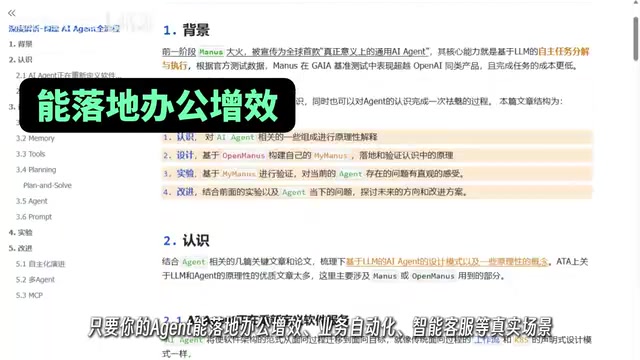
Practical Guide to Agent Development: The Complete Path from Zero to Commercial Deployment
A systematic guide to AI Agent development from beginner to deployment, covering task planning, tool calling, memory management, learning paths, and realistic commercial monetization considerations.
Read more →

·5 min
Learn AI Agent Development from Scratch: A 3-Step Practical Path to Get Started Quickly
How to learn AI Agent development from scratch? This article outlines a clear 3-step path: Python crash course, LLM theory & practice, and LangChain framework project implementation.
Read more →

·3 min
OpenAI Admin API Explained: How Enterprises Manage ChatGPT at Scale
Deep dive into how OpenAI Admin API and ChatGPT Work help IT admins manage enterprise ChatGPT at scale—covering access control, cost monitoring, usage insights, and smart quota recommendations.
Read more →

·5 min
Running GPT-5.6 Inside Claude Code: Best Practices for Subagent Orchestration and System Prompts
Deep dive into running OpenAI GPT-5.6 inside Claude Code: comparing Codex vs Claude Code on subagent orchestration, workflow design, and system prompt quality, revealing how harness engineering determines model output.
Read more →

·4 min
The New Coding Paradigm in the AI Era: Why You Should Generate More Code Instead of Reading Every Line
Explore the new code review mindset for the AI programming era: now that code is cheap, engineers should generate massive amounts of code to verify critical code rather than obsessing over reading every line.
Read more →

·4 min
Advice from the Creator of Claude Code: Automation Is an Engineer's True Moat
Claude Code creator Boris argues top engineers should embrace AI-era automation leverage. By encoding domain knowledge into infrastructure, preview environments, and lint rules, engineers multiply output—the core path to Staff Engineer.
Read more →