#AI computing
1338 related articles

·2 min
Chrome Built-in AI Explained: How Locally Running Models Protect Your Privacy
Explore Chrome Built-in AI technology and how running AI models locally in the browser enables zero data upload, instant responses, and stronger privacy protection.
Read more →

·2 min
Chrome Built-in AI Explained: How Locally Running Models Protect Your Privacy
Deep dive into Chrome Built-in AI technology, exploring how running AI models locally in the browser achieves zero data uploads, instant responses, and stronger privacy protection.
Read more →

·3 min
Gemini 3.1 Pro Rate Limiting Exposed: Why Paid Users Can Never Use Their Full Quota
Deep analysis of Google Gemini 3.1 Pro's rolling window rate limiting, revealing the gap between paper quotas and real usability for paid AI subscribers.
Read more →

·3 min
Why You Shouldn't Ask LLMs for Confidence Scores: The Pitfalls of Self-Reported Reliability
Asking LLMs to self-report confidence scores is a common mistake. Learn why it fails and discover reliable alternatives like logprobs, self-consistency sampling, and RAG.
Read more →

·3 min
Monocular RGB Human Mesh Reconstruction: Real-Time Motion Capture at 18 FPS with Rust + CUDA
A deep dive into a real-time 3D human mesh reconstruction project using a single RGB camera, built with Rust, Candle, and CUDA, achieving 55ms/frame on an RTX 5080.
Read more →

·3 min
Monocular RGB Human Mesh Reconstruction: Real-Time Motion Capture at 18 FPS with Rust + CUDA
Deep dive into a real-time 3D human mesh reconstruction project using a single RGB camera, built with Rust, Candle, and CUDA, achieving 55ms/frame on RTX 5080. Exploring its architecture, Metal porting plans, and applications in VTuber, AR/VR, and sports analysis.
Read more →

·3 min
Why You Shouldn't Ask LLMs for Confidence Scores: The Pitfalls of LLM Self-Assessed Reliability
Asking LLMs for self-reported confidence scores is a common mistake. Learn why it fails, and discover reliable alternatives like logprobs, self-consistency sampling, and RAG for uncertainty estimation.
Read more →

·3 min
Using AI Agents to Write Research Experiment Logs: A Complete Methodology and Workflow
A detailed guide on using AI Agents to build Research Logs for scientific experiments, covering skeleton structure, daily workflows, pre-experiment thinking standards, code change tracking, and Agent-researcher division of labor.
Read more →

·4 min
Faithfulness of the Burau Representation at n=4 Proven: A Key Breakthrough on a Classical Problem
The faithfulness of the Burau representation of braid groups at n=4 has been unresolved for nearly ninety years. Recent research finally proves it faithful, with deep implications for knot theory, topological quantum computing, and cryptography.
Read more →

·4 min
Faithfulness of the Burau Representation at n=4 Proven: A Key Breakthrough on a Classical Problem
The faithfulness of the Burau representation of braid groups at n=4 has been unresolved for nearly 90 years. A recent proof finally settles this critical case, with implications for knot theory, topological quantum computing, and cryptography.
Read more →

·4 min
Disaster and Glory of the Apollo Program: The History We Must Revisit Before Returning to the Moon
From the fatal Apollo 1 fire to Apollo 8's daring lunar orbit to Apollo 11's successful landing—revisiting the disasters, fears, and compromises of the Apollo program and their lessons for today's return to the Moon.
Read more →
·3 min
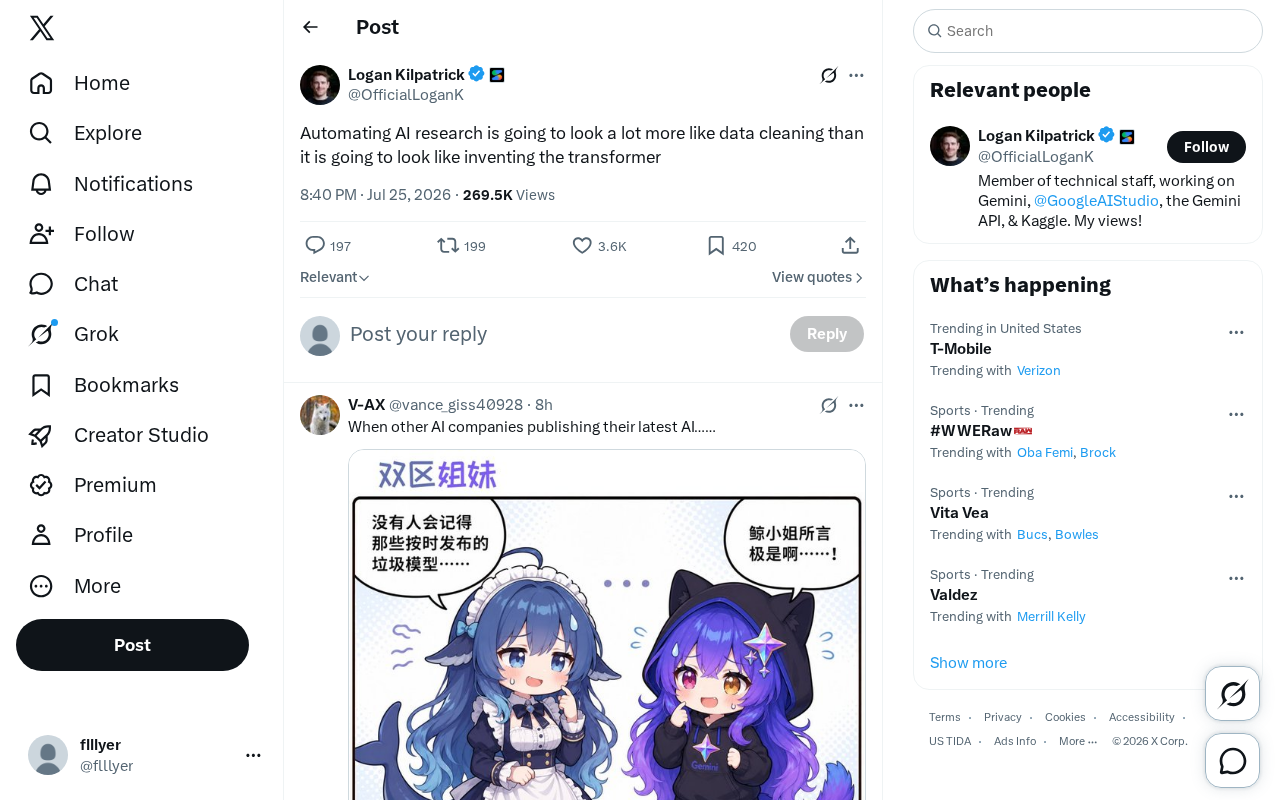
AI Research Automation: More Like Data Cleaning Than Inventing the Transformer
AI research automation will look more like data cleaning than inventing the Transformer. Explore how automating 60%-80% of repetitive research work reshapes the AI research paradigm.
Read more →
·3 min
AI Research Automation: More Like Data Cleaning Than Inventing the Transformer
Why AI research automation looks more like data cleaning than inventing the Transformer. Exploring the value of automating 60%-80% of repetitive research work and how human-AI collaboration reshapes the research paradigm.
Read more →
·3 min
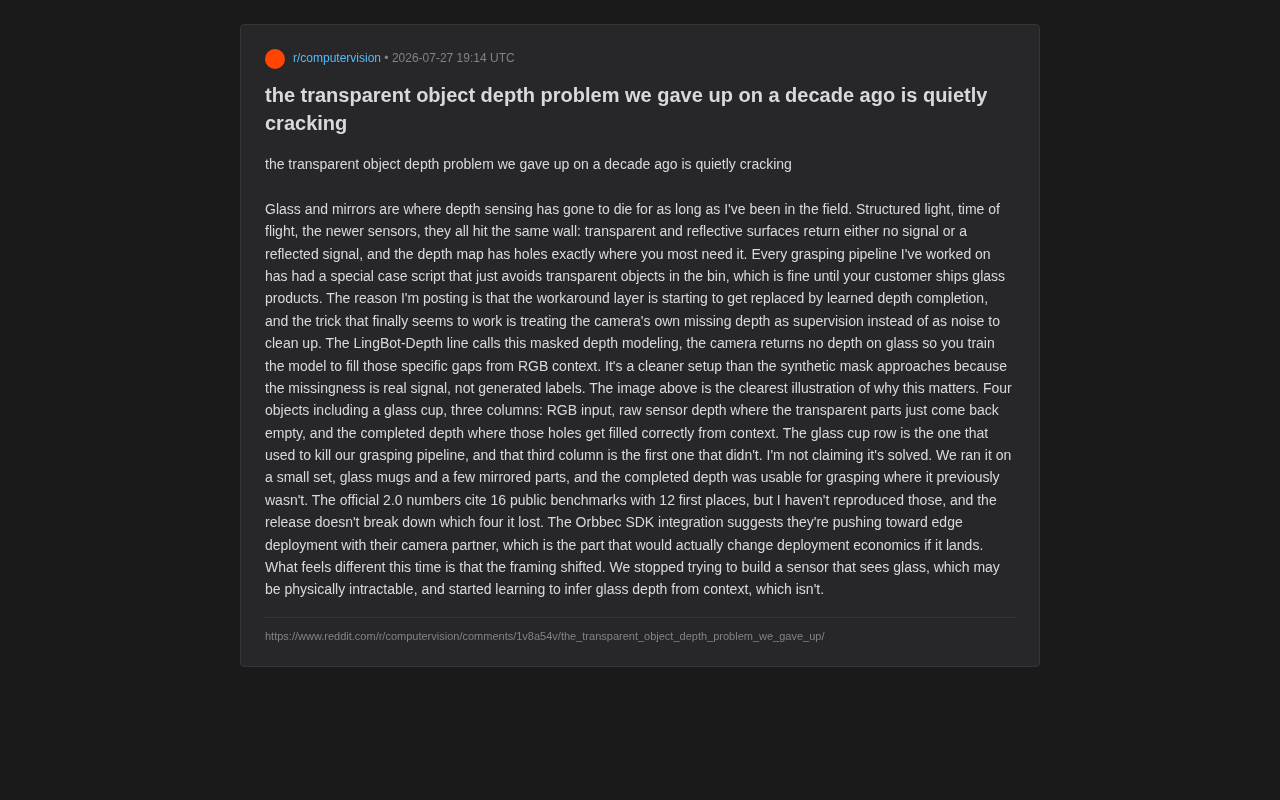
The Depth Perception Challenge for Transparent Objects: How LingBot-Depth Breaks Through with Masked Depth Modeling
Depth perception for transparent and reflective objects has long been a core challenge in robotic grasping. LingBot-Depth uses masked depth modeling to turn sensor failure into supervisory signals, inferring glass depth from RGB context.
Read more →

·3 min
Carta: Pandoc Rewritten in Rust — 45x Faster, 20x Smaller
Carta is a Rust reimplementation of Pandoc with a 9MB binary (1/20th of Pandoc) and up to 45x faster conversion. Supports Markdown, DOCX, LaTeX, and Pandoc JSON filters.
Read more →

·3 min
Open Source vs. Closed Source: Who Will Win the US-China AI Battle?
Chinese open-source models DeepSeek and Kimi K3 are challenging OpenAI's closed-source dominance. Analyzing the business logic, chip ecosystems, and US-China strategic dynamics behind the open vs. closed AI debate.
Read more →

·4 min
Jensen Huang Joins 50 Silicon Valley Giants to Champion Open-Source Models: How Capital Logic Overrides Political Correctness
Jensen Huang's first-ever tweet backs open-weight AI. 50 Silicon Valley giants oppose banning Chinese open-source models. Deep analysis of the interests behind closed vs. open AI ecosystems.
Read more →

·3 min
Running AI Inside DRAM: A Processing-in-Memory Experiment That Breaks DDR4 Timing Rules
Explore how deliberately violating DDR4 timing rules enables running PrismML's Bonsai AI model inside DRAM, covering the principles, energy benefits, and challenges of processing-in-memory.
Read more →
·3 min
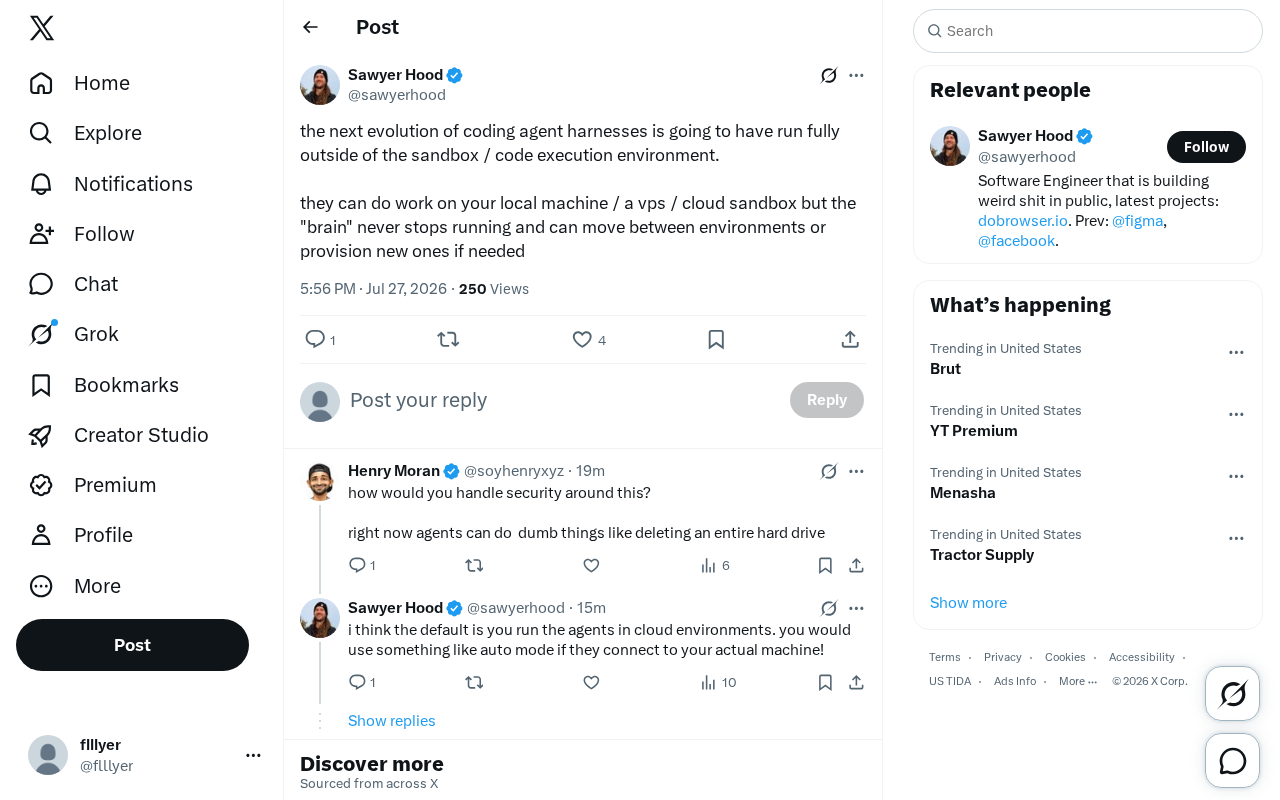
The Next Evolution of Coding Agents: Letting the Brain Break Free from the Sandbox
Exploring the key evolution in coding agent architecture: separating the reasoning core from code execution environments to decouple control and execution planes.
Read more →
·3 min
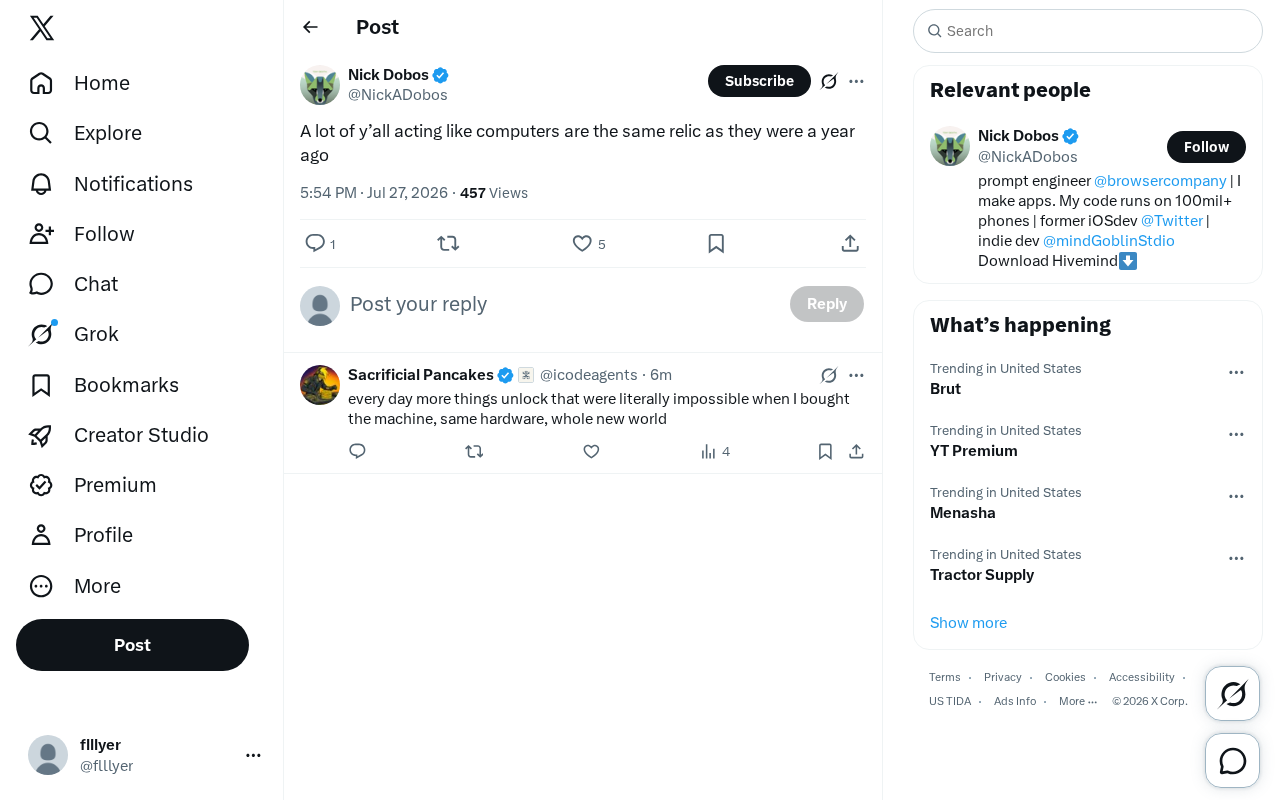
The Computer Is Being Redefined in the AI Era — Has Your Understanding Kept Up?
Generative AI is profoundly redefining the personal computer — from passive tool to intelligent collaborator. This article examines the core shifts of the AI PC era and the productivity gap created by cognitive lag.
Read more →