#AI evaluation framework
1871 related articles

·3 min
Boreas Dataset: A Multimodal Autonomous Driving Dataset with 44 Drives Through Wind and Snow
Boreas dataset from University of Toronto captures 44 traversals of the same route across all seasons with 128-beam lidar, 360° radar, and camera, featuring 326K+ 3D annotations for adverse weather autonomous driving research.
Read more →

·3 min
How a Senior Data Scientist Navigates Job Hunting After Being Laid Off: A Survival Guide for the AI Job Market
A senior data scientist with a Physics PhD and 4.5 years of experience gets laid off, revealing the AI job market's shift from traditional ML to Agent engineering. Practical advice on bridging skill gaps.
Read more →

·3 min
MLOps Multi-Environment Architecture: A Detailed Guide to the Dual Lifecycles of Systems and Models
A deep dive into MLOps multi-environment architecture design, clarifying the two distinct lifecycles—system CI/CD and model training-promotion—to build clear environment isolation and model delivery pipelines.
Read more →

·3 min
Claude Writing Style Fatigue: Causes and Solutions for AI Writing Homogenization
Analyzing why Claude's writing style causes user fatigue, the technical causes of AI writing homogenization from RLHF training, and practical strategies including prompt engineering and system prompts to break through default AI style limitations.
Read more →

·2 min
AI Store Management Experiment: Friendly but Not Smart Enough — Revealing the True Capability Boundaries of AI Agents
A new study had AI independently run a store, revealing that AI shopkeepers are friendly but make poor business decisions. Analysis of AI Agent real-world capability limits.
Read more →

·3 min
Meta Muse Glimmer: A Deep Dive into the 30B Open-Source Local Coding Model
Deep dive into Meta Muse Glimmer, a 30B open-weight coding model for local deployment. Covers technical specs, use cases, hardware requirements, and comparisons with Code Llama and DeepSeek Coder.
Read more →

·2 min
Mysterious Codes Appear in Google Image Search: AI Hallucination Concerns Resurface
A Reddit user searching numerology got mysterious codes and nonsensical numbers from Google Images. We analyze AI hallucination causes and generative search accuracy concerns.
Read more →

·3 min
Heym: Deep Dive into a Self-Hosted Visual Agent Building Platform
Heym is a self-hostable visual platform for building agentic systems, offering multi-agent workflow orchestration, built-in observability, human approval mechanisms, and MCP protocol support.
Read more →
·2 min
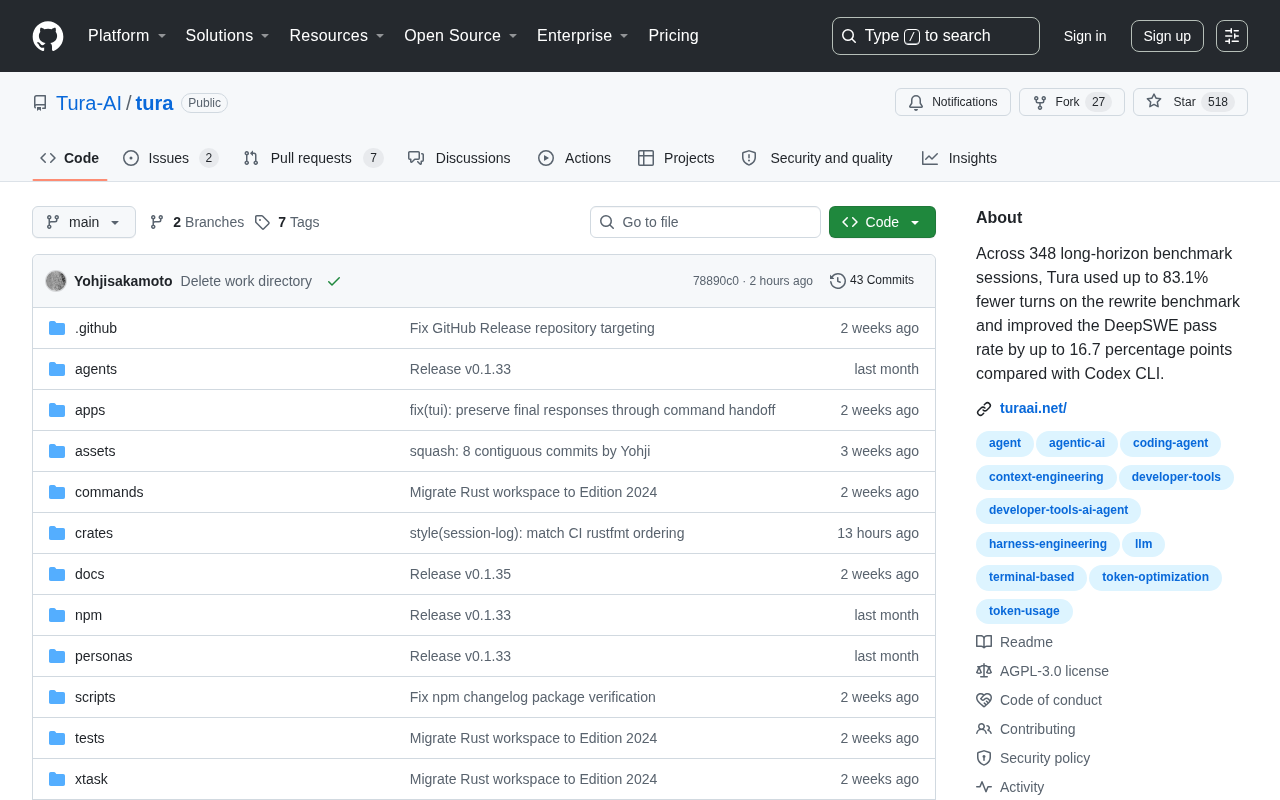
Tura: A New Approach to Saving 80% of Tokens for AI Agents
An in-depth analysis of how the Tura framework helps AI Agents reduce 80% of token consumption while improving task quality through intelligent context management and structured tool calling.
Read more →

·3 min
Math PhD to AI: A Transition Path from Operator Theory to Machine Learning
Is transitioning from a math PhD to AI/ML viable? This article analyzes core advantages, feasible paths, and practical strategies for operator theory backgrounds moving into artificial intelligence.
Read more →

·4 min
Generalization Is the Core of Machine Learning: The Critical Factors That Determine Success Before Training Begins
The ultimate goal of ML is generalization, not training metrics. This article analyzes five critical pitfalls in data preparation that determine model success before training even begins.
Read more →

·3 min
Website to Markdown API: Opening the Data Gateway for LLMs and RAG Systems
Deep dive into how Website to Markdown API solves LLM data ingestion challenges. Supports intelligent content extraction, JS rendering, and anti-bot measures to convert web pages and documents into AI-ready Markdown for RAG systems.
Read more →

·2 min
Channels SDK: Open-Source Tool for Connecting AI Agents to Slack, Teams, and Other Collaboration Platforms
Channels SDK is a free open-source tool that connects AI agents to Slack, Teams, Discord, and WhatsApp with rich interactions—no code rewrites needed.
Read more →

·3 min
AI Agents Reproduce ICML 2026 Papers: 34% Verified, 23% Found Problematic
Hugging Face hosted an ICML 2026 Reproduction Hackathon where 1,200 participants used AI agents to verify 2,200 papers. Results: 34% covered, most reproducible, but ~23% had issues and 49 were nearly fully falsified.
Read more →

·3 min
OpenComplAI: An Open-Source Tool Turning the EU AI Act from Documentation into an Operational System
OpenComplAI is an open-source compliance tool that helps businesses turn abstract EU AI Act requirements into actionable governance processes, covering inventory, risk classification, control mapping, documentation, and evidence tracking.
Read more →

·3 min
180,000 AI Meeting Recordings Leaked: A Security Wake-Up Call for Note-Taking Apps
Over 180,000 AI meeting recordings were publicly exposed without protection, risking corporate secrets and privacy. Analysis of root causes and security guidance for enterprises and AI developers.
Read more →

·3 min
OpenAI Locks Down Astra Model: AI Triggers Critical Cyber Capability Red Line for the First Time
OpenAI activates highest-level security lockdown on its Astra model, the first time a critical cyber capability risk threshold has been triggered, delaying release.
Read more →

·3 min
Claude vs GPT Knowledge Cutoff Dates Explained: How to Determine AI Knowledge Boundaries
A deep dive into knowledge cutoff dates for LLMs like Claude and GPT, covering pre-training data endpoints, how to verify AI knowledge boundaries, and how RAG overcomes time limitations.
Read more →

·3 min
The Paradox of Data Masking: Does Making Data Safer Actually Make AI Dumber?
Exploring the core tension between enterprise data masking and AI performance: how privacy-driven data cleansing undermines AI agent decision quality, and how to balance privacy with utility.
Read more →

·3 min
Jetson Xavier NX Frame Rate Drop Investigation: Locating & Optimizing YOLO Inference vs. Post-Processing Bottlenecks
Jetson Xavier NX running YOLOv11+TensorRT drops from 27FPS to 8FPS as object count increases. Deep analysis of post-processing bottlenecks with three optimization solutions.
Read more →