#AI presentation maker
81 related articles

·7 min
LangSmith Engine: An Intelligent Operations Tool That Automatically Diagnoses and Fixes Agent Failures
LangChain's LangSmith Engine is an intelligent agent tool for tracking Agent failures, prioritizing issues, and auto-drafting fixes. Deep dive into its core capabilities, sandbox isolation, sub-Agent architecture, and continuous evaluation challenges.
Read more →

·3 min
Google AI Monthly Roundup: Multimodal, Agents, and Developer Ecosystem Accelerate on All Fronts
A deep dive into Google's latest AI monthly updates: Gemini multimodal upgrades, AI Agent breakthroughs, product ecosystem integration, and developer toolchain improvements.
Read more →

·6 min
Fable 5 vs. GPT-5.6 Sol: Benchmarks, Pricing, and the AI Power Struggle Explained
An in-depth comparison of Fable 5 and GPT-5.6 Sol: benchmarks across Terminal Bench, HealthBench, and ExploitBench, plus pricing strategy, OpenAI's government equity controversy, and shifting AI power dynamics.
Read more →

·6 min
Deep Dive into GPT-5.6 Ultra's Sub-Agent Architecture and Ten Key AI Industry Trends
In-depth analysis of GPT-5.6 Ultra's sub-agent collaborative reasoning, the global rise of Chinese AI models, world-model evaluation gaps, and AI's real-world deployment challenges and bubble warnings.
Read more →

·6 min
GPT-5.6 Three-Model Family Launch: A Complete Breakdown of Sol/Terra/Luna Capabilities and the Government Restriction Incident
OpenAI officially launches the GPT-5.6 family, including the Sol flagship, Terra balanced, and Luna lightweight models. Coding capabilities set a new industry benchmark, generating a Minecraft clone in 90 minutes—while OpenAI publicly opposes U.S. government release restrictions.
Read more →

·6 min
GLM 5.2 Arrives: Industry Upheaval on the Eve of AI Margin Collapse
The rise of Zhipu's GLM 5.2 is accelerating the democratization of LLM capabilities. This article analyzes the commoditization of foundation models, the logic behind margin collapse, and the opportunities and challenges facing application-layer and foundation model firms.
Read more →

·6 min
TechCrunch Startup Battlefield Australia: Applications Close July 6
TechCrunch Startup Battlefield Australia applications close July 6. Seize this premier startup competition for global investor exposure, capital connections, and brand endorsement.
Read more →
·6 min
TechCrunch Startup Battlefield Australia: Applications Close July 6
TechCrunch Startup Battlefield Australia applications close July 6. Seize this top-tier competition opportunity for global investor exposure, capital connections, and brand endorsement.
Read more →

·6 min
AI Superforecasters: Can Machines Surpass Human Experts at Prediction?
Have AI superforecasters truly arrived? A deep dive into how LLMs challenge human superforecasters in probability calibration, information integration, and scalable forecasting, plus core debates on data leakage, interpretability, and real-world applications.
Read more →

·5 min
NVIDIA AI-Q Blueprint × OCI: A Practical Guide to Production Deployment of Enterprise AI Agents
Deep dive into NVIDIA AI-Q Blueprint production deployment on Oracle Cloud Infrastructure, covering NIM microservices, RAG architecture, multi-agent orchestration, and OCI GPU selection for enterprise AI agents.
Read more →

·5 min
NVIDIA AI-Q Blueprint × OCI: A Practical Guide to Production Deployment of Enterprise AI Agents
Deep dive into NVIDIA AI-Q Blueprint production deployment on Oracle Cloud Infrastructure, covering NIM microservices, RAG architecture, multi-agent orchestration, and OCI GPU selection.
Read more →

·5 min
Defending the Right to Run Local AI: A Battle for Privacy, Freedom, and Digital Sovereignty
Local AI faces a triple threat from tightening regulation, hardware lock-downs, and commercial pressure. A deep analysis of why running open-source LLMs on your own device is a digital right worth defending.
Read more →

·4 min
7-Step Framework for Deploying Commercial AI Agents: From Requirements to Production
A detailed 7-step guide to building commercial AI Agents, covering requirements, platform selection (Coze/Dify/FastGPT), prompt engineering, databases, UI, testing, and deployment.
Read more →

·3 min
Vibe Coding in Practice: Why You Should Choose Reuse When AI Offers Two Solutions
When AI offers multiple fix options in Vibe Coding, why should you choose abstract reuse over quick patches? A real-world frontend bug case study explains the key architectural decision principle.
Read more →

·2 min
ChatGPT Integrates Codex: Three Major Features Reshaping Enterprise AI Collaboration
OpenAI deeply integrates Codex into ChatGPT with three new features — role-based AI plugins, Sites website builder, and Annotations — marking ChatGPT's transformation into an enterprise OS.
Read more →
·3 min
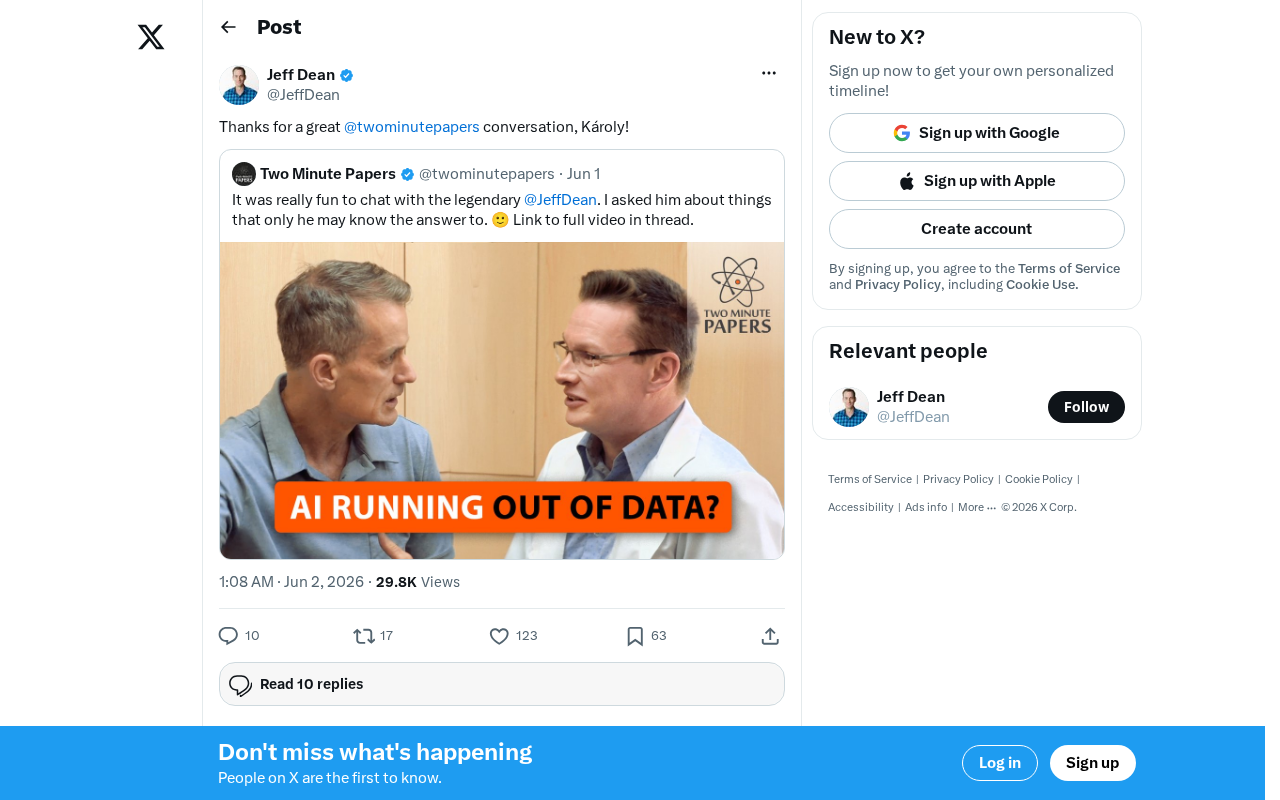
Two Minute Papers: The Gold Standard for Making Cutting-Edge AI Research Accessible
An in-depth look at how Two Minute Papers explains cutting-edge AI research in two minutes, covering Károly's methodology, topics, and lessons for science communicators.
Read more →

·3 min
OpenAI Codex Deep Dive: How AI Coding Agents Are Reshaping the Entire Software Development Lifecycle
Deep dive into OpenAI Codex's core capabilities and real-world applications, covering automated coding, compliance reviews, and security detection — revealing how AI coding agents boost team efficiency by 50%.
Read more →

·3 min
OpenHuman In-Depth Review: Innovation Highlights and Privacy Concerns of a 15,000-Star Desktop AI Assistant
In-depth analysis of OpenHuman desktop AI assistant: anthropomorphic interaction, transparent memory tree highlights, and privacy risks behind its misleading "local-first" claims.
Read more →

·3 min
AI Era Survival Guide for Programmers: The Transformation from Code Producer to AI Orchestrator
In-depth analysis of AI programming's impact on traditional developers, covering Vibe Coding trends, the emerging FDE role, and how programmers can transform through business acumen and architectural thinking.
Read more →

·2 min
Cosmos Unified Agents Platform: A New Paradigm for AI Agent Collaboration Through Shared Context and Memory
Deep dive into how the Cosmos Unified Agents Platform solves multi-AI Agent collaboration challenges through shared context and memory mechanisms, and its positioning in enterprise multi-Agent orchestration.
Read more →