#GPU fragmentation
179 related articles

·4 min
AI Engineer Growth Roadmap: From Programming Fundamentals to RAG and MCP Agent Development
A systematic AI engineer learning roadmap covering programming, math, ML, and data engineering foundations, plus frontier AI technologies like LLM, RAG, Agents, and MCP with free open-source resources.
Read more →

·2 min
Plethora: YouTube for Interactive Content, Redefining the Feed Experience
Plethora is a platform built for interactive content where users experience mini-games, puzzles, digital fidget toys, and educational simulators in their feed. Discover how this "YouTube for interactive content" transforms passive viewing into active participation.
Read more →

·3 min
CutWire Drift: An Open-Source Video Editing Tool Powered by Local AI
CutWire Drift is a beginner-friendly open-source video editor with local AI features including Whisper auto-subtitles, SAM2 background removal, multi-track timeline, keyframe animation, and transitions—free and privacy-preserving.
Read more →

·3 min
MI355X Running Kimi K3 Benchmark: The Logic Behind Outperforming B300 in Performance per Dollar
Deep analysis of AMD MI355X running Kimi K3 with superior cost-efficiency vs NVIDIA B300, and its implications for the AI inference hardware market.
Read more →

·3 min
Getting Started with MARL (Multi-Agent Reinforcement Learning): A Complete Path from Theory to Code
A systematic guide to learning MARL from theory to code, covering CleanRL, PettingZoo, PyMARL tools, IQL/VDN/QMIX/MADDPG algorithm progression, and practical tips for bridging theory and implementation.
Read more →

·3 min
Self-Hosting a Code Review AI Agent: From Architecture Design to Engineering Implementation
A deep dive into building and self-hosting a code review AI Agent from scratch, covering architecture design, context management, model selection, and noise control.
Read more →

·5 min
Have AI Doomers Actually Used AI? A Developer Exposes the Gap Between Hype and Reality
AI Doomers warn AI will destroy humanity, but have they actually built AI apps? A developer's sharp critique reveals the vast gap between AI demos and real engineering practice.
Read more →

·3 min
Practical Guide to Setting Up a Local AI Coding Environment on MacBook Pro M4
Complete guide to setting up a local AI coding environment on MacBook Pro M4, covering Ollama, MLX, Continue, Qwen3-Coder 30B configuration, and performance optimization strategies for 32GB RAM.
Read more →

·4 min
Cross-Cloud GPU Preemption Migration: How to Slash 40% of Compute Costs
Deep analysis of how cross-cloud GPU preemption migration technology helps MLOps teams cut 40% of compute costs through predictive telemetry, cross-cloud state migration, and compute arbitrage.
Read more →

·4 min
Banquish: A Mac Productivity Tool That Pins Live Web Fragments onto a Canvas
Banquish is a Mac app that clips live web fragments onto a free-form canvas, eliminating tab-switching hell. Combined with AI Agent automation, it creates personalized information dashboards.
Read more →

·2 min
SenseNova-Vision Training Data Pipeline Explained: A Guide to Fine-Tuning Unified Vision Models
SenseNova-Vision adds a complete training data pipeline with dataset registration, format converters, and end-to-end docs, making unified vision model fine-tuning for segmentation, OCR, and editing far more accessible.
Read more →

·3 min
Is LLM Inference Really That Expensive? Breaking Down the Cost Reduction Logic of GPU Compute and Inference Frameworks
Analyzing real LLM inference costs: from B200 GPU compute gains, vLLM framework optimization to MTP multi-token prediction, explaining why serving costs are widely overestimated.
Read more →

·2 min
Behind the Open-Source Model Frenzy: Who Will Provide Cheap Inference Services?
Open-source LLM weights don't equal low-cost access for developers. This article analyzes the inference service gap in open-source AI and how providers like Together AI and Groq are addressing it.
Read more →

·2 min
Behind the Open-Source Model Frenzy: Who Will Provide Cheap Inference Services?
Open-source LLM weights don't mean developers can use them cheaply. This article examines the inference service gap in open-source AI and how providers like Together AI and Groq are addressing it.
Read more →

·3 min
Production-Grade LLM Inference Deployment: A Practical K8s Handbook
Complete guide to deploying production-grade LLM inference on Kubernetes, covering GPU scheduling, vLLM engine selection, autoscaling, observability, and cost optimization.
Read more →

·5 min
Opus 5 Builds a No Man's Sky-Style Exploration Game in One Day: MCP and Sub-Agent Architecture Explained
A developer used Anthropic's Opus 5 model to build a No Man's Sky-style space exploration game in one day using Blender MCP and sub-agents. Deep dive into the technical architecture and industry implications.
Read more →

·2 min
Chrome Built-in AI Explained: How Locally Running Models Protect Your Privacy
Deep dive into Chrome Built-in AI technology, exploring how running AI models locally in the browser achieves zero data uploads, instant responses, and stronger privacy protection.
Read more →

·2 min
Chrome Built-in AI Explained: How Locally Running Models Protect Your Privacy
Explore Chrome Built-in AI technology and how running AI models locally in the browser enables zero data upload, instant responses, and stronger privacy protection.
Read more →
·3 min
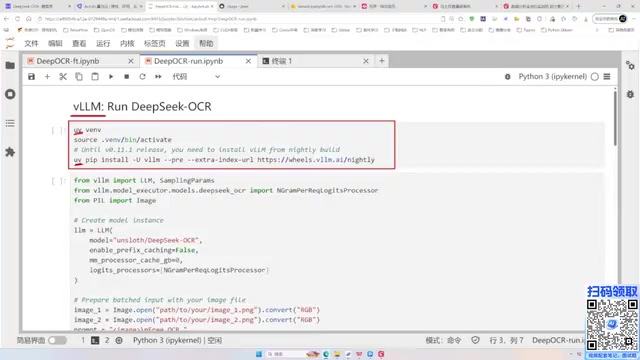
DeepSeek-OCR Deployment & Fine-Tuning in Practice: From vLLM Inference to Unsloth Fine-Tuning
Complete guide to DeepSeek-OCR from vLLM inference deployment and Unsloth model loading to fine-tuning, covering cloud server setup, GPU selection, and code examples — all on a single 4090 GPU.
Read more →

·3 min
Anthropic Claude Pay-As-You-Go Model Explained: The Credit-Based Billing Revolution and Its Impact on Users
Anthropic is migrating Claude from subscriptions to pay-as-you-go credits. This deep dive explains the mechanics, rationale, industry impact, and user strategies for this billing revolution.
Read more →