#GPU performance optimization
970 related articles

·2 min
Groq Raises $650 Million to Rebuild Team, Challenging NVIDIA with LPU Chips
AI inference chip company Groq confirms $650M funding round, actively rebuilds executive team after NVIDIA's massive talent raid, and doubles down on Neocloud business.
Read more →

·3 min
Industrial Defect Detection: OpenCV vs. YOLO — A Complete Guide to Scenario-Based Decision Making
Compare OpenCV vs. YOLO for industrial defect detection. Analyze selection criteria across data needs, accuracy, deployment, and get learning roadmap advice.
Read more →
·4 min
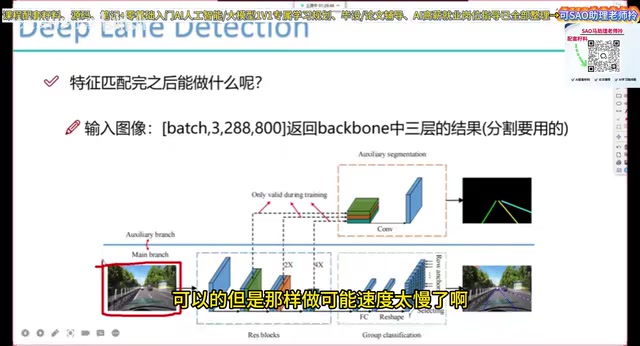
Deep Learning Lane Detection: From Segmentation to Classification for 300+ FPS Real-Time Inference
Deep learning lane detection algorithm that simplifies dense segmentation into efficient grid classification, achieving 300+ FPS real-time inference with row selection, Focal Loss, and expectation-based localization.
Read more →

·2 min
DiffusionBlocks: A New Method for Block-by-Block Neural Network Training That Reduces Memory by Several Times
DiffusionBlocks splits neural networks into independent blocks for sequential training, reducing memory from linear in network depth to proportional to a single block. Validated across ViT, DiT, autoregressive Transformers and more.
Read more →

·3 min
Sakana AI Releases Fugu Ultra: How Model Orchestration Achieves Frontier AI Performance
Sakana AI releases Fugu Ultra, achieving frontier AI performance through autonomous model orchestration. Deep dive into its technology, strategic implications, and impact on global AI competition.
Read more →

·3 min
NVIDIA ACE SDK: On-Device AI Inference for Intelligent Game NPC Companions
Deep dive into NVIDIA ACE Game Agent SDK's integration with Unreal Engine 5, exploring how on-device AI inference enables low-latency, privacy-safe intelligent NPC dialogue and behavior.
Read more →

·3 min
Making LLMs Faster and Lighter: A Practical Approach to Reshaping Sparsity for GPUs
Deep dive into Sakana AI and NVIDIA's latest research using TwELL sparse packing format and custom CUDA kernels to convert LLM sparsity into real GPU speedups, achieving 20%+ faster inference/training and significantly lower memory usage.
Read more →

·3 min
DAQIRI Platform Explained: Deep Integration of High-Speed Data Acquisition and Real-Time AI Inference
Deep dive into how the DAQIRI platform embeds NVIDIA GPU-accelerated computing into high-speed data acquisition pipelines, enabling real-time AI inference for industrial inspection, scientific experiments, and autonomous driving.
Read more →

·3 min
SWE-Smith Expands to JavaScript: 6,099 Synthetic Bugs Powering Multilingual Code Repair
SWE-Smith Multilingual extends synthetic bug generation to JavaScript, validating 6,099 patches across 74 repos. Covers 14 modifiers, high-yield repo traits, and Modal cloud pipeline architecture.
Read more →

·1 min
CPU, GPU, and TPU: Core Differences and Best Use Cases Explained
Deep dive into CPU, GPU, and TPU architecture differences, strengths, and use cases. Understand why GPUs excel at AI training and TPUs specialize in ML workloads.
Read more →

·3 min
748-Episode AI Large Language Model Development Tutorial: Seven Core Modules from Zero to Project Deployment
Analysis of a 748-episode, 198-hour AI LLM development tutorial covering API integration, prompt engineering, RAG, AI Agents, fine-tuning, multimodal development, and deployment.
Read more →

·2 min
GPT, Claude, Gemini vs. China's Top Three: A Complete Comparison of Coding Ability, Chinese Language Performance & Pricing
A side-by-side comparison of GPT, Claude, Gemini, Tencent Hunyuan, Qwen, and DeepSeek across coding ability, Chinese language performance, and API pricing to help you find the best fit.
Read more →

·2 min
AI Generates 7 Cocos Dissolve Shaders at Once — Zero Errors, Ready to Use
Generate 7 Cocos grayscale dissolve Shader versions at once with AI templates — zero compilation errors, ready to use. Covers dissolve principles and AI-assisted Shader workflows.
Read more →

·3 min
The Complete Skill Map for AI Application Engineers: A Progressive Roadmap from Fundamentals to Production
A systematic breakdown of the complete skill structure for AI application engineers, covering Python & deep learning fundamentals, small model engineering, LLM fine-tuning, Agent development, and enterprise projects.
Read more →

·4 min
DeepSeek + Resonix: A Low-Cost AI Coding Solution — 150 Million Tokens for Just $1.10
Real-world test: DeepSeek API + Resonix coding tool consumed 150M tokens for just $1.10. Deep dive into DeepSeek pricing, Resonix's 95% cache hit rate, and honest comparison with GPT models.
Read more →

·4 min
GLM 5.2 & Zcode Hands-On Review: A Deep Dive into the Free AI Coding Tool with 5 Million Tokens/Day
In-depth review of Zhipu's GLM 5.2 model and Zcode programming tool: interface experience, coding benchmarks, and long-horizon Agent performance compared to GPT and Opus. 5M free tokens/day with MIT license.
Read more →

·3 min
Codex and Claude Code Dual-Engine: A Practical Guide to AI-Powered Engineering
A deep dive into AI engineering with Codex and Claude Code: Vibe Coding limitations, Chinese LLM rankings, Skill-driven development, and enterprise project practices.
Read more →

·3 min
Generating a 3D Plants vs. Zombies Game from Pure Text Descriptions — Zero Code Written
A developer generated a complete 3D Plants vs. Zombies game using only natural language on AI platform Codewisp — multiple plant/zombie types, 8 levels, sandbox mode, zero code written.
Read more →

·3 min
OpenLLMVTuber: A Deep Dive into the Open-Source AI Virtual Character Framework
Deep dive into OpenLLMVTuber, a 10K-star open-source AI virtual character framework integrating ASR, LLM, TTS, and Live2D with voice interruption, visual perception, and modular architecture.
Read more →

·2 min
AI Coding Terminal Tools Compared: cmux vs Ghostty+tmux vs iTerm2
In-depth comparison of cmux, Ghostty+tmux, iTerm2, and Mac Terminal for AI coding. Discover why cmux's zero-config setup, sidebar management, and smart alerts make it the best terminal for heavy AI programming users.
Read more →