#GPU performance optimization
985 related articles

·2 min
AI Large Model Development Learning Path: A Complete Guide from Zero to Enterprise Projects
A complete learning roadmap for AI large model development — covering Transformer, Prompt Engineering, RAG, LangChain, Agent development, fine-tuning, and deployment.
Read more →

·4 min
AI Weekly: Top Coding Model Returns, Google's New Flash Checkpoint, and the Video Generation Race
This week in AI: Anthropic's flagship coding model returns globally with new safety classifiers, Google tests a new Gemini Flash checkpoint, video generation heats up, and Figure AI robots enter BMW factories.
Read more →

·3 min
Programmers Pivoting to AI: Opportunities in Application Development and Pitfalls to Avoid
How can ordinary programmers break into AI? This guide breaks down the gap between algorithm engineers and AI app developers, covering Agent development, model fine-tuning, salary trends, and the three hidden risks behind the current opportunity window.
Read more →
Should Frontier AI Models Like GPT-5.6…
·4 min
Should Frontier AI Models Like GPT-5.6 Be Open-Sourced? A Deep Dive into the Open vs. Closed Debate
Should frontier AI models be open-sourced? This deep dive explores the key debates around democratization, misuse risks, commercial sustainability, and governance — and the middle paths between open and closed.
Read more →
OpenAI and Broadcom Unveil Jalapeño Ch…
·2 min
OpenAI and Broadcom Unveil Jalapeño Chip: Built Exclusively for LLM Inference
OpenAI and Broadcom unveil Jalapeño, a custom ASIC designed for LLM inference. A deep dive into its technical logic, strategic intent, and impact on NVIDIA and the AI compute landscape.
Read more →

·7 min
AI Agent Development: A Four-Stage Competency Model from 15K to 40K RMB Salary Growth Path
A detailed four-stage competency model for AI Agent development: from Python/RAG basics (15K) to workflow orchestration (20K), inference optimization (30K), and Agent cluster governance (40K RMB).
Read more →

·7 min
Complete Guide to OpenCode: Installation, Configuration, and Custom Commands in Practice
A systematic guide to OpenCode, the open-source terminal AI coding tool: installation methods (including WSL), model configuration, rules files, Agent types, custom commands, and MCP tool extensions.
Read more →

·7 min
GPT Account Sharing Traps: The Hidden Risks Behind Low-Cost Shared Subscriptions
Is GPT Pro carpooling or account top-up really reliable? This article analyzes the risks of low-cost sharing including account security, privacy leaks, financial loss, and compliance issues.
Read more →
Anthropic Launches Sonnet 5: An AI Orc…
·2 min
Anthropic Launches Sonnet 5: An AI Orchestration Model Built for Computer Use
Anthropic launches Sonnet 5, an orchestration model for Computer Use scenarios, available to Pro and Max subscribers. Designed for multi-step task execution, tool calling, and AI Agent workflows.
Read more →
Box3D Open-Source 3D Physics Engine Re…
·4 min
Box3D Open-Source 3D Physics Engine Released: A New Work from Box2D Creator Erin Catto
Erin Catto, creator of Box2D, releases open-source 3D physics engine Box3D, combining Box2D's architecture with Valve Rubikon's commercial-grade tech, featuring cross-platform determinism and SIMD-accelerated contact solving.
Read more →

·7 min
AI Agent Code Execution Sandbox Selection Guide: In-Depth Comparison of E2B and Four Other Solutions
In-depth comparison of five AI Agent code execution sandbox solutions—E2B, Daytona, Modal, Cloudflare Sandbox, and Vercel Sandbox—across isolation, cold start latency, state management, and pricing.
Read more →
·8 min
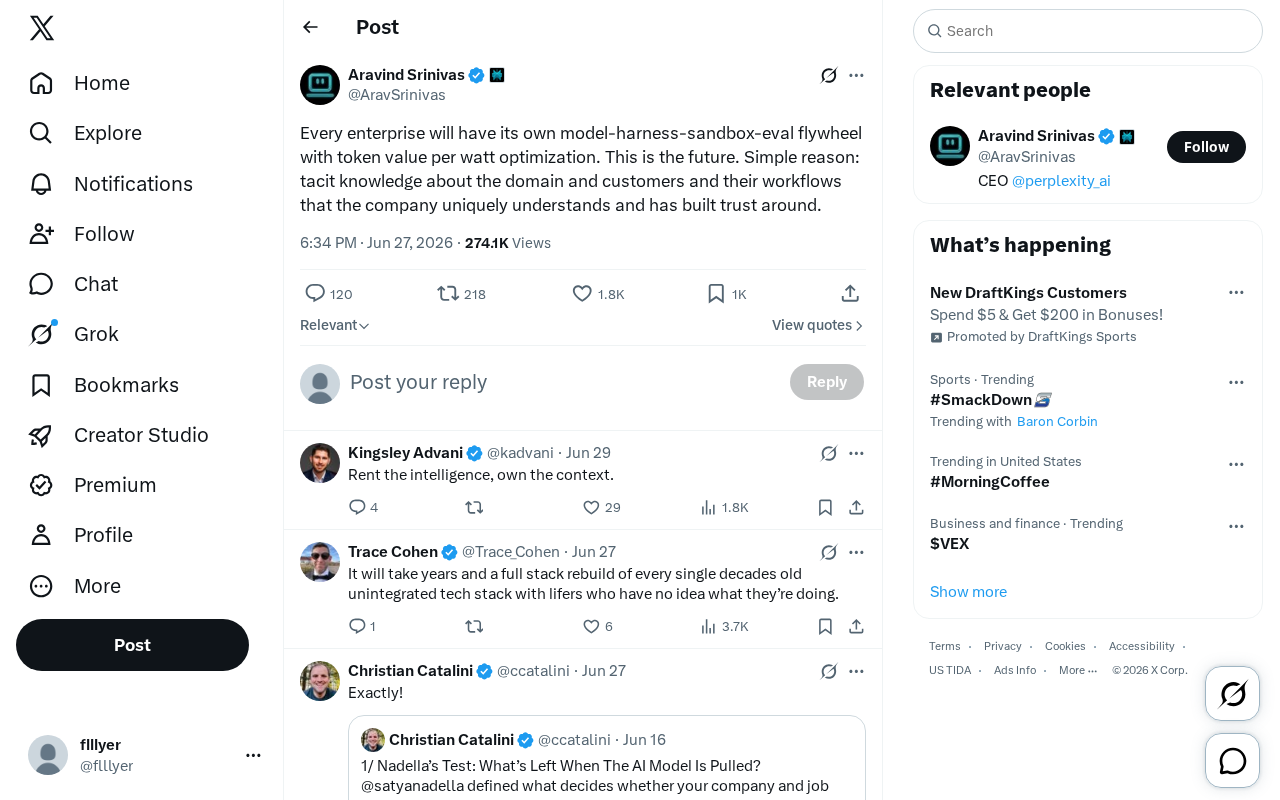
The Enterprise AI Flywheel: Building a Model-Eval Loop as a Competitive Moat
The core of enterprise AI isn't calling general models—it's building a self-reinforcing "model-harness-sandbox-eval" flywheel. This article analyzes the four components, tacit knowledge moats, and the "token value per watt" efficiency metric.
Read more →

·8 min
Free Top-Tier AI Models on Aggregator Platforms? A Sober Analysis and Pitfall Avoidance Guide
In-depth analysis of AI aggregator platforms claiming free access to GPT, DeepSeek, and Gemini. Reveals hidden data risks, business logic, and recommends legitimate alternatives like OpenRouter and Poe.
Read more →

·3 min
Is Claude Fable 5 Real? A Deep Analysis and Guide to Spotting Fake AI Products
Deep analysis of a viral Bilibili video claiming to show Claude Fable 5 — examining naming conventions, business logic, and demo effects to help users spot fake AI products.
Read more →

·2 min
GLM4 Open-Source Flagship Tested: Crushes Claude and Other Commercial Models in Frontend Development
In-depth testing of Zhipu AI's GLM4 open-source flagship model, ranked #1 on Design Arena, outperforming Claude 3.5 and Gemini in frontend development at one-sixth the cost of Claude Opus.
Read more →

·3 min
Behind SpaceX's Acquisition of Cursor: The Systemic Oxygen Deprivation of China's Deep Tech
SpaceX acquires Cursor for $60B in all-stock deal, buying the AI-era developer gateway. A deep analysis of the U.S.-China deep tech ecosystem gap and China's path to building its own flywheel.
Read more →

·4 min
OpenAI Agents SDK in Practice: Harness and Sandbox Separation Architecture Explained
Deep dive into OpenAI Agents SDK updates covering Harness-Compute separation, Codex-style orchestration, sandbox snapshots, skills system, and multi-agent collaboration with practical demos.
Read more →

·3 min
The Era of Agent-Driven Automated Research: Where Should Graduate Students Be Heading?
AI Agents are reshaping research workflows, taking over execution from experiment design to paper writing. Learn how grad students can shift from executors to decision-makers.
Read more →

·3 min
Complete RAG System Development Guide: Data Preprocessing, Vector Retrieval, and Output Optimization in Practice
A complete guide to building RAG systems: covering data preprocessing, vector databases, embedding models, hybrid search, re-ranking, and advanced topics like Graph RAG and multimodal RAG.
Read more →

·3 min
Qwythos-9B Hands-On Review: Deploying an Uncensored Open-Source Model That Inherits Claude's Reasoning Abilities
Hands-on review of Qwythos-9B, distilled from 500M+ Claude reasoning traces. Supports 1.04M token context, uncensored, runs on just 4GB VRAM. Full deployment guide included.
Read more →