#GPU
1860 related articles

·3 min
GPUStack in Action: Complete Guide to Day 0 Deployment of DeepSeek-V4-Flash
Deploy DeepSeek-V4-Flash DSpark on 8× H20-141G using GPUStack's SGLang backend on Day 0. Full walkthrough of Web UI config, parameter tuning, and 200 tokens/sec benchmark results.
Read more →

·2 min
GPU Sharing in Kubernetes Production: A Deep Dive into MIG, MPS, and Time-Slicing
A deep dive into MIG, MPS, and Time-Slicing GPU sharing solutions for Kubernetes production. Compare isolation, performance, and use cases to make the right choice.
Read more →

·3 min
GPU Rental vs. Buying: How Low-Usage Teams Should Actually Do the Math
Should low-usage teams rent or buy GPUs? Based on real billing data, we break down hardware costs, electricity, and hidden time losses to help small teams decide.
Read more →

·2 min
Womprat: Open-Source Small Aerial Target Tracking Without a GPU
Womprat is an open-source lightweight aerial target tracking tool by Punk Labs. Runs fully on CPU — no GPU or trained models required. Uses classical CV algorithms.
Read more →
·2 min
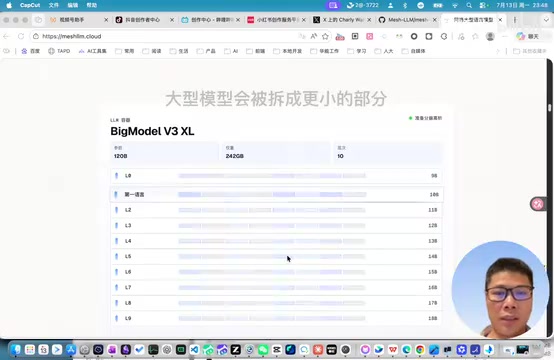
Mesh LLM: Pool Multiple Old Computers Into a Virtual Super GPU for Running Large Models
Mesh LLM is an open-source distributed inference framework that splits model layers across multiple devices, creating a virtual super GPU to run 100GB+ LLMs on consumer hardware.
Read more →
Building an eGPU for Local LLM on a $1…
·2 min
Building an eGPU for Local LLM on a $1,000 Budget: A Practical Buying and Setup Guide
Building an eGPU for local LLMs on a $1,000 budget? This guide covers GPU selection, dock costs, RTX 3090 vs 3060 value, and top tools like Ollama and llama.cpp.
Read more →

·2 min
Production LLM Deployment Guide: Model Selection, GPU Configuration, and Inference Engine Breakdown
A comprehensive decision framework for production LLM deployment: model selection (open-source vs. API), GPU VRAM configuration, and inference engine comparison including vLLM and TensorRT-LLM.
Read more →

·2 min
P2P Student GPU Sharing Network: A Full Breakdown of Technical Feasibility and Real-World Challenges
A deep dive into the technical feasibility and real-world challenges of P2P student GPU sharing networks, covering distributed computing, latency, security, and incentive design.
Read more →
The Circular Financing Trap in Nvidia'…
·4 min
The Circular Financing Trap in Nvidia's Ecosystem: The Capital Undercurrents Behind the GPU Boom
An in-depth look at the circular financing model among Nvidia, CoreWeave, and Nebius—where suppliers double as investors, capital self-reinforces, and valuation bubbles and systemic risk lurk behind the AI infrastructure boom.
Read more →

·5 min
The Five Unsolved Challenges of Production MLOps: A Deep Dive into GPU Scheduling, Fault-Tolerant Training, and Model Observability
A deep dive into the five genuinely tough challenges of production MLOps: fault-tolerant training on Spot instances, cross-team GPU scheduling, data reproducibility, model observability, and inference cost optimization.
Read more →

·3 min
SlickToken: A Deep Dive into GPU Fleet and Agentic Workflow Planning
SlickToken is a GPU fleet and agentic workflow planning tool for AI teams, supporting offline simulation, load testing, and capacity planning—no internet required to protect enterprise data.
Read more →

·3 min
DeepSeek-V4 Flash RL Training Successfully Ported to AMD MI355X GPU: A Complete Breakdown
The Miles team and AMD announce the full port of DeepSeek-V4 Flash RL training to AMD Instinct MI355X GPUs on ROCm, boosting AIME pass@1 from 0.39 to 0.49—a milestone for compute ecosystem diversity.
Read more →

·3 min
A Full-Stack Deep Dive into Terminal Technology: From Character Encoding to GPU Rendering
A comprehensive analysis of the terminal technology stack: PTY mechanisms, ANSI escape sequences, terminfo compatibility, Unicode rendering, and GPU acceleration explained.
Read more →

·4 min
INT4 ConvRot W4A4 Quantization: Running Large Image Models on Low-VRAM GPUs in ComfyUI
An in-depth look at INT4 ConvRot W4A4 quantization, covering conversions of Krea2, Qwen-Image, and other diffusion models to help ComfyUI users run large image models on 8GB GPUs.
Read more →

·7 min
Practical RL Compute Optimization: Core Strategies to Boost CPU and GPU Utilization
An in-depth look at why CPU and GPU utilization is low in RL training, covering vectorized environment parallelism, distributed Actor-Learner architectures, GPU-side simulation (Isaac Gym/Brax), and Ray RLlib practice.
Read more →

·3 min
ComfyUI-INT4-Fast: Running Flux Models Smoothly on 6GB GPUs
ComfyUI-INT4-Fast brings W4A4 quantized inference to ComfyUI. RTX 3060 (6GB VRAM) generates 1024×1024 images in 17s. Per-layer mixed-precision routing balances speed and quality for Flux models.
Read more →

·3 min
GLM-5.2 Coming Soon? Domestic GPU Code LLM MUSA Coder Goes Open Source
GLM-5.2 enters internal testing; Moore Threads open-sources MUSA Coder, China's first code LLM trained on domestic GPUs; Google backs Anthropic with $35B in guarantees.
Read more →

·5 min
TensorRT Multi-Device Inference: Engineering Practices for Breaking Through Single-GPU Memory Bottlenecks
NVIDIA TensorRT now supports multi-device inference via pipeline and tensor parallelism, distributing large models across multiple GPUs to break through single-card memory limits.
Read more →

·7 min
Reverse-Engineering CUDA-checkpoint: The Technical Principles and Practice of Cracking GPU Cold Starts
An in-depth analysis of reverse-engineering Nvidia CUDA-checkpoint to accelerate GPU cold starts. Covers checkpoint/restore, Serverless GPU prospects, and VRAM snapshot challenges.
Read more →

·7 min
Complete Guide to Training Small Models on Kaggle's Free Compute: GPU Quotas and Practical Tips
In-depth guide to Kaggle's free-tier compute: P100/T4 GPU with 30 hours/week quota, 12-hour sessions, suitable models like CNN and BERT fine-tuning, plus tips like mixed precision and checkpointing to start deep learning at zero cost.
Read more →