#LLM interoperability
183 related articles

·8 min
The Codex Orange Book: An Open-Source Full-Stack Practical Guide for AI Programming Beginners
The Codex Orange Book is an open-source unofficial guide with 2.5K+ GitHub Stars, covering installation, plugins, MCP extensions, and hands-on projects to help beginners master AI programming tools.
Read more →

·7 min
AI Agent Development: A Four-Stage Competency Model from 15K to 40K RMB Salary Growth Path
A detailed four-stage competency model for AI Agent development: from Python/RAG basics (15K) to workflow orchestration (20K), inference optimization (30K), and Agent cluster governance (40K RMB).
Read more →

·5 min
The Complete Guide to OpenCode: Installation, Configuration, and Advanced Usage
A comprehensive guide to OpenCode, the open-source AI coding tool — covering installation (desktop/WSL), model config, rules files, custom commands, MCP extensions, and Agent SQL capabilities.
Read more →

·7 min
Agent Loop Explained: The Core Runtime Mechanism and Think-Act Cycle of AI Agents
Deep dive into Agent Loop mechanics: the think-act cycle, how agents differ from LLMs, termination conditions, and design principles for building autonomous AI Agent systems.
Read more →

·8 min
MCP Server or Agent Skills? A Clear Guide to Architecture Decision-Making
MCP Server vs Agent Skills: how to choose? This article systematically outlines an AI Agent architecture decision framework across three dimensions—essential differences, applicable scenarios, and judgment criteria.
Read more →

·7 min
Cloudflare Natively Supports the x402 Protocol: How Micropayments Are Reshaping Web Monetization
Cloudflare announces native x402 HTTP payment protocol support, enabling developers to charge stablecoin micropayments for API calls without accounts or keys. Deep dive into how x402 works and its impact on AI Agent economics.
Read more →

·3 min
Gemini 3.5 Flash Automatically Generates Jet Lag Recovery Plans: A Full Walkthrough from Email to Calendar
Gemini 3.5 Flash auto-extracts flight info from Gmail, generates personalized jet lag recovery plans, and syncs them to Google Calendar. Full workflow review and AI implications.
Read more →

·4 min
7-Step Framework for Deploying Commercial AI Agents: From Requirements to Production
A detailed 7-step guide to building commercial AI Agents, covering requirements, platform selection (Coze/Dify/FastGPT), prompt engineering, databases, UI, testing, and deployment.
Read more →

·2 min
SWE-bench Multilingual: A Comprehensive Guide to the Multi-Language Programming Benchmark
A deep dive into SWE-bench Multilingual benchmark covering 9 programming languages, 300 real GitHub tasks, its design methodology, language distribution, evaluation metrics, and significance for AI coding assistants.
Read more →
·4 min
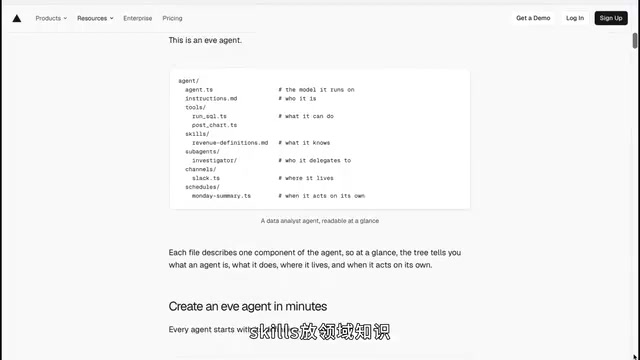
Deep Dive into Six AI Development Tools: Loop Recipe Library, Vercel Agent Framework, and More
Deep analysis of Loop workflow recipes, Vercel's open-source Agent framework, Pyker AI-native project management, Arrow P2P tool, DBX database client, and NVIDIA's Skill Spectre security tool.
Read more →

·3 min
New Book Breakdown: "Claude Code in Practice: The Way of Harness Engineering" — Master AI Programming Engineering in Ten Chapters
Deep breakdown of the new book on Claude Code engineering, covering Harness concepts, four-layer architecture, five-layer memory, sub-agents, hooks, MCP protocol, and CI/CD integration.
Read more →

·3 min
OpenAI Codex CLI Practical Guide: From Installation and Configuration to Enterprise-Level Development
A deep dive into OpenAI Codex CLI's core capabilities and practical usage, covering setup, agents.md configuration, slash commands, MCP protocol, multi-agent collaboration, and RAG system development.
Read more →

·2 min
UK Pilots AI Planning Approval System: Processing Time Expected to Be Cut by 50%
The UK government pilots an AI planning approval system with DSIT, MHCLG, and i.AI, aiming to cut housing planning processing time by 50% through automated document review and intelligent triage.
Read more →

·4 min
Spring AI vs LangChain4j: How to Choose a Java AI Framework
In-depth comparison of Spring AI and LangChain4j — two major Java AI frameworks — covering core features, completeness, ecosystem support, and usability to help Java developers make the right choice.
Read more →

·4 min
Ponytail: The Lazy Philosophy That Teaches AI to Write 90% Less Code
Deep dive into how GitHub's trending project Ponytail uses YAGNI principles, NCP protocol, and declarative scheduling to constrain AI coding assistants, cutting 90% of redundant code.
Read more →

·3 min
Building a WeChat Mini Program with Zero Code: A 3-Day Hands-On Journey with Codex + Antigravity
A developer used OpenAI Codex and Antigravity to build and launch a WeChat Mini Program in 3 days with zero code. Full breakdown of the AI recipe app's design, tool workflow, and development process.
Read more →

·3 min
Complete Guide to LangChain 0.3: Module Architecture & Core Development in Practice
A deep dive into LangChain 0.3's module architecture, message abstraction, prompt templates, output parsers, LCEL chains, LangSmith tracing, and LangGraph for mastering LLM application development.
Read more →

·4 min
Claude Code Codex Plugin Integration: A Practical Guide to Dual-AI Adversarial Review for Better Code Quality
Learn how to install and configure the Codex plugin in Claude Code, leveraging dual-AI adversarial review to uncover code vulnerabilities across seven attack surfaces.
Read more →

·4 min
Complete Guide to Commercial AI Agent Development: From Requirements Analysis to Production Deployment
Complete guide to commercial AI agent development from scratch, covering requirements analysis, architecture design (ReAct framework, deep search, intent recognition), hands-on Coze platform implementation, workflow creation, and production deployment.
Read more →

·3 min
Hands-On with Tencent Cloud ADP 4.0: How an Enterprise-Grade Agent Development Platform Tackles the Agent Commercialization Challenge
Hands-on review of Tencent Cloud ADP 4.0: testing its full-lifecycle Agent management — from rapid creation and enterprise integration to automated evaluation and Skill governance for real-world deployment.
Read more →