#LLM trading agent
112 related articles

·6 min
10 Billion Tokens in Practice: An In-Depth Review of Codex's Long-Horizon Engineering Capabilities
Creator Ajiang burned 10B Tokens on Codex to migrate cc-haha from Tauri 2 to Electron. A deep dive into Codex's long-horizon engineering, Computer Use, costs, and practical advice for developers.
Read more →

·7 min
Andrew Ng Teams Up with LangChain: Core Principles of LangGraph Agent Development
Andrew Ng and LangChain CEO Harrison Chase present AI Agents in LangGraph, covering five core agent design patterns and LangGraph's graph-based framework for building cyclical agentic workflows.
Read more →
·7 min
Andrew Ng Teams Up with LangChain: Core Concepts of LangGraph Agent Development
Andrew Ng and LangChain CEO Harrison Chase's AI Agents in LangGraph course covers five agent design patterns and LangGraph's graph-based framework for building cyclical AI workflows.
Read more →

·6 min
herder: A Terminal Multiplexer for Multiple Coding Agents — Say Goodbye to Session Management Chaos
herder is a terminal multiplexer for coding agents like Claude Code and Codex, combining tmux power with mouse support, agent state awareness, and session persistence for efficient multi-agent workflows.
Read more →

·4 min
How Can Programmers Survive and Thrive in the Age of AI? A Deep Dive and Action Guide
AI is reshaping the programmer job market: junior roles are disappearing while senior architects grow more valuable. This guide breaks down AI's impact on knowledge workers and outlines three transformation paths for programmers.
Read more →

·3 min
The Interview Game in the AI Era: Where Does Human Expertise Still Matter?
From CSS-trap interview questions to 30K-line code patches, explore where human expertise truly matters in the Agent Coding era — and why AI raises the bar, not lowers it.
Read more →

·4 min
Tencent Marvis Hands-On: How Multi-Agent AI Takes Over Your Computer
Deep dive into Tencent's Marvis AI agent: multi-agent architecture, intelligent file organization, document analysis, cross-device sync, and local privacy mode explained.
Read more →

·7 min
App Builder: Generate Runnable Applications from a Single Sentence — A New Paradigm in AI Programming Tools
App Builder generates single-file runnable apps from natural language, with real-time sandbox preview and conversational revision. Deep analysis of its workflow, architecture, limitations, and costs.
Read more →

·7 min
AI Agent Memory Layer Comparison: Mem0, Zep, Letta, and Cloudflare — Four Major Solutions Evaluated
In-depth comparison of four AI agent memory layer solutions: Mem0's extract-retrieve approach, Zep's temporal knowledge graphs, Letta's self-editing memory, and Cloudflare Durable Objects as infrastructure primitives.
Read more →
Is Claude Sonnet 5 Worth Upgrading To?…
·3 min
Is Claude Sonnet 5 Worth Upgrading To? A Developer's Guide to Performance vs. Cost
Claude Sonnet 5 approaches Opus-level performance, but a new tokenizer increases token usage by ~30%. This guide helps developers rationally evaluate the upgrade.
Read more →
Perplexity Integrates Forge Private Ma…
·3 min
Perplexity Integrates Forge Private Market Data, Accelerating Push into Professional Financial Research
Perplexity integrates Forge Global private market data into Perplexity Computer, enabling direct queries on pre-IPO valuations. A deep dive into the strategy, data moat logic, and AI's push into professional financial research.
Read more →

·3 min
GitHub Daily · July 3: AI Penetration Testing Tops the Charts, Claude Code Ecosystem in Full Bloom
GitHub Trending July 3: AI pen testing tool strix tops the chart, Claude Code ecosystem explodes with Skills, Agents, and plugins reshaping development.
Read more →

·4 min
Four Core Strategies for Building Effective Claude Code Agents
Master Claude Code agents with four core strategies: planning, verification, context management, and system evolution. Move beyond Vibe Coding to systematic AI development.
Read more →

·3 min
Loop Engineering Explained: An Engineering Approach to Making AI Coding Agents Run Autonomously in Loops
A deep dive into Loop Engineering and the Rhythmic framework: how closed-loop systems replace repetitive prompting to enable autonomous AI coding agents with state management and budget control.
Read more →

·3 min
Codex vs Claude Code in Practice: A Complete Guide to AI-Engineered Programming for Enterprise Projects
In-depth comparison of Codex and Claude Code for enterprise AI development, covering Vibe Coding limitations, multi-Agent workflows, OpenRouter platform architecture, and programmer learning paths.
Read more →

·4 min
Loop Engineering from Beginner to Expert: A Complete Guide to Agent Loop Development
A deep dive into Loop Engineering covering Agent Loop workflows, code implementation (While loops and Graph patterns), and how it differs from Prompt Engineering.
Read more →

·2 min
Claude Code Workflow in Practice: Hundreds of Agents Automatically Migrating PHP to Golang
Deep dive into Claude Code Workflow's multi-Agent auto-orchestration: a real-world PHP to Golang migration running 14 hours with 100+ Agents, covering planning, execution, and Token cost analysis.
Read more →
·3 min
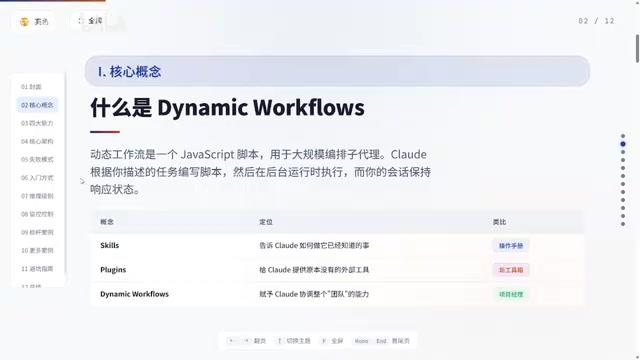
Claude Code Dynamic Workflows: Orchestrating Hundreds of Sub-Agents Working in Parallel
Deep dive into Claude Code Dynamic Workflows: enable parallel sub-agent orchestration via three methods for multi-agent collaboration and automated pipelines.
Read more →

·3 min
The Ultimate Guide to Squeezing Every Drop from Mythos/Fable: Burning Through $8,000 in Inference Credits in 10 Days
Deep dive into maximizing Anthropic's Fable/Mythos model: 5-hour limit workarounds, dual account rotation, multi-Agent orchestration, and Mac Mini remote deployment to get $8,000 of inference from a $200 subscription.
Read more →

·3 min
A $10 Million Research Fund Launches: What Happens When Millions of AI Agents Interact with Each Other?
Google.org and Schmidt Sciences launch a $10M fund to study collective behavior and emergent risks of multi-agent AI systems, from flash crashes to mass AI Agent deployment.
Read more →