#Manus
79 related articles

·7 min
Andrew Ng Teams Up with LangChain: Core Concepts of LangGraph Agent Development
Andrew Ng and LangChain CEO Harrison Chase's AI Agents in LangGraph course covers five agent design patterns and LangGraph's graph-based framework for building cyclical AI workflows.
Read more →

·2 min
Files as Memory: How to Finally Cure AI Coding Agents of Context Amnesia
AI coding agents suffering from context amnesia? The planning-with-files project uses Markdown file persistence to enable cross-session task continuity, compatible with 60+ tools including Claude Code and Cursor. 24K+ Stars.
Read more →

·3 min
GitHub Daily · July 6: The Agent Skill Ecosystem Explodes — AI Evolves from 'Capable' to 'Expert'
GitHub Trending July 6: Agent skill ecosystem explodes with taste-skill, marketingskills, dotnet/skills; multi-Agent orchestration matures; privacy-first projects thrive.
Read more →

·3 min
Light-Skills: Open-Source Research AI with 28 Skill Modules Covering the Full Workflow
Light-Skills is an MIT-licensed open-source research AI with 28 interconnected Skills, 9 knowledge bases, 317 knowledge cards, and 49 scripts covering the full research workflow — with a hard rule against fabricating citations or data.
Read more →

·2 min
No-Install Enterprise Agent: A New Approach to AI Workflow Automation and Core Capability Breakdown
A no-install AI Agent with hundreds of enterprise skills is emerging, enabling automatic multi-skill orchestration for complex workflows. Here's a deep breakdown of its three core advantages and key evaluation dimensions for enterprise adoption.
Read more →

·3 min
Building AI Agents from Scratch: LangGraph Architecture and Practical Guide
A deep dive into AI agent principles and development practices, covering agent definitions, leading products (Deep Research, ChengPian, Manus), and the complete LangGraph + LangChain + MCP architecture.
Read more →

·4 min
Three Modes of AI Development: A Complete Guide from Chat to Agent to IDE
A systematic guide to three AI development modes: chat-based, Agent, and AI IDE. Covers model selection, cost comparison, and use cases for beginners.
Read more →

·2 min
LifeSciBench: A Life Science AI Benchmark Built by 173 Scientists
LifeSciBench is a life science AI benchmark developed by 173 biotech and pharma scientists, featuring 750 expert tasks across seven research workflows.
Read more →

·3 min
Codex in Action: One Prompt, 47 Minutes, a Complete Algorithm Research Paper
Testing OpenAI Codex: one detailed prompt generates a complete algorithm paper in 47 minutes, including working code, figures, and LaTeX manuscript. Covers prompt design, quality assessment, and real submission experience.
Read more →
·3 min
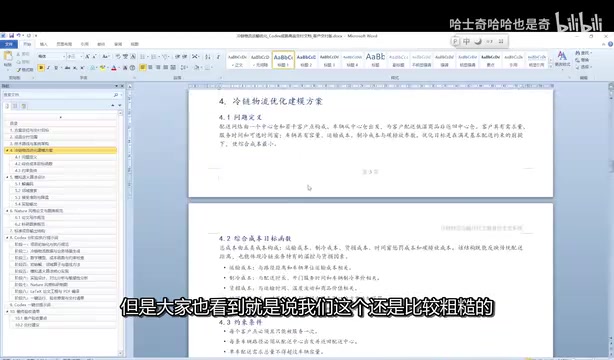
Building a Cold Chain Logistics Optimization Research Project with Codex: A Complete Workflow from Scratch to PDF Paper
Learn how to use OpenAI Codex to build a complete cold chain logistics optimization research project from scratch, including simulated annealing implementation, experiments, figures, and LaTeX paper compilation.
Read more →

·4 min
Nex-N2 Pro In-Depth Review: Impressive Code Generation, But How Inflated Are the Benchmarks?
In-depth review of open-source agent model Nex-N2 Pro: testing code generation, SVG output, and game dev capabilities while analyzing benchmark inflation, GPT distillation traces, and speed issues.
Read more →

·4 min
AI Agent in Practice: Building a Commercial-Grade Programming Agent from Scratch
A deep dive into AI Agent development, from the core principles of perception-decision-action to a Vue3 auto-creation demo, covering LangChain, LangGraph, MCP, and the full tech stack.
Read more →

·2 min
AI Agent Full-Stack Development: Architecture Principles and Production-Grade Project Implementation Guide
A comprehensive guide to AI Agent full-stack development covering LangChain, LangGraph, MCP protocol, and LLM deployment, with a hands-on Vue3 project demo showcasing the perception-decision-action loop.
Read more →

·1 min
Pi Agent: When Every AI Coding Framework Is Adding More, It Chose to Subtract
Deep dive into Pi Agent's minimalist design: no sub-agents, no MCP, no background tasks—yet its self-extending Harness makes it ideal for building AI coding products.
Read more →

·4 min
The Real Logic of Getting Rich with AI: Toolbox Thinking and the Three-Layer Capability Model
Mastering AI tools doesn't equal making money. This article breaks down the three-layer AI wealth model: LLM prompting, automation workflows, and agent collaboration, plus the MAPS framework and Three R's Rule.
Read more →

·2 min
Claude Code Dynamic Workflows: A Complete Guide to Six Patterns and Ten Scenarios
Deep dive into Claude Code's dynamic workflow mechanism covering Agent, Parallel, and Pipeline functions, six orchestration patterns, and ten real-world scenarios with cost control tips.
Read more →

·2 min
The Five-Layer Evolution of Scaling Law: How Physical AI Opens the Next Growth Curve
Deep analysis of Scaling Law's five-layer evolution from Pre-Training to Multi-Agent, exploring Physical AI's World Models, edge inference, and emotional interaction.
Read more →
 Tutorials
·3 min
ReAct vs. CodeAct: Two Core Approaches to Agent Tool Calling
In-depth comparison of ReAct and CodeAct — two core Agent tool-calling architectures. From paper principles to code implementation, learn the trade-offs between reasoning+action and code execution.
Read more →
 Product Reviews
·2 min
11 Best AI Agent Tools Explained: From Office Work to Coding with a Single Command
In-depth review of 11 AI Agent tools including ChatGPT Agent, Manus, and Claude Code, covering office work, academic writing, coding, and video creation scenarios.
Read more →
 Tutorials
·4 min
Fengxing Story AI Novel Expansion Suite: Installation, Configuration & Seven-Stage Creative Writing Tutorial
Complete guide to Fengxing Story AI novel expansion suite: installation, model API configuration, and seven-stage automated creative workflow from synopsis to full-length text.
Read more →