#MeMo AI Agent
2479 related articles

·2 min
Memmy Agent: A Cross-Platform AI Memory Sharing Tool and Local-First Personal Memory Hub
Memmy Agent is a local-first, open-source AI memory hub enabling cross-platform memory sharing across Claude Code, Codex, and more. Free 2M token tier included.
Read more →

·2 min
Memmy Agent: Cross-Platform AI Memory Sharing Tool, A Local-First Personal Memory Hub
Memmy Agent is a local-first open-source AI memory hub enabling cross-platform memory sharing across Claude Code, Codex, and more. Free 2M tokens included.
Read more →

·4 min
FlowTask 2.0: Building a Unified Enterprise Memory Layer for AI Agents
FlowTask 2.0 proposes a "Company Brain" that unifies data from Email, Slack, WhatsApp and more to provide real-time enterprise context for AI Agents, reducing repetitive context-feeding costs.
Read more →

·2 min
Peekinduck: Dual AI Voice Agents with Shared Memory Bridging the Entire B2B Customer Journey
Peekinduck uses two AI voice agents—Demo Duck and Guide Goose—sharing customer memory to unify pre-sales demos, onboarding, and post-sales support for B2B SaaS teams.
Read more →

·4 min
AI Agent Memory Systems: Genuine Technical Progress or RAG in Disguise?
In-depth analysis of AI agent memory systems: examining whether current improvements represent real progress or just RAG repackaged, and what architectural changes are truly needed.
Read more →

·7 min
Enterprise AI Agent Security Isolation and Memory Design: NanoClaw Founder Breaks Down Real-World Lessons
NanoClaw founder David Boyd breaks down the core engineering of enterprise autonomous Agents: a triple security isolation model, LLM Wiki memory design, and the real-world path from personal Agents to team-scale deployment.
Read more →
Cognee: The Open-Source Knowledge Grap…
·2 min
Cognee: The Open-Source Knowledge Graph Engine for Persistent AI Agent Memory
Cognee is an open-source AI memory platform using knowledge graphs to give AI agents persistent cross-session memory. Self-hosted, graph + vector hybrid retrieval. 28K+ GitHub stars.
Read more →
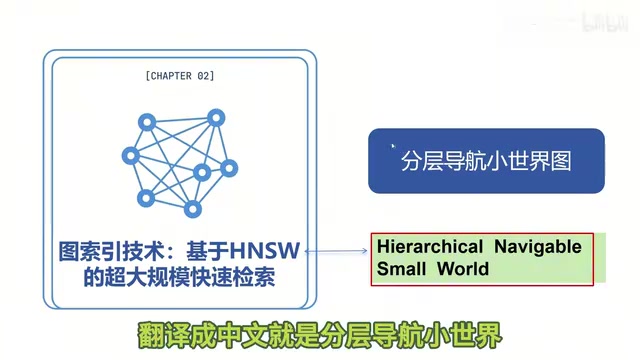
·5 min
A Deep Dive into Vector Search for AI Agents: The Technical Foundations of RAG and Long-Term Memory
An in-depth look at the core tech behind AI Agents: how the HNSW, IVF, and PQ vector search algorithms power RAG and long-term memory. Understand where a model's "memory" and "knowledge" come from.
Read more →
AI Coding Agents Have Amnesia — An Ope…
·2 min
AI Coding Agents Have Amnesia — An Open-Source SSH-Synced Memory System Wants to Fix That
Tired of AI coding agents forgetting everything? Explore an open-source SSH-synced memory system that lets Cursor, Claude Code, and other agents retain project context across sessions and devices — no cloud required.
Read more →

·2 min
A Guide to Selecting AI Agent Memory Strategies: A Deep Dive into the Decision-Tree Methodology
How do you choose the right memory strategy for an AI agent? This article uses a decision-tree methodology to analyze the use cases and trade-offs of short-term memory, vector retrieval, and structured summaries.
Read more →

·4 min
Tencent Open-Sources Agent Memory: A Fully Local AI Long-Term Memory Solution with Zero External Dependencies
Tencent Cloud open-sources TencentDB Agent Memory — a fully local AI Agent memory system with a 4-tier progressive pipeline, zero external API dependencies, and 8,100+ GitHub Stars. Ideal for finance, healthcare, and privacy-sensitive use cases.
Read more →

·4 min
Building an AI Agent Framework from Scratch: Deep Dive into Tool Calling, Memory, and Dual-Model Scheduling
Build an AI Agent from scratch — no frameworks. Deep dive into Function Call schema design, MCP remote mirroring, dual-model routing, and short-term memory management.
Read more →

·2 min
Files as Memory: How to Finally Cure AI Coding Agents of Context Amnesia
AI coding agents suffering from context amnesia? The planning-with-files project uses Markdown file persistence to enable cross-session task continuity, compatible with 60+ tools including Claude Code and Cursor. 24K+ Stars.
Read more →

·7 min
AI Agent Memory Layer Comparison: Mem0, Zep, Letta, and Cloudflare — Four Major Solutions Evaluated
In-depth comparison of four AI agent memory layer solutions: Mem0's extract-retrieve approach, Zep's temporal knowledge graphs, Letta's self-editing memory, and Cloudflare Durable Objects as infrastructure primitives.
Read more →

·4 min
AI Agent Memory System Architecture Breakdown: A Practical Selection Guide from 16 Open-Source Projects
Deep analysis of memory system architectures across 16 open-source AI Agent projects including Hermes, Goose, NanoClaw, and Deerflow, covering FTS5 vs vector search, multi-tenant isolation, and LLM auto-extraction.
Read more →
 Tech Frontiers
·4 min
Claude Slack Agent Upgrade: Multiplayer Collaboration, Proactive Responses, and Persistent Memory Explained
Anthropic upgrades Claude's Slack integration with multiplayer collaboration, proactive responses, and persistent memory — transforming AI from a passive tool into a true team partner.
Read more →

·3 min
AI Agent Tutorial Collection: Complete Coverage of Multi-Agent, Memory, and Reasoning
Open-source AI Agent tutorial project with 2600+ GitHub Stars covering multi-agent systems, memory, planning, and reasoning loops via Jupyter Notebooks for hands-on learning.
Read more →

·4 min
AI Agent Core Architecture Explained: A Deep Dive into the Four Key Modules — Perception, Brain, Action, and Memory
Deep dive into AI Agent architecture: explore the four core modules — Perception, Brain, Action, and Memory — covering RAG, tool calling, Chain of Thought, and more.
Read more →

·4 min
AI Agent Global Variable Pool & Memory Mechanisms: A Practical Guide to Workflow Node Data Passing
Deep dive into global variable pool design for AI Agent development, covering three memory types, variable scoping, node execution architecture, and placeholder variable replacement workflows.
Read more →

·2 min
Cosmos Unified Agents Platform: A New Paradigm for AI Agent Collaboration Through Shared Context and Memory
Deep dive into how the Cosmos Unified Agents Platform solves multi-AI Agent collaboration challenges through shared context and memory mechanisms, and its positioning in enterprise multi-Agent orchestration.
Read more →