#Notion MCP
85 related articles

·6 min
AI Agent Development in Go: A Hands-On Guide to ByteDance's Eino Framework and Its Seven Core Capabilities
Build production-grade AI Agents with a pure Go stack using ByteDance's Eino framework. A deep dive into seven core capabilities: multi-Agent orchestration, long-task execution, command approval, RAG, MCP, Skills, and database reporting.
Read more →

·7 min
Base44 in Practice: How Claude Code Powered Rapid Scaling from 1 to 80 People
How Base44's product team scaled from a single founding engineer to an 80-person team with Claude Code. Covers AI-assisted onboarding, code review, user evaluation, and QA automation.
Read more →

·7 min
Sakana Fugu vs GLM 5.2 Hands-On Test: Who Can Truly Challenge Top-Tier AI Models?
A head-to-head hands-on test of Sakana Fugu vs GLM 5.2 based on real Hermes agent workflows. Covering tool calling, frontend generation, and code improvement to reveal each model's true performance, speed, and value.
Read more →

·6 min
Skill vs MCP: The Essential Difference Between Two Types of AI Agent Capabilities and How They Work Together
Skill and MCP are two core concepts for building AI Agents. Skill encapsulates task execution methodology, while MCP provides a standardized protocol for connecting external tools. This article breaks down their core differences, abstraction levels, and collaboration.
Read more →

·7 min
Rowboat: An Open-Source, Local-First Alternative to Claude Desktop
Rowboat is an open-source, local-first AI desktop client positioned as a Claude Desktop alternative. Local data storage and fully transparent code help developers control privacy and workflows.
Read more →

·4 min
Why Is Skill Breaking Out of Software Development? Uncovering the Underlying Structure of Knowledge Work
Skill isn't just for programmers — it's crossing industry lines to become the operational foundation for entire organizations. This article unpacks the three cores of knowledge work, explores legal, research, and finance use cases, and examines how a Skill Library becomes a core enterprise AI asset.
Read more →

·4 min
Complete Beginner's Guide to Claude Code in 19 Minutes
A complete beginner's guide to Claude Code covering setup, Plan Mode, CLAUDE.md project memory, MCP connectors, Skills, Plugins, and deploying via GitHub and Vercel.
Read more →

·4 min
Cursor's Three Major Announcements: Mobile App, Git Platform, and In-House Frontier Model
Cursor unveils three major updates: Cursor Mobile, Origin platform challenging GitHub, and a frontier in-house LLM trained from scratch. A deep dive into Cursor's strategy.
Read more →

·3 min
Claude Code Skills and MCP Resources: A Complete Guide from Beginner to Expert
A comprehensive guide to Claude Code Skills and MCP resources, covering international platforms like Skills.mp and Smithery plus Chinese alternatives, with a quick selection guide to boost AI coding productivity.
Read more →

·4 min
The Complete Beginner's Guide to Claude Code: Build and Deploy Apps with Zero Programming Experience
A complete guide to Claude Code from setup to deployment, covering Plan Mode, MCP connectors, reusable skills, CLAUDE.md project memory, and Vercel deployment — no coding experience needed.
Read more →

·3 min
Claude Code vs Traditional AI Chat: An In-Depth Comparison Across Five Key Dimensions
Compare Claude Code and traditional AI chat tools like ChatGPT across five dimensions: interaction, context, execution, memory, and tool integration.
Read more →

·4 min
Complete Guide to Commercial AI Agent Development: From Requirements Analysis to Production Deployment
Complete guide to commercial AI agent development from scratch, covering requirements analysis, architecture design (ReAct framework, deep search, intent recognition), hands-on Coze platform implementation, workflow creation, and production deployment.
Read more →

·4 min
The Complete Guide to Claude Desktop: 15 Core Features & 9 Money-Saving Tips
Deep dive into Claude Desktop's Chat, Cowork & Code modes, Skill system setup, 8 automation workflow examples, and 9 practical tips to dramatically save Tokens.
Read more →

·2 min
Claude Code vs Regular AI Chat: An In-Depth Comparison Across Five Dimensions
A deep comparison of Claude Code vs regular AI chat across five dimensions: interaction, context understanding, execution, memory, and tool invocation.
Read more →

·3 min
In-Depth Review of Alibaba's Qoder CN: Is This AI Coding Agent with a Free First Month Worth Using?
In-depth review of Alibaba's Qoder CN AI coding agent, covering features, expert suites, WeChat/DingTalk connectors, and hands-on programming tests.
Read more →

·3 min
OpenAI Codex Deep Dive: How AI Coding Agents Are Reshaping the Entire Software Development Lifecycle
Deep dive into OpenAI Codex's core capabilities and real-world applications, covering automated coding, compliance reviews, and security detection — revealing how AI coding agents boost team efficiency by 50%.
Read more →
·3 min
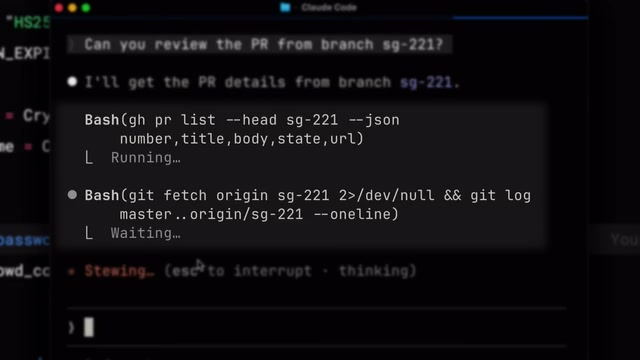
Complete Guide to MCP Protocol in Claude Code: Configuration, Management, and Context Optimization
Complete guide to MCP protocol in Claude Code: adding servers, configuring three scope levels, and optimizing context windows to efficiently connect external tools and data sources.
Read more →

·4 min
Agent Development Learning Roadmap: A Four-Stage Systematic Guide from Beginner to Practitioner
A systematic four-stage learning roadmap for AI Agent development, covering core concepts, classic paradigms like ReAct, multi-agent collaboration frameworks, and hands-on projects to master Agent development skills in 2-3 months.
Read more →

·3 min
OpenAI Codex App In-Depth Review: Streets Parallel Development and Five Core Features Explained
In-depth review of OpenAI Codex App's five core features: Streets parallel development, deep Git integration, Skills system, Automation tasks, and MCP support.
Read more →

·2 min
Claude Code: The Ultimate Beginner's Guide — A Deep Dive into the Open-Source Project That Hit 33K Stars in 3 Days
Deep dive into the viral Claude Code manual on GitHub (33K+ Stars): slash commands, memory system, MCP protocol, Hooks plugins, and how to build a full AI dev team.
Read more →