#Peek app
22 related articles

·3 min
Qwen3-Max Arrives on Venice: A New Privacy-First Option for Anonymous AI Interactions
Qwen3-Max joins the Venice privacy AI platform, enabling anonymous access to Alibaba's flagship LLM without registration. Learn about Venice's features, Qwen3-Max capabilities, and anonymous AI usage.
Read more →

·3 min
Abstract Data Types (ADT): Why They Are the Bedrock of Software Design
A deep dive into Abstract Data Types (ADT) and how separating interface from implementation manages software complexity and improves maintainability—a timeless design principle every engineer should master early.
Read more →

·4 min
17M-Parameter Transformer for Blood Glucose Prediction: Open-Source Diabetes AI Model Explained
An open-source blood glucose prediction model using BERT-style Transformer architecture with only 17M parameters, running on mobile devices with DILATE and Pinball loss for 2-hour glucose forecasting.
Read more →

·3 min
Reproducing GPT-2: How a Hidden Bug Affected Weight Training
An in-depth analysis of a hidden bug discovered while reproducing GPT-2 from scratch, revealing how implementation errors silently degrade weight quality and sharing practical debugging methodologies.
Read more →

·2 min
Rivault: A Zero-Knowledge Security Solution That Locks AI Agent Data Access Behind Face ID
Rivault provides per-request authorization for AI agent data access through zero-knowledge vault storage and Face ID biometric verification. An in-depth look at its architecture and privacy value.
Read more →

·2 min
Peekinduck: Dual AI Voice Agents with Shared Memory Bridging the Entire B2B Customer Journey
Peekinduck uses two AI voice agents—Demo Duck and Guide Goose—sharing customer memory to unify pre-sales demos, onboarding, and post-sales support for B2B SaaS teams.
Read more →

·3 min
Can ChatGPT Read Unsent Text? The Technical Truth and Privacy Implications
A Reddit user claimed ChatGPT read their unsent input, sparking privacy fears. This article explains the technical architecture behind LLMs, revealing why AI appears to "read minds" through pattern matching, hallucination, and statistical inference.
Read more →

·3 min
Peek: An Open-Source Android Tool for Viewing Instagram and Other Social Media Links Without Logging In
Peek is an open-source Android app that lets users view Instagram Reels, posts, and other social media links without logging in, bypassing login walls and pop-up interruptions.
Read more →

·3 min
Modern Web Guidance: Getting AI to Generate Better Front-End Code
Google Developer Expert Raudy shares Modern Web Guidance at Google I/O Connect Berlin: a framework steering AI coding assistants to use native HTML/CSS over outdated JavaScript patterns.
Read more →

·2 min
Grok 4.5 vs Composer 2.5: Real-World Code Benchmark — Who Wins?
A developer benchmarked Grok 4.5 High vs Composer 2.5 on real Terraform/AWS bug fixes. Composer 2.5 won decisively — even beating the pricier GPT-5.6 Sol.
Read more →

·2 min
GPT-5.6 Soul In-Depth Review: Can Multi-Agent Programming Mode Reshape the AI Development Tools Landscape?
GPT-5.6 Soul review: Super Mode hits 91.9% on TerminalBench. We break down multi-agent scheduling, benchmark controversies, and real-world dev tool comparisons.
Read more →
Codex Encrypts Sub-Agent Prompts: The …
·2 min
Codex Encrypts Sub-Agent Prompts: The AI Black-Box Trend and What Developers Should Do
OpenAI Codex is encrypting sub-agent prompts, sparking debate about AI transparency. We analyze the motivations, community concerns, and strategies for developers navigating the black-box trend.
Read more →

·5 min
From CNN to Transformer: How AI Evolved to Understand Human Language
From CNN and RNN to Transformer, a complete breakdown of the core evolution of AI natural language processing. Understand attention, BERT vs. GPT, and the architecture behind large models.
Read more →

·4 min
GSAP in Practice: Build Stunning Landing Page Animations from Scratch
Master GSAP animations in practice: ScrollTrigger, SplitText, Timeline orchestration, and frame-rate-consistent infinite scroll — with full code examples. Now completely free.
Read more →

·7 min
Google's $250K Bounty: Linux VM Escape Vulnerability Sets a Historic Record
Google paid a security researcher $250K for a Linux kernel VM escape vulnerability, setting a VRP record. An in-depth analysis of VM escape principles, kCTF incentives, and cloud security impact.
Read more →

·5 min
DeepSeek Boosts Inference Speed by 85%: How Speculative Decoding Is Reshaping the AI Speed Race
DeepSeek and Peking University's DS Spark paper boosts AI inference speed by up to 85% via confidence scheduling and semi-autoregressive speculative decoding — no model or GPU changes.
Read more →

·3 min
GitHub Daily · July 10: The Agent Skills Ecosystem Explodes — AI Coding Enters the 'Skills Library' Era
July 10 GitHub Daily: The Agent Skills ecosystem explodes as over half of trending projects revolve around AI coding Agent skill libraries, with MCP as the standard interface.
Read more →

·6 min
Hardware-Level AI Security: How Confidential Computing Achieves Both Performance and Protection
Explore how hardware-level AI security and Confidential Computing protect model weights, training data, and inference processes, building trusted execution environments without performance loss.
Read more →
·3 min
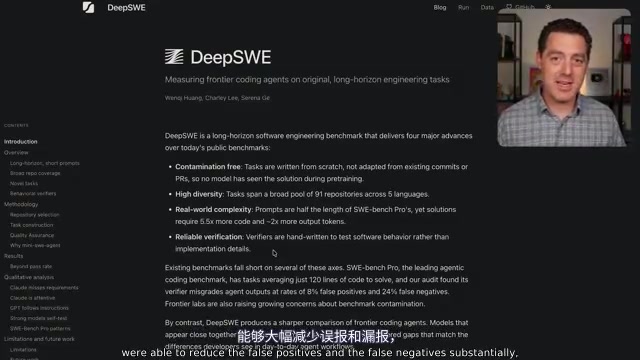
DeepSWE Benchmark Reveals the Truth: GPT 5.5 Leads Opus 4.7 by a Wide Margin
DeepSWE long-horizon benchmark shows GPT 5.5 leads Opus 4.7 by 15+ points with 70% pass rate at one-third the cost. Deep dive into contamination-free testing and AI coding implications.
Read more →
 Tech Frontiers
·3 min
Hackers Spying Through a Million Baby Monitors: A Complete Guide to Smart Camera Security Vulnerabilities
Over a million baby monitors and home cameras have critical security flaws letting hackers spy on families. A deep dive into IoT vulnerabilities with practical protection tips.
Read more →