#RAG recall optimization
264 related articles

·4 min
Self-Study Guide to AI Agent Development: A Complete Path from Zero to Production
A practical self-study roadmap for AI Agent development: covering core skills, common pitfalls, phased learning plans, and interview prep to help developers go from concept collectors to builders.
Read more →

·3 min
LangChain from Beginner to Agent Development: A Complete Learning Path for LLM Application Development
A systematic guide to LangChain LLM application development, covering environment setup, core components (RAG, Chain, Memory), and Agent development to help developers master LLM app building.
Read more →
 Tutorials
·3 min
From Traditional RAG to Agentic RAG: Core Principles and Implementation Guide
Deep dive into the technical differences between traditional RAG and Agentic RAG, covering offline/online pipeline principles, tool-based autonomous decision mechanisms, and a LangGraph-based Agentic RAG implementation via the ChatBox open-source project.
Read more →
 Tutorials
·3 min
Enterprise RAG Project in Practice: A Complete Guide from Principles to Deployment
Complete guide to enterprise RAG projects covering principles, LangChain implementation, data processing, retrieval optimization, evaluation, and cloud deployment for AI knowledge base applications.
Read more →
 Tutorials
·3 min
Building a Vocabulary App with Claude Using Zero Code: From Requirements Description to Deployment
A non-programmer built a vocabulary app with human-like pronunciation, verb conjugation lookup, and SM2 spaced repetition by conversing with Claude AI—zero coding required.
Read more →
 Product Reviews
·2 min
GPT-5.5 vs DeepSeek-V4: Who Wins in a Four-Round Head-to-Head Test?
GPT-5.5 vs DeepSeek-V4 in four comprehensive rounds covering world knowledge, context memory, logical reasoning, and coding — a detailed comparison of real performance differences.
Read more →
 Tutorials
·3 min
DeepSeek Novel Writing Pitfall Guide: A Practical Tutorial for Beginners to Get Published
A guide to avoiding common pitfalls when using DeepSeek for web novel writing: from market research and structured prompts to contract approval techniques for platforms like Tomato Novel.
Read more →
 Deep Dives
·2 min
RAG System End-to-End Breakdown: From Vector Indexing to Production Optimization
A deep dive into the complete RAG pipeline — covering vector embeddings, document chunking, retrieval and reranking, plus three production optimization techniques for building accurate enterprise AI knowledge base applications.
Read more →
 Tutorials
·2 min
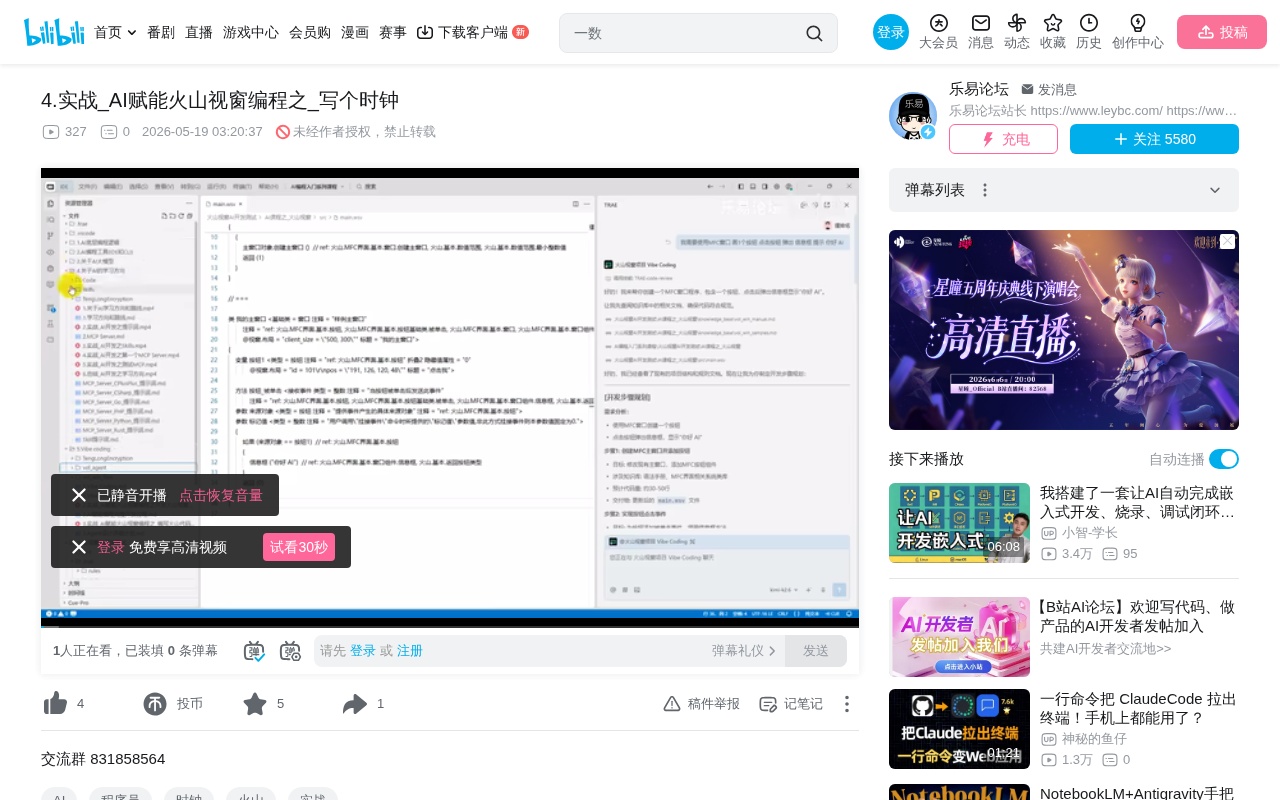
Building a Custom AI Agent to Automatically Write a Clock Program: AI-Powered Desktop App Development in Practice
A custom AI agent automatically writes a circular clock desktop program on the Volcano Visual platform, covering requirements analysis, code generation, self-inspection, and iterative bug fixing.
Read more →
 Tutorials
·3 min
Nature Skills: A Complete Guide to Automating Academic Paper Workflows with Claude Code
Deep dive into the open-source Nature Skills project by a Shanghai Jiao Tong University PhD, automating 7 academic paper workflows via Claude Code's Skills mechanism with 9 Skill writing patterns.
Read more →
 Industry Insights
·4 min
Deep Dive into Claude Code's Open-Source Architecture: Six Core Design Principles and Engineering Practices Revealed
Deep analysis of Claude Code's open-source architecture: six core design principles including dual-loop mechanism, seven-step tool pipeline, four-layer token compression, multi-agent collaboration, and memory systems.
Read more →
 Tutorials
·3 min
Learn AI Agents in 30 Days: A Four-Stage Learning Roadmap from Zero to Production
A systematic breakdown of the AI Agent learning roadmap covering core architecture, ReAct/CoT paradigms, multi-agent collaboration, and Prompt optimization across four stages with quality resource recommendations.
Read more →
 Research
·3 min
MementoGUI: A Multimodal Memory Management Framework for Solving Long-Horizon GUI Agent Amnesia
MementoGUI is a plugin-style multimodal memory management framework that solves GUI agent forgetting in long-horizon tasks through dual time-scale memory and four memory control operators, boosting long-task completion without fine-tuning.
Read more →
 Tutorials
·3 min
Complete Learning Roadmap for Java Developers Transitioning to AI Engineering
A detailed five-phase learning roadmap for Java developers transitioning to AI engineering, covering Spring AI, LangChain4j, RAG core technology, and Agent development.
Read more →
 Tutorials
·4 min
Engineering Practices That Boosted Claude Code Skill Activation Rate from 25% to 90%
How Hooks+Skills+Commands+Agents work together in Claude Code to boost AI skill activation from 25% to 90%, with core config files and deployment guide.
Read more →
 Product Reviews
·3 min
Claude Code 2.1 Deep Dive: Hooks Automation, MCP Ecosystem & Multi-Agent Collaboration Fully Explained
Full breakdown of Claude Code 2.1: Opus 4.6 model upgrade, Hooks deterministic automation, Skills multi-agent collaboration, MCP tool chain integration, plus IDE shortcuts and practical commands.
Read more →
 Product Reviews
·4 min
OpenHuman Deep Dive: A Context-First Open-Source Personal AI Agent
Deep dive into OpenHuman open-source AI Agent: context-first architecture, Rust+React hybrid, Memory Tree system, Token Juice compression, and multi-model routing.
Read more →
 Tutorials
·3 min
Can You Really Transition to AI/LLM in Three Months? A Deep Dive into the Learning Roadmap
Deep dive into a popular 3-month AI/LLM transition roadmap: from Python basics and Prompt engineering to LangChain, RAG, Agents, and hands-on projects, with realistic time estimates and pitfall warnings.
Read more →
 Industry Insights
·4 min
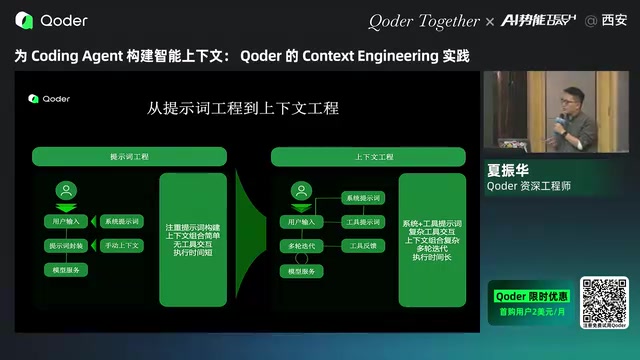
Qoder's Context Engineering in Practice: Four-Layer Retrieval Engine and Memory System Architecture
Deep analysis of Qoder's (Tongyi Lingma international edition) context engineering architecture, including its four-layer retrieval engine, memory engine, context caching, and core product design.
Read more →
 Product Reviews
·3 min
Ruflo: A Multi-Agent Orchestration Solution That Turns Claude Code into a 100-Person AI Team
Ruflo is an open-source multi-agent orchestration platform that upgrades single-threaded Claude Code into a distributed AI dev team with 100+ specialized Agents and a SANA self-learning engine.
Read more →