#RAG recall optimization
268 related articles
 Product Reviews
·4 min
OpenHuman Deep Dive: A Context-First Open-Source Personal AI Agent
Deep dive into OpenHuman open-source AI Agent: context-first architecture, Rust+React hybrid, Memory Tree system, Token Juice compression, and multi-model routing.
Read more →
 Tutorials
·3 min
Can You Really Transition to AI/LLM in Three Months? A Deep Dive into the Learning Roadmap
Deep dive into a popular 3-month AI/LLM transition roadmap: from Python basics and Prompt engineering to LangChain, RAG, Agents, and hands-on projects, with realistic time estimates and pitfall warnings.
Read more →
 Industry Insights
·4 min
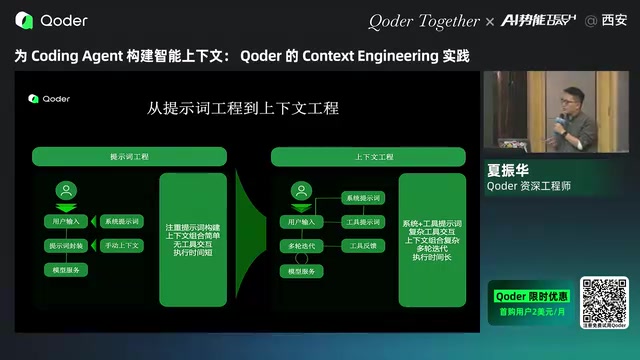
Qoder's Context Engineering in Practice: Four-Layer Retrieval Engine and Memory System Architecture
Deep analysis of Qoder's (Tongyi Lingma international edition) context engineering architecture, including its four-layer retrieval engine, memory engine, context caching, and core product design.
Read more →
 Product Reviews
·3 min
Ruflo: A Multi-Agent Orchestration Solution That Turns Claude Code into a 100-Person AI Team
Ruflo is an open-source multi-agent orchestration platform that upgrades single-threaded Claude Code into a distributed AI dev team with 100+ specialized Agents and a SANA self-learning engine.
Read more →
 Product Reviews
·2 min
Agent Memory: Giving AI Coding Agents Persistent Memory Across Sessions
Agent Memory is an open-source local memory layer providing persistent, cross-session, cross-tool long-term memory for AI coding agents like Claude Code, Cursor, and Codex.
Read more →
 Tutorials
·2 min
Career Progression in AI/LLM Application Development: Four Stages from Beginner to 40K Monthly Salary
A systematic four-stage career path for AI/LLM application development: from RAG and Agent fundamentals to architecture design, helping developers transition to AI roles targeting 40K+ monthly salary.
Read more →
 Product Reviews
·2 min
MemPalace: An Open-Source Tool That Gives AI Agents Local Long-Term Memory
MemPalace is an open-source local memory tool that builds long-term memory for AI Agents via verbatim storage, semantic retrieval, and MCP protocol, solving the pain of starting from scratch every session.
Read more →
 Deep Dives
·3 min
Why Pure Vector Search Fails at Precision: A Deep Dive into Enterprise Hybrid Retrieval Architecture
Deep analysis of why vector search fails at exact keyword matching, with a breakdown of enterprise hybrid retrieval architecture for RAG: keyword search as safety net, vector search for UX, RRF fusion, and query routing.
Read more →
 Tutorials
·3 min
From Programmer to Agent Developer: A Detailed Four-Stage Learning Roadmap
A systematic four-stage learning roadmap for programmers transitioning to AI Agent development, covering core theory, ReAct and classic paradigms, Prompt engineering, and hands-on projects.
Read more →
 Tutorials
·3 min
Complete Breakdown of Andrew Ng's Agent Course: A Practical Guide to the Five Core Modules of AI Agent Development
Deep dive into Andrew Ng's viral AI Agent course covering five core modules: Reflection, Planning, Tool Use, Multi-Agent Collaboration, and Memory, with practical learning paths for LLM agent development.
Read more →
 Tutorials
·3 min
From Traditional RAG to Agentic RAG: Principles Compared and Enterprise-Grade Implementation Guide
Deep dive into traditional RAG limitations and Agentic RAG upgrades, with ChatBox source code analysis covering core tool design, intelligent decision flows, and LangGraph implementation for enterprise deployment.
Read more →
 Tutorials
·3 min
RAG Technology Full-Stack Analysis: Core Principles, Enterprise Implementation & Learning Path
Deep analysis of RAG technology's core principles, three key values, enterprise implementation cases, common pitfalls, and a systematic learning roadmap covering vector databases, retrieval optimization, and Knowledge Graph fusion.
Read more →
 Tutorials
·3 min
Enterprise RAG Implementation: Architecture Principles and Production-Grade Optimization Guide
Complete guide to enterprise RAG architecture covering data indexing, vectorization, and retrieval optimization. Practical insights on chunking strategies, hybrid retrieval, and hallucination control for production-grade LLM applications.
Read more →
 Tutorials
·3 min
Enterprise AI Agent Four-Layer Architecture Design and PDCA Continuous Optimization Practical Guide
Deep dive into enterprise AI Agent four-layer architecture design (User, Gateway, Agent Service, Capability layers) with PDCA optimization methodology and dual manual+automated evaluation for production-grade Agent systems.
Read more →
 Deep Dives
·3 min
Getting Started with RAG: A Complete Guide from LLM Hallucinations to Retrieval-Augmented Generation
A deep dive into RAG (Retrieval-Augmented Generation) technology, covering LLM hallucinations, data staleness, and limited expertise, plus RAG workflows, core components, and LangChain learning paths.
Read more →
 Tutorials
·2 min
Advanced Codex Tips: Building a Cursor-Level Development Experience
Advanced OpenAI Codex tips including sidebar shortcuts, batch Agent sub-tasks, session management, and environment setup to create a Cursor-level development experience.
Read more →
 Tutorials
·2 min
Vibe Coding in Practice: Building a Mini-OpenClaw Agent from Scratch Without Writing Code
Learn how to build a Mini-OpenClaw Agent framework using Vibe Coding with zero code, covering OpenClaw's architecture, LangChain integration, and AI-assisted development workflows.
Read more →
 Industry Insights
·1 min
AI Agent Developer Toolchain: Code Search, Diff Viewing & K8s Config Generation in Practice
Deep dive into AI Agent developer tools: Symbol code search saves 98% Tokens, plus Filess AMD local notes, K8s config generation, and more practical tools.
Read more →
 Tutorials
·1 min
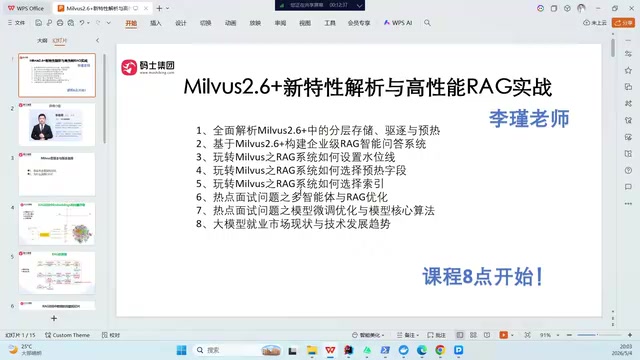
Milvus 2.6 Core New Features Explained: Tiered Storage, Architecture Deep Dive & RAG in Practice
Deep dive into Milvus 2.6.x core features including tiered storage, eviction strategies, warmup mechanisms, cloud-native architecture design, and key optimization strategies for building high-performance RAG systems.
Read more →
 Product Reviews
·3 min
RankSpot In-Depth Review: Can This AI-Powered SEO Writing Agent Replace Your Content Team?
In-depth analysis of RankSpot, an AI-driven SEO blog automation tool. Evaluating its competitor intelligence, automated workflows, and AI search optimization to help you decide if it can replace your content team.
Read more →