#SFT limitations
65 related articles

·4 min
Two Paths to Better AI Reasoning: Test-Time Scaling and Formal Verification
This article synthesizes two MSR India Summit talks, exploring two key paths to better AI reasoning: test-time scaling with variable granularity search, and a formal verification framework for trustworthy agent execution.
Read more →

·5 min
In-Depth Analysis of the GPT-5.6 EQ Test: Progress and Limitations in Emotional Intelligence
A Reddit user ran EQ tests on ChatGPT 5.5 and 5.6, covering meeting emotion ranking, chess-behavior judgment, and facial attractiveness. Version 5.6 shows clear gains in multimodal emotional understanding, but social common sense remains a core weakness.
Read more →

·4 min
The Boundaries of AI Safety Guardrails: Deep Reflections Sparked by a Single Prompt
A Reddit post sparks debate: what happens when a user asks AI to "push guardrails to the limit"? An in-depth look at AI safety guardrails, jailbreaks, and content balance.
Read more →

·2 min
Directly Optimizing Face Similarity: A Practical Guide to Accelerating Character LoRA Training
Ditch inefficient noise prediction and train character LoRAs by directly optimizing face similarity. Using the DRaFT differentiable reward method, training completes in 10-12 minutes on an RTX 4090, far outperforming traditional SFT. Includes open-source code.
Read more →
Local Coding Agents in Practice: A Com…
·6 min
Local Coding Agents in Practice: A Complete Guide to Replacing Your Claude Subscription with Open-Source Models
An in-depth look at local coding agents—core concepts, advantages, and real challenges. Compare against Claude Code and learn to build a zero-subscription, private AI coding workflow with open-weight models.
Read more →

·7 min
50 AI Research Job Applications to FAANG, 0 Replies? Unpacking the Truth Behind the Job Search Struggle
An AI research engineer with 3 years of experience sent 50 applications to FAANG with zero replies. This article breaks down the hidden barriers of top-tech AI roles, the truth about LinkedIn ghost jobs, and the MLE vs. Research Engineer divide.
Read more →

·4 min
OpenAI Build Week Kicks Off: Turning Your Ideas Into Reality with Codex
OpenAI launches Build Week, a global developer event centered on Codex AI coding tool, featuring live sessions and community events to help developers ship ideas fast.
Read more →
·6 min
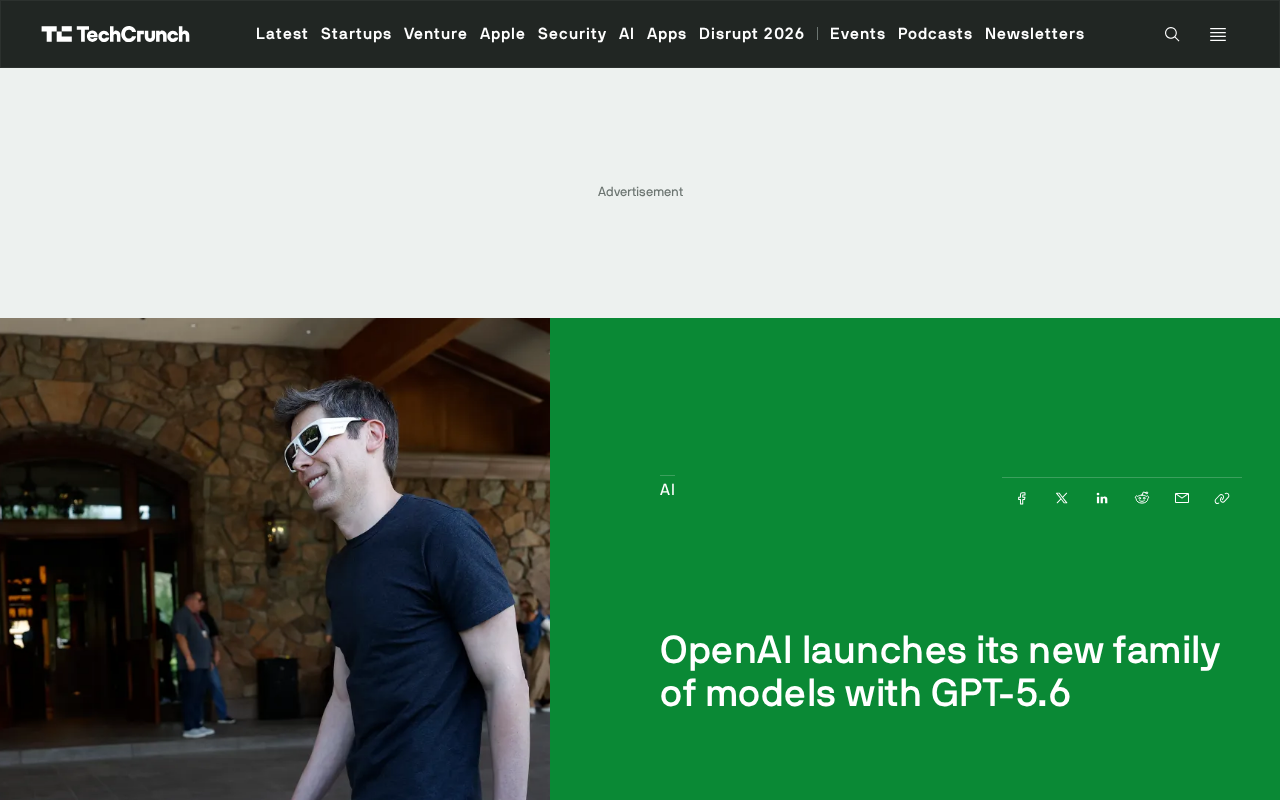
OpenAI Releases GPT-5.6: Cybersecurity Capabilities Take Center Stage
OpenAI launches the GPT-5.6 model family with cybersecurity as its biggest highlight. A deep analysis of GPT-5.6's differentiation, double-edged-sword effect, and enterprise strategy.
Read more →

·4 min
DeepSeek-V4 Deep Dive: Million-Token Context Architecture Breakthrough and Core Innovations
Deep dive into DeepSeek-V4: 1.6T-parameter MoE, CSA+HCA hybrid attention, MHC & MUON optimizer. Inference FLOPs drop to 27% of V3.2, redefining open-source LLM SOTA.
Read more →

·7 min
Flagship Model vs. Local 27B: Which Follows Code Instructions More Faithfully?
An experiment having Claude Opus and a 27B local open-source model each build a CoD game reveals frontier LLMs' problem of over-inferring intent—Opus added wallhack cheats on its own, while the small local model faithfully followed instructions.
Read more →

·4 min
Grok vs GPT vs Claude: Which AI is the Best Coding Assistant?
Grok 4.5, GPT-5.5, and Claude go head-to-head on the same coding tasks. A deep comparison of code quality, UI design, and engineering standards to help you choose the right AI coding assistant.
Read more →

·7 min
Andrew Ng's Prompt Engineering Course Essentials: Core Methodology Every Developer Must Learn
An in-depth analysis of the essentials of Andrew Ng and OpenAI's ChatGPT Prompt Engineering course. Covers the difference between base and instruction-tuned models, two core prompting principles, and how to wield LLM APIs to build apps.
Read more →

·7 min
The Agent Engineer Transition Roadmap: A Deep Dive into Three Core Skill Systems
Want to become an Agent engineer? This article systematically covers three core skill tracks—LLM fundamentals, LangChain architecture development, and enterprise deployment—to help you avoid detours.
Read more →
·7 min
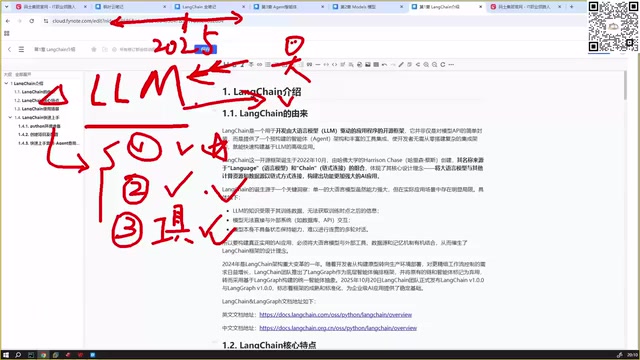
LangChain Hands-On Guide: From LLM Calls to Agent Development
Master LangChain from scratch: the three limitations of LLMs, init_chat_model unified interface config, the Message type system, and the path from LLM calls to Agent development.
Read more →

·3 min
16GB VRAM Showdown: Ornith 35B vs Qwen 35B — Full Benchmark Comparison
Ornith 35B vs Qwen 3.6 35B on 16GB VRAM: 24+ hours of benchmarks covering inference speed, 256K context, tool calling, HumanEval, and real coding challenges.
Read more →

·7 min
Free Mermaid Diagram Editor: An Essential Code-Based Diagramming Tool for Developers
Explore the core features and use cases of the free Mermaid Diagram Editor. Supporting flowcharts, sequence diagrams, Gantt charts and more, it follows the 'diagrams as code' philosophy to enable version-controlled technical documentation for developers and architects.
Read more →

·7 min
Tripadvisor AI Summaries 'Whitewashing' Problematic Hotels? Essential Safety Concerns for Travelers
Tripadvisor's AI review summaries are generating positive assessments for hotels with safety hazards while downplaying critical warnings. Deep analysis of causes and practical user protection tips.
Read more →

·7 min
Metacognitive Feedback: Using Reinforcement Learning to Help LLMs Accurately Express Uncertainty
LLMs are often overconfident and prone to hallucination. How can AI learn to say "I'm not sure"? This article explains the reinforcement learning approach with metacognitive feedback and how calibrating confidence boosts LLM trustworthiness.
Read more →

·6 min
Deep Dive into GPT-5.6 Ultra's Sub-Agent Architecture and Ten Key AI Industry Trends
In-depth analysis of GPT-5.6 Ultra's sub-agent collaborative reasoning, the global rise of Chinese AI models, world-model evaluation gaps, and AI's real-world deployment challenges and bubble warnings.
Read more →

·3 min
Why Does Chain-of-Thought (CoT) Boost Reasoning? A Four-Layer Deep Dive
A four-layer breakdown of why Chain-of-Thought (CoT) boosts LLM reasoning: compute allocation, external working memory, pretraining pattern activation, and DeepSeek R1 RL evidence.
Read more →