#Tensor chip
226 related articles

·2 min
Behind the Open-Source Model Frenzy: Who Will Provide Cheap Inference Services?
Open-source LLM weights don't equal low-cost access for developers. This article analyzes the inference service gap in open-source AI and how providers like Together AI and Groq are addressing it.
Read more →

·2 min
Behind the Open-Source Model Frenzy: Who Will Provide Cheap Inference Services?
Open-source LLM weights don't mean developers can use them cheaply. This article examines the inference service gap in open-source AI and how providers like Together AI and Groq are addressing it.
Read more →

·3 min
Moonshot AI Open-Sources FlashKDA: A Deep Dive into High-Performance CUDA Kernels for KDA Attention
Moonshot AI open-sources FlashKDA, providing high-performance CUDA kernels for Kimi Delta Attention. Learn about its technical principles, performance gains, and value for long-context training and inference acceleration.
Read more →

·3 min
Moonshot AI Open-Sources FlashKDA: A Deep Dive into High-Performance CUDA Kernels for KDA Attention
Moonshot AI open-sources FlashKDA, providing high-performance CUDA kernels for Kimi Delta Attention. Explore its technical principles, performance gains, and value for long-context training and inference.
Read more →

·2 min
Reverse Engineering Apple's ANE: Open-Source Project Enables On-Device Training on the Neural Engine
Deep dive into the maderix/ANE GitHub project that reverse engineers Apple's private APIs to enable neural network training on the Apple Neural Engine, exploring its technical approach, efficiency gains, compliance risks, and implications for on-device AI.
Read more →

·3 min
Gemini Batch API Major Upgrade: 80% Latency Reduction, Success Rate Exceeds 99.998%
Google's Gemini Batch API completes major infrastructure upgrade with 80% lower p95 latency, 99.998%+ success rate, 98% fewer expirations, and new partial batch support for large-scale AI inference.
Read more →

·3 min
Kimi K3 Launch: A 2.8 Trillion Parameter Flagship Model Makes Its Grand Entrance
Moonshot AI launches Kimi K3 with 2.8 trillion parameters and 1M token context. Google delays Gemini 3.5 Pro, AI coding tools upgrade collectively as competition shifts to coding and Agent capabilities.
Read more →

·3 min
Backend Developer Transition to AI/LLM: 4 Core Skills and a Practical Learning Roadmap
Complete guide for backend developers transitioning to AI/LLM engineering. Covers the 4 core skills—Python, RAG, Fine-tuning, and Agents—with a phased learning roadmap and practical project advice.
Read more →

·2 min
Chrome Built-in AI Explained: How Locally Running Models Protect Your Privacy
Explore Chrome Built-in AI technology and how running AI models locally in the browser enables zero data upload, instant responses, and stronger privacy protection.
Read more →

·2 min
Chrome Built-in AI Explained: How Locally Running Models Protect Your Privacy
Deep dive into Chrome Built-in AI technology, exploring how running AI models locally in the browser achieves zero data uploads, instant responses, and stronger privacy protection.
Read more →

·3 min
Monocular RGB Human Mesh Reconstruction: Real-Time Motion Capture at 18 FPS with Rust + CUDA
Deep dive into a real-time 3D human mesh reconstruction project using a single RGB camera, built with Rust, Candle, and CUDA, achieving 55ms/frame on RTX 5080. Exploring its architecture, Metal porting plans, and applications in VTuber, AR/VR, and sports analysis.
Read more →

·3 min
Monocular RGB Human Mesh Reconstruction: Real-Time Motion Capture at 18 FPS with Rust + CUDA
A deep dive into a real-time 3D human mesh reconstruction project using a single RGB camera, built with Rust, Candle, and CUDA, achieving 55ms/frame on an RTX 5080.
Read more →

·3 min
AMD CDNA5 Architecture Deep Dive: Technical Evolution and the AI Computing Competition Landscape
Deep analysis of AMD's CDNA5 architecture covering Chiplet packaging upgrades, HBM memory evolution, and low-precision compute optimization, examining how AMD challenges NVIDIA's AI chip dominance.
Read more →
·3 min
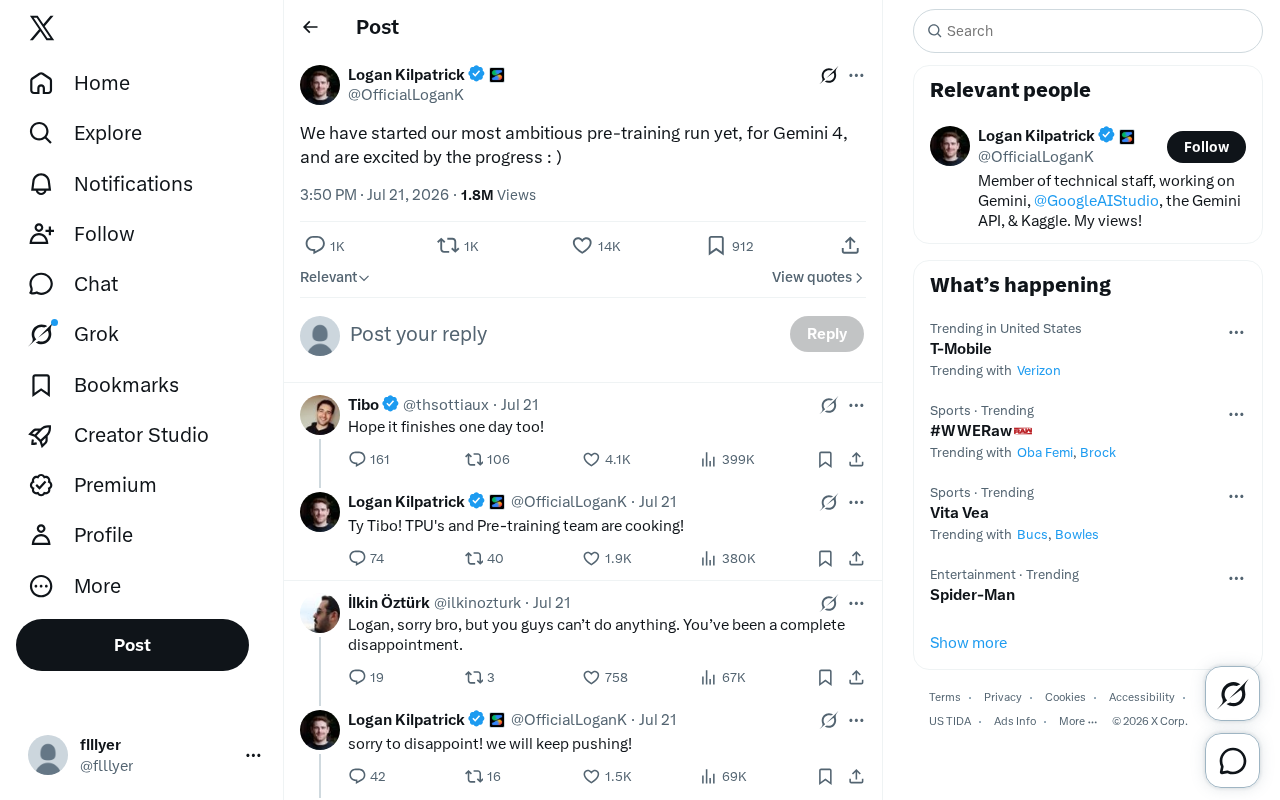
Google Launches Gemini 4 Pre-training: Its Most Ambitious AI Model Training Yet
Google DeepMind announces Gemini 4 pre-training has begun, calling it their most ambitious training yet. A deep dive into its technical direction, compute scale, multimodal breakthroughs, and competitive impact.
Read more →

·3 min
Open Source vs. Closed Source: Who Will Win the US-China AI Battle?
Chinese open-source models DeepSeek and Kimi K3 are challenging OpenAI's closed-source dominance. Analyzing the business logic, chip ecosystems, and US-China strategic dynamics behind the open vs. closed AI debate.
Read more →

·4 min
Jensen Huang Joins 50 Silicon Valley Giants to Champion Open-Source Models: How Capital Logic Overrides Political Correctness
Jensen Huang's first-ever tweet backs open-weight AI. 50 Silicon Valley giants oppose banning Chinese open-source models. Deep analysis of the interests behind closed vs. open AI ecosystems.
Read more →
·3 min
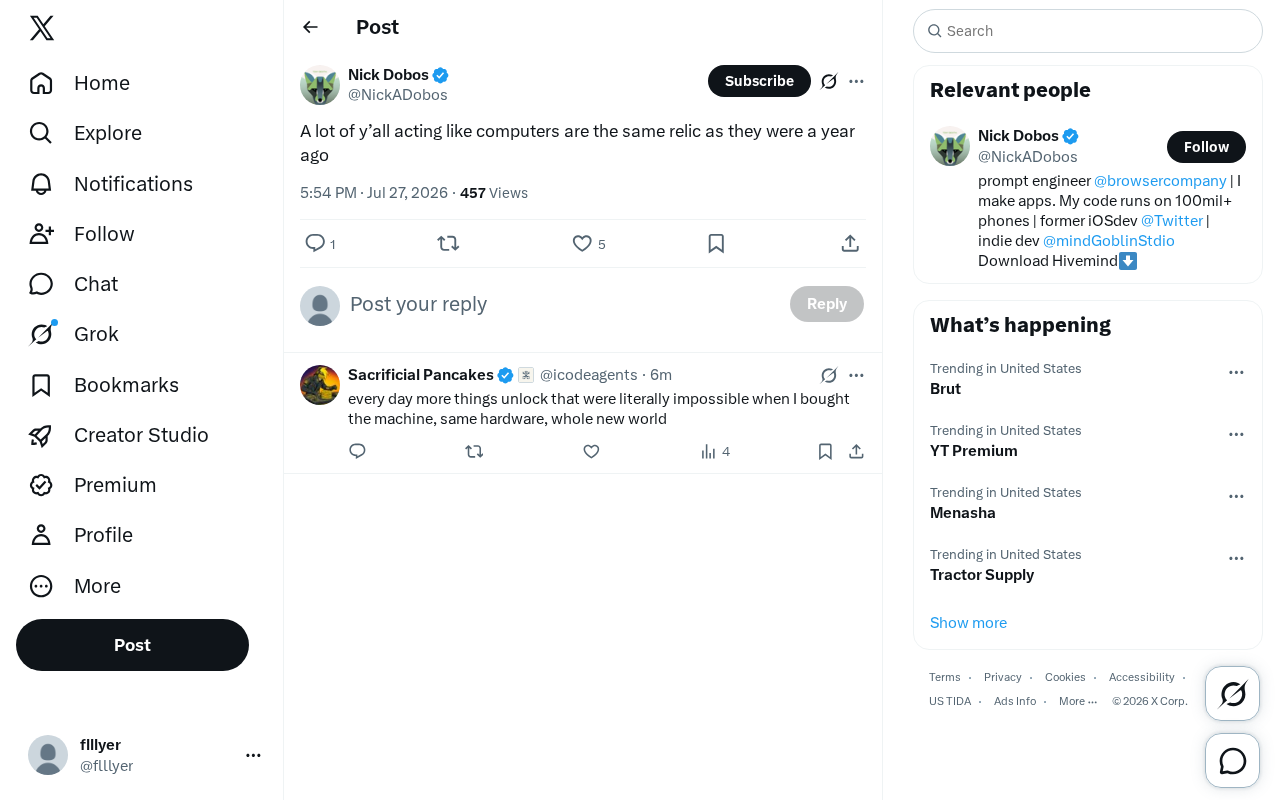
The Computer Is Being Redefined in the AI Era — Has Your Understanding Kept Up?
Generative AI is profoundly redefining the personal computer — from passive tool to intelligent collaborator. This article examines the core shifts of the AI PC era and the productivity gap created by cognitive lag.
Read more →

·3 min
Jensen Huang's First Tweet Backs AI Open Source — But It's Really About NVIDIA's Ecosystem Anxiety
Jensen Huang's first tweet backs AI open source, but behind it lies NVIDIA's deep anxiety over CUDA ecosystem displacement. We analyze why open-source models matter and what's really at stake.
Read more →
·3 min
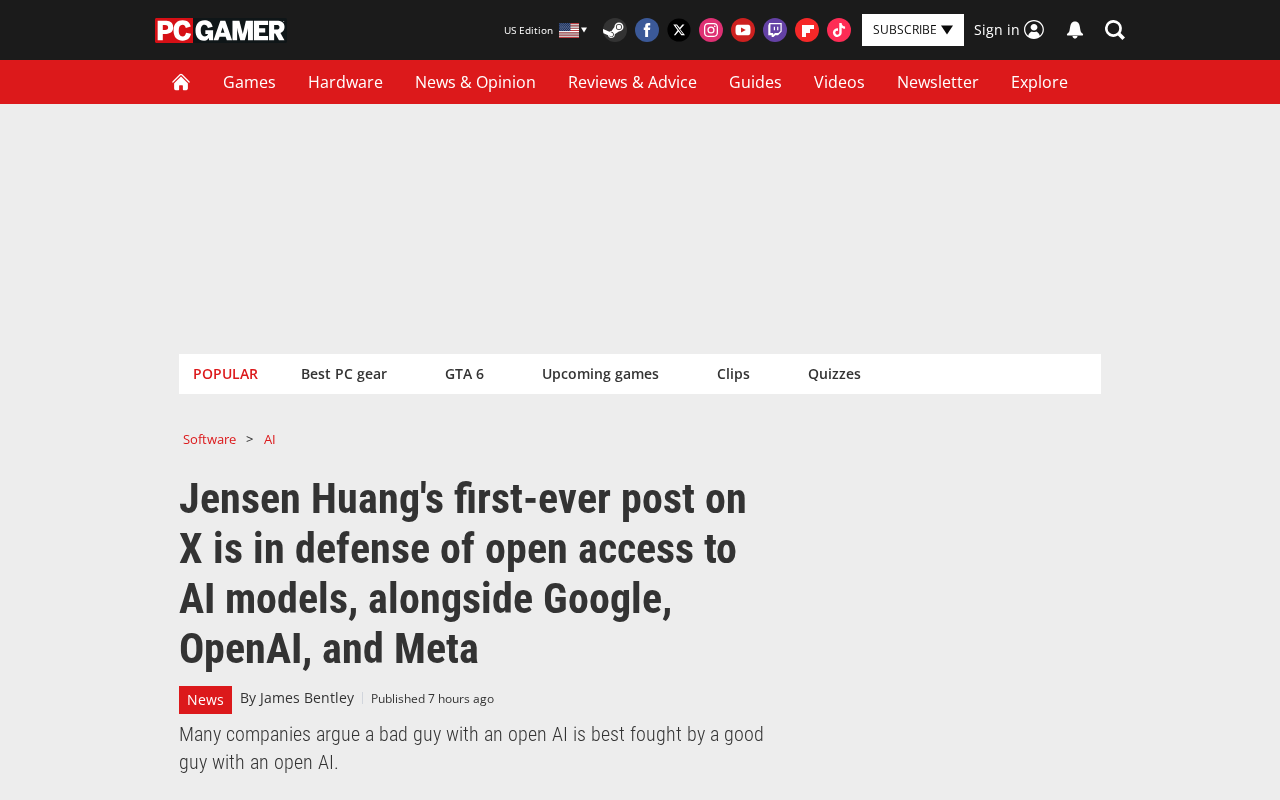
Jensen Huang's First X Post Backs Open AI: Why the Computing Power King Sides with Open Source
NVIDIA CEO Jensen Huang's first X post champions open AI access. We analyze the business logic, policy dynamics, and the open vs. closed AI debate shaping the industry.
Read more →

·2 min
Jensen Huang Champions Open-Source AI: Distillation Is Not Plagiarism, DeepSeek and Kimi Are Excellent
NVIDIA CEO Jensen Huang defends open-source AI, calls distillation legitimate learning, praises DeepSeek and Kimi, and co-signs open letter with 20+ companies while OpenAI and Google stay silent.
Read more →