#algorithm derivation
92 related articles

·3 min
Don't Start AI Learning with Machine Learning: A Beginner's Guide to the Onion Model
Gaurav Sen reveals the fatal trap in AI learning: starting from ML fundamentals often leads to burnout. Learn the Onion Model approach—RAG, Agents first, Transformers next, math last.
Read more →
From Math to AI Research Engineer: A D…
·2 min
From Math to AI Research Engineer: A Deep Dive into the Viral GitHub Learning Roadmap
A GitHub project called maths-cs-ai-compendium surpassed 6,000 Stars with a roadmap for becoming an AI/ML Research Engineer. Here's what makes it worth following.
Read more →

·7 min
Claude Code Practical Tutorial: A Complete Beginner's Guide to Automating Your Entire Workflow
No coding required! This guide breaks down the complete Claude workflow: custom Projects, batch SEO content, one-sentence tool building with Artifacts, and Claude Code terminal ops—with real traffic-growth cases.
Read more →
·3 min
How to Choose AI Learning Books: A 5-Dimension Rational Evaluation Framework
How to evaluate AI/ML books rationally? Use these 5 dimensions—content depth, code quality, currency, community reputation, and companion resources—to choose wisely.
Read more →

·3 min
Math Learning Path for Machine Learning: From Resource Overload to Systematic Mastery
Overwhelmed by ML math courses? This guide maps out linear algebra, calculus, and probability into a practical learning path — from core courses to reference books.
Read more →

·3 min
Gradient Descent and Backpropagation Explained: How Neural Networks Learn from Scratch
Understand how neural networks learn: a complete guide to cost functions, gradient descent, backpropagation, and SGD — ideal for deep learning beginners building intuition from the ground up.
Read more →

·2 min
Build From Scratch or Just Use sklearn? A Complete ML Engineer Learning Path Guide
Should you implement ML algorithms from scratch or just use sklearn? This guide breaks down the optimal learning path for ML engineers by career stage and company type.
Read more →

·3 min
AI/ML Students Lost in Job Search? A Deep Comparison of Four Career Paths and How to Choose
AI/ML students unsure which career path to pursue? Compare AI engineering, SDE, PM, and UI/UX in depth — with honest entry barriers and a practical self-assessment framework.
Read more →

·2 min
Peer Instruction for ML Self-Learners: A Practical Guide to Breaking Through Plateaus
A civil engineering student's Reddit plea reveals ML self-learning's most overlooked obstacle: lack of feedback and peers. Explore peer instruction theory and actionable tips for cross-disciplinary AI learners.
Read more →

·3 min
CS Students' Summer Prep: How to Strategically Choose Between ML Internships and Data Analytics Roles
How should a CS+Stat junior efficiently prep for data/ML internships? We break down the real market gap, skill priorities, and a focused 3-month strategy.
Read more →

·4 min
RAM: First-Principles Approach to 50x Faster RL Post-Training for Diffusion Models
RAM (Reinforce Adjoint Matching) achieves 50x faster RL post-training for diffusion models by discarding path costs, combining ODE sampling with decorrelated training objectives. A deep dive into RAM's core principles and experiments vs. Flow-GRPO.
Read more →
Hands-On ML Chapter 2 Practical Guide:…
·2 min
Hands-On ML Chapter 2 Practical Guide: Key Takeaways from an End-to-End Project
A deep dive into Chapter 2 of Hands-On ML — California housing price prediction. Covers feature engineering, preprocessing pipelines, cross-validation, and building a complete ML workflow.
Read more →
Recruiting Testers for a Master's Thes…
·2 min
Recruiting Testers for a Master's Thesis: How Academic Research Leverages Community Users for Validation
A Reddit post recruiting thesis testers reflects the growing trend of academic research relying on real user validation. Explore why it matters and how to participate.
Read more →
Learning AI Without Math: 7 Mindset Sh…
·3 min
Learning AI Without Math: 7 Mindset Shifts That Make It Easier
Scared off by math? Learn 7 mindset shifts to understand AI without it — concepts first, analogies, hands-on practice, and layered understanding.
Read more →

·2 min
A Beginner's Guide to Grokking Machine Learning: Self-Study Paths and Resource Recommendations
Why Grokking Machine Learning is a top pick for ML beginners — covering the author, content, legal access options, and an effective self-study roadmap.
Read more →

·2 min
Interactive Graph Theory Algorithm Visualizations: See BFS, DFS, and Shortest Paths in Action
Struggling with graph theory? learngraphtheory.org offers free, ad-free interactive visualizations of BFS, DFS, Dijkstra's algorithm, and spanning trees — watch every step unfold.
Read more →

·2 min
Run Python in Your Browser! Why This Free Machine Learning Course Is Worth a Try
ai.coredump.digital is a completely free, no-signup, from-scratch machine learning course that runs Python directly in your browser, covering 11 ordered learning tracks with 970 quiz questions and an interview drill mode.
Read more →

·4 min
Do You Still Need to Hand-Code Machine Learning Algorithms in the AI Era? The Answer and the Method
With AI tools everywhere, is it still worth hand-coding SVM, decision trees, and other ML algorithms? This article explores the real value of hand-coding, the limits of AI tools, and smarter learning strategies for beginners in the AI era.
Read more →
·4 min
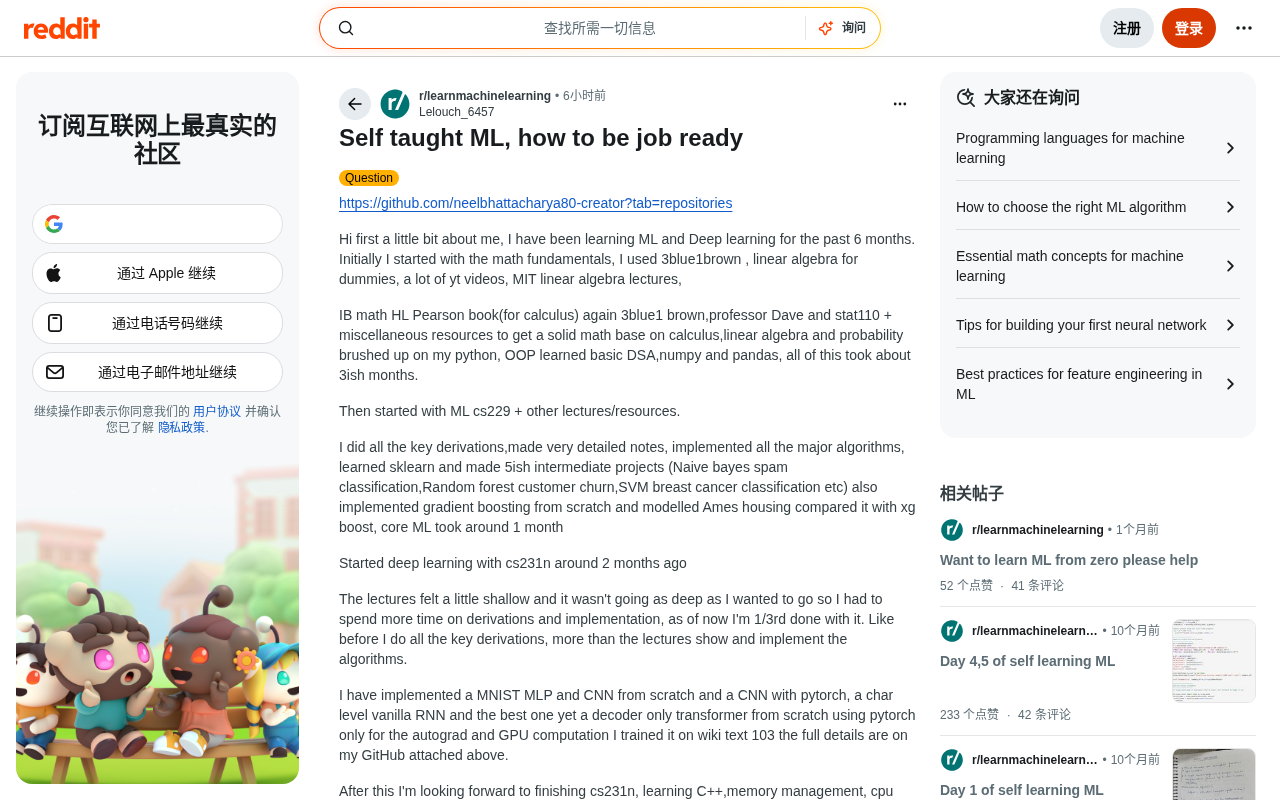
6 Months of Self-Taught Machine Learning: A Complete Roadmap from Zero to Job-Ready
A self-learner completed a full progression from math foundations and core ML to deep learning in 6 months—hand-writing a Transformer and implementing gradient boosting from scratch. This article breaks down the highlights and blind spots of this real roadmap.
Read more →

·1 min
A Deep Dive into Core Machine Learning Concepts: Those 'Aha' Moments of Sudden Clarity
Backpropagation, bias-variance tradeoff, attention mechanism… do you really understand these ML concepts? This article dives into the hardest yet most crucial core ML ideas to help you build real intuition.
Read more →