#append-only log
29 related articles

·4 min
Why Do AI Agents Crash the Moment They Go Live? A Practical Guide to Harness Engineering for Runtime
A deep dive into the Claude Code source code, systematically analyzing the five-layer Harness Engineering architecture: environment, tool, control, memory, and evaluation. Build a stable runtime system for production AI Agents.
Read more →

·5 min
Postgres Is Enough More Often Than You Think: Stop Piling On Your Tech Stack
Many teams add message queues, search engines, and caches before they ever need them. This article maps out what Postgres can cover—task queues, full-text search, JSON storage—and when you actually need Redis, Kafka, or Elasticsearch.
Read more →

·7 min
ManagedAgents.sh: A Deep Dive into the Model-Agnostic Open-Source Managed Agent Platform
ManagedAgents.sh is a model-agnostic managed agent platform from OpenComputer, supporting Claude, Pi, and Codex runtimes with Slack and GitHub integration.
Read more →
·6 min
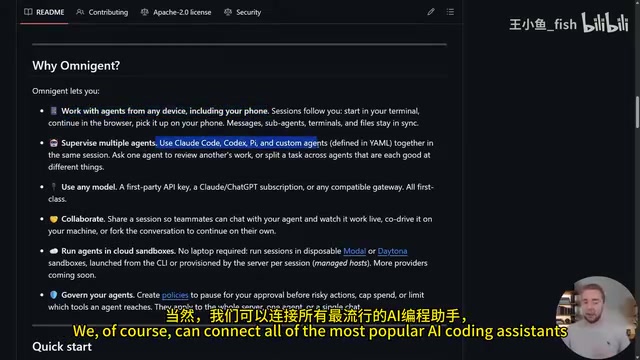
Omnigent Open-Sourced: A Meta-Harness for AI Coding Agents Built by Databricks
Databricks open-sources Omnigent, a Meta-Harness for orchestrating Claude Code, Codex, and more AI coding assistants together—with built-in guardrails, cross-model workflows, and real-time collaboration. Get started in 10 minutes.
Read more →

·5 min
The Halo Open-Source Project: Building Tamper-Evident Runtime Evidence for AI Agents
Halo is an open-source tool providing tamper-evident runtime evidence for AI agents, recording every action via hash chains and cryptography to solve auditing, compliance, and accountability challenges.
Read more →

·7 min
Context Warp Drive: A Deep Dive into Deterministic Context Folding for AI Agents
An in-depth look at 'Deterministic Context Folding' from Context Warp Drive: solving AI agent context window management with reproducible, cacheable, debuggable context compression for production-grade agents.
Read more →

·3 min
Workstyle Memory Bridge: Making AI Remember How You Work
Explore how Workstyle Memory Bridge uses Slot+Scope unique keys, provenance tracking, and verifiable deletion to solve AI coding assistants' persistent memory loss of collaboration preferences.
Read more →

·2 min
The Era of Managed Agents: Anthropic vs. Google's Two Diverging Approaches
Deep analysis of Anthropic vs Google's Managed Agent architectures, pricing strategies, and selection guidance. Managed Agents are emerging as a new AI infrastructure product category.
Read more →
 Tutorials
·4 min
AI Agent Memory Architecture Design: Four-Layer Partitioning + Bitemporal Modeling Practical Guide
A deep dive into production-grade AI Agent memory architecture covering four-layer partitioning, bitemporal modeling, and skill extraction to eliminate hallucinations and historical amnesia.
Read more →