#backward compatible refactor
22 related articles
 Deep Dives
·3 min
LLM 0.32a0 Major Refactor Analysis: How a Backward-Compatible Architecture Upgrade Tackles the Multimodal and Tool-Calling Era
Deep analysis of Simon Willison's LLM Python library 0.32a0 alpha: message sequences, streaming typed parts, tool calling, and the design philosophy behind backward-compatible refactoring.
Read more →

·3 min
Richard Hipp's Rules of Reliability: How a Small Team Built Software Deployed Trillions of Times
SQLite creator Richard Hipp shares reliability engineering secrets: 100% MC/DC coverage, defensive programming, and zero-dependency design that powers trillions of deployments by a 3-person team.
Read more →

·2 min
The Complete TypeScript Guide: How JavaScript's Superset Came to Dominate Modern Web Development
TypeScript is Microsoft's JavaScript superset that catches errors at compile time via static type checking. Explore its core benefits, ecosystem, and trade-offs.
Read more →

·6 min
Databricks Agent Framework in Practice: A Guide to ChatAgent Wrapping and Production Deployment
A deep dive into Databricks Agent Framework (Mosaic AI): unify LangGraph/OpenAI agents via ChatAgent, log & evaluate with MLflow, version with Unity Catalog, and deploy Model Serving Endpoints for production AI agents.
Read more →

·7 min
Single-Responsibility Component Design: Learning Abstraction and Reuse from message-scroller
Through the practical case of the message-scroller component, this article delves into applying the Single Responsibility Principle in front-end component design—how to abstract scrolling logic independently and balance cost with long-term returns.
Read more →

·7 min
Gemini CLI: The AI Development Powerhouse in Your Terminal, Ending Tool Fragmentation
Gemini CLI is Google's open-source AI terminal tool that deeply integrates Gemini model capabilities into the command line—supporting code generation, file operations, Shell execution, and MCP protocol extensions, with 1,000 free daily requests.
Read more →

·5 min
Claude Drives the sqlite-utils 4.0 Release: The Real Cost and Collaboration Methodology of AI-Assisted Refactoring
Developer Simon Willison used Claude to ship sqlite-utils 4.0: 37 prompts, 34 commits, $149 API cost — revealing coding agents' real capabilities, cross-model review, and agentic engineering best practices.
Read more →
sqlite-utils 4.0rc2 Released: Major Ve…
·2 min
sqlite-utils 4.0rc2 Released: Major Version Built with $150 in AI Costs
Simon Willison releases sqlite-utils 4.0rc2, with most code written by Claude at just $149.25 in API costs. A deep dive into AI-assisted development costs and human-AI collaboration.
Read more →
GPT-5.6 Sol Deep Dive: Major Upgrades …
·3 min
GPT-5.6 Sol Deep Dive: Major Upgrades Across Coding, Science, and Cybersecurity
OpenAI previews GPT-5.6 Sol, featuring major upgrades in coding, scientific research, and cybersecurity alongside its most advanced safety stack yet.
Read more →
 Product Reviews
·3 min
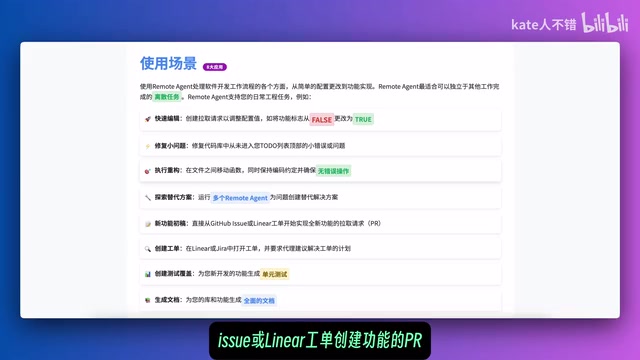
Augment Remote Agent Hands-On: Running 10 Cloud AI Agents in Parallel for Programming
Hands-on review of Augment Remote Agent: 10 cloud AI Agents coding in parallel, covering bug fixes, PR generation, documentation, and more with detailed workflows and real-world examples.
Read more →
 Tutorials
·2 min
Go 1.26 Source-Level Inliner Explained: //go:fix inline for Self-Service API Migration
Deep dive into Go 1.26's //go:fix inline directive and source-level inliner: how it works, use cases, limitations, and how it enables self-service API migration for library maintainers and users.
Read more →
 Deep Dives
·2 min
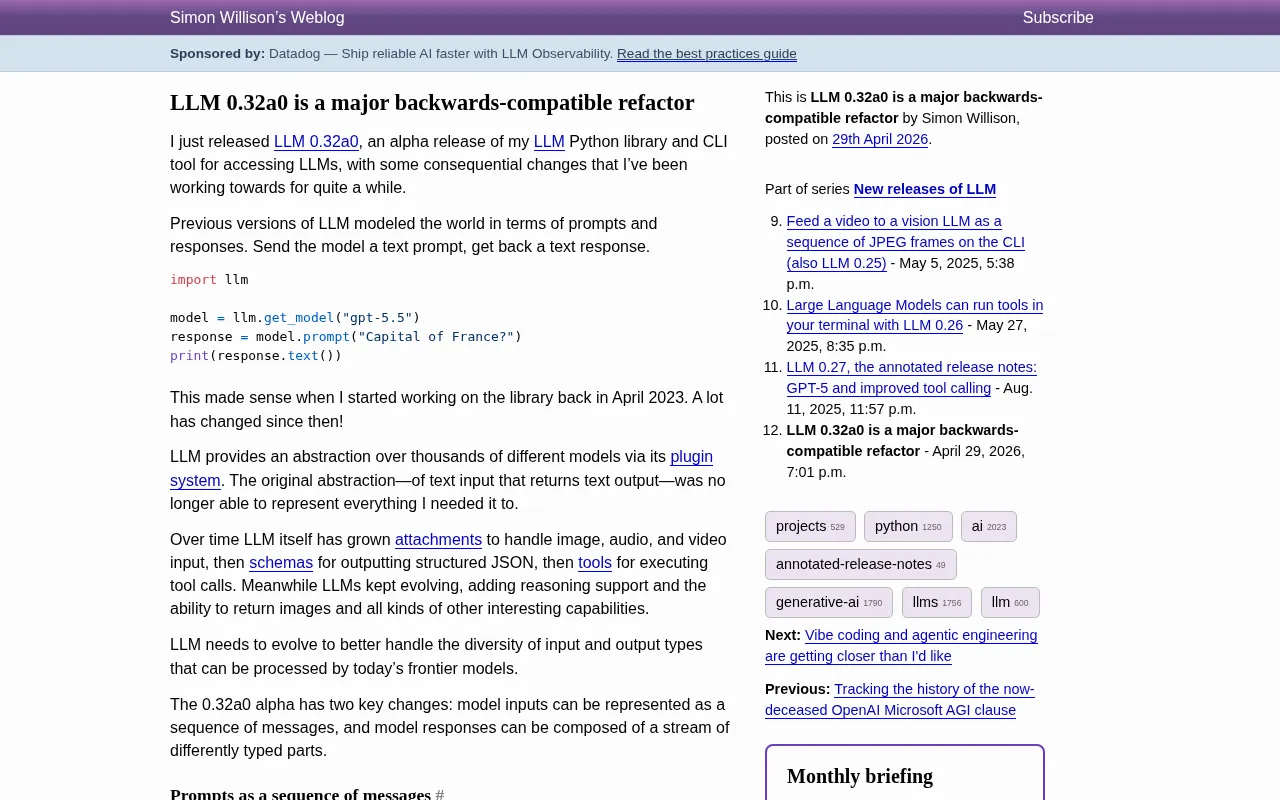
LLM 0.32 Refactor: An Architecture Upgrade from Text Q&A to Multimodal Streaming Interaction
Simon Willison releases LLM 0.32a0 alpha with a major refactor introducing message sequence API, typed streaming output, and flexible serialization while maintaining backward compatibility.
Read more →
 Tech Frontiers
·2 min
LLM 0.32 Refactoring Deep Dive: Message Sequence Input and Streaming Multi-Type Response Design
Deep dive into LLM 0.32 alpha's two core refactorings: message sequence API aligned with OpenAI format, stream_events for typed streaming responses, serialization design, and backward compatibility.
Read more →
 Deep Dives
·3 min
LLM 0.32 Refactor: How Message Sequences and Streaming Chunks Are Reshaping Python LLM Interactions
Simon Willison releases LLM 0.32a0 alpha with message sequences and typed streaming chunks, redefining how Python developers interact with LLMs while maintaining full backward compatibility.
Read more →
 Tech Frontiers
·2 min
LLM 0.32a0 Released: Message Sequences and Typed Streaming Refactor Explained
Simon Willison releases LLM 0.32a0 alpha with message sequence modeling and typed streaming parts, supporting multimodal output and conversation history injection while maintaining backward compatibility.
Read more →
 Tech Frontiers
·2 min
LLM 0.32a0 Major Refactor: A Deep Dive into Message Sequences and Typed Streaming Responses
Simon Willison releases LLM Python library 0.32a0 alpha with message sequence prompts and typed streaming responses, redesigning model interaction abstractions for multimodal output, tool calls, and modern LLM features.
Read more →
 Tech Frontiers
·3 min
LLM 0.32 Refactoring Explained: How Message Sequences and Streaming Chunks Are Reshaping This Python LLM Library
Simon Willison releases LLM library 0.32 alpha with message sequences and typed streaming chunks, replacing the old text-in-text-out model to fully support multi-turn dialogue, multimodal output, and tool calling.
Read more →
 Deep Dives
·2 min
LLM 0.32 Refactoring Deep Dive: Message Sequences and Multimodal Streaming Event Design
Deep dive into LLM 0.32a0 alpha: a major refactoring from text conversations to message sequences and typed streaming events, supporting multimodal output, tool calls, and flexible serialization.
Read more →
 Tech Frontiers
·3 min
LLM 0.32 Refactoring Explained: Message Sequence API and Typed Streaming Responses
Deep dive into Simon Willison's LLM Python library 0.32 refactoring: new message sequence API, typed streaming responses, and universal serialization for multimodal AI and tool calling.
Read more →
 Deep Dives
·3 min
LLM 0.32 Major Refactor: Message Sequences and Streaming Multi-Type Responses Explained
Simon Willison releases LLM 0.32a0 alpha with message sequences API and streaming multi-type parts, redesigning how the Python LLM library handles model interactions for complex inputs and outputs.
Read more →