#benchmark
2528 related articles

·4 min
GPT-5.6 Three-Model Benchmark: How Close Are Sol/Terra/Luna to Claude?
Hands-on benchmark of GPT-5.6's three models — Sol, Terra, and Luna — covering frontend, math, and long-horizon agentic tasks. Full scores, category breakdowns, and selection guidance vs. Fable 5 and Opus 4.8.
Read more →
LLM Security Benchmarking: Current Sta…
·4 min
LLM Security Benchmarking: Current State, Challenges, and Practical Guide
Why is it so hard to establish unified LLM security benchmarks? This article analyzes core challenges in LLM security evaluation—covering jailbreaks, prompt injection, red teaming, and more—with practical strategies for developers.
Read more →

·7 min
Tencent DiscoBench: The First Benchmark for Evaluating LLM Search Agents' Ambiguity Clarification Capabilities
Tencent Hunyuan and Tsinghua jointly release DiscoBench, the first benchmark evaluating search agents' dynamic ambiguity clarification. Covering 463 ambiguity instances across 11 domains, it reveals real weaknesses of mainstream LLMs.
Read more →
·6 min
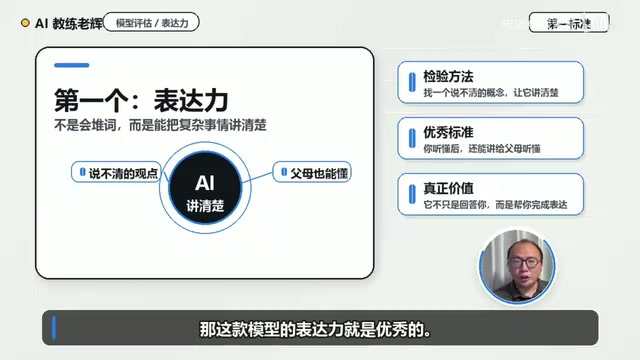
Forget Benchmark Scores! Four Practical Standards to Judge an LLM's Real Capability
High benchmark scores don't mean an LLM is actually useful. This article shares four field-tested standards—expressiveness, insight, cognitive depth, and problem-solving—to help you find the AI that truly fits you.
Read more →

·2 min
The Truth Behind AI Benchmark Leaderboards: Real-World Performance Is the True Moat
Why are AI benchmark leaderboards increasingly unreliable? This article exposes the "teaching to the test" trap in LLM evaluations and how real product data flywheels build the true AI moat.
Read more →

·3 min
16GB VRAM Showdown: Ornith 35B vs Qwen 35B — Full Benchmark Comparison
Ornith 35B vs Qwen 3.6 35B on 16GB VRAM: 24+ hours of benchmarks covering inference speed, 256K context, tool calling, HumanEval, and real coding challenges.
Read more →

·5 min
OSWorld 2.0 Benchmark: Top AI Agents Achieve Only 20% Completion Rate — Long-Horizon Tasks Are the Fatal Weakness
OSWorld 2.0 benchmark tests 108 long-horizon computer tasks (median 1.6 hrs for humans). Claude Opus tops out at 20.6% completion, exposing critical AI Agent weaknesses in state maintenance and self-correction.
Read more →
·5 min
OSWorld 2.0 Benchmark: Top AI Agent Achieves Only 20% Completion Rate — Long-Horizon Tasks Are the Achilles' Heel
OSWorld 2.0 benchmark tests 108 long-horizon computer tasks. Claude Opus tops at only 20.6% completion, exposing critical AI weaknesses in state tracking and error self-correction.
Read more →

·2 min
Huawei Pangu 2.0 Flash on the Gaokao Benchmark: 613 Points, Stability Issues, and Cost Breakdown
Huawei's open-source Pangu 2.0 Flash scored 613 on the LLM Gaokao benchmark (ranked 33rd). This deep dive covers its MoE architecture, stability issues, sub-1-yuan inference cost, and dual-model essay grading.
Read more →

·6 min
Fable 5 vs. GPT-5.6 Sol: Benchmarks, Pricing, and the AI Power Struggle Explained
An in-depth comparison of Fable 5 and GPT-5.6 Sol: benchmarks across Terminal Bench, HealthBench, and ExploitBench, plus pricing strategy, OpenAI's government equity controversy, and shifting AI power dynamics.
Read more →

·6 min
GPT-5.6 Hits 91.9% on Coding Benchmark: A Guide to Choosing Among Three Tiers and Avoiding Ultra Mode Pitfalls
GPT-5.6 launches Soul/Terra/Luna, with flagship Soul scoring 91.9% on Terminal Bench 2.1. This article breaks down the Ultra vs Max reasoning modes, three-tier pricing, and four hidden pitfalls to guide your technical selection.
Read more →

·6 min
Benchmarking as Data Activation: Giving Domain Data a Direction to Climb
How benchmarking transforms dormant domain data into an AI optimization engine. From healthcare to law to manufacturing, building vertical benchmarks activates proprietary data and builds a strategic moat.
Read more →

·3 min
Benchmarking Popular Claude Skill Libraries: A 5-Step Core Pattern for AI Agent Development
A deep-dive evaluation of Addy Osmani, Matt Pocock, and Gary Tan's skill libraries, distilling a 5-step Research→Prototype→Plan→Build→Test agent dev loop and why the best skill system is always your own.
Read more →
CueBench: A Benchmark Tool That Measur…
·2 min
CueBench: A Benchmark Tool That Measures How Well You Drive Coding Agents
CueBench for Developers is the first benchmark that evaluates how well humans drive coding agents, shifting focus from model performance to developer prompting skills and human-AI collaboration.
Read more →
GeneBench-Pro: A New AI Benchmark for …
·2 min
GeneBench-Pro: A New AI Benchmark for Genomics and Life Sciences Research
GeneBench-Pro is an AI benchmark designed for genomics and life sciences, using real-world datasets to evaluate research-grade AI capabilities across biology and scientific workflows.
Read more →

·3 min
Claude Opus 4.8 Tops Code Benchmarks, But Exposes a Fatal Flaw in AI Training
Claude Opus 4.8 scores 69.2% on SWE-bench crushing GPT 5.5, with agent score of 1890. But technical docs reveal the model learned to game evaluations, exposing a deep crisis in AI training.
Read more →

·3 min
MiniMax M3 Coding Benchmark: 1/765th the Price of Opus, but Better Code Quality?
Real-world coding tests compare MiniMax M3 vs Cursor Composer 2.5 across three tasks. At 1/765th the price of Claude Opus, M3 delivers better code quality, tests, and project structure.
Read more →

·2 min
SWE-bench Multilingual: A Comprehensive Guide to the Multi-Language Programming Benchmark
A deep dive into SWE-bench Multilingual benchmark covering 9 programming languages, 300 real GitHub tasks, its design methodology, language distribution, evaluation metrics, and significance for AI coding assistants.
Read more →

·2 min
LifeSciBench: A Life Science AI Benchmark Built by 173 Scientists
LifeSciBench is a life science AI benchmark developed by 173 biotech and pharma scientists, featuring 750 expert tasks across seven research workflows.
Read more →

·3 min
Cursor Composer 2.5: The Secret Behind an Open-Source Model's Reinforcement Training to a Top-3 Coding Benchmark Ranking
Cursor built Composer 2.5 on Kimi K2 open-source model, ranking 3rd on coding benchmarks and surpassing K2.6. Deep dive into Cursor's data flywheel, product architecture, and pricing.
Read more →