#deep RL
8466 related articles
 Product Reviews
·4 min
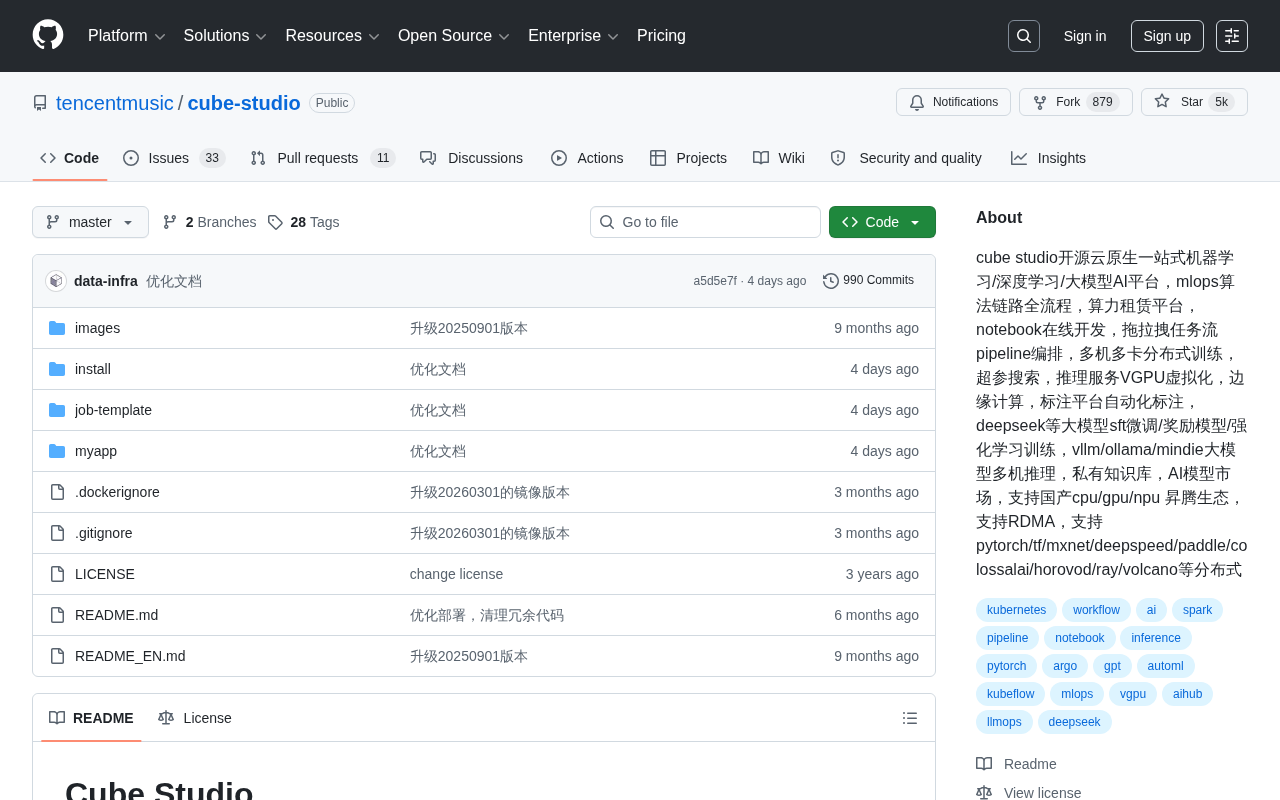
Cube Studio: Tencent's Open-Source All-in-One AI Platform Covering the Full Pipeline from Large Model Training to Inference
Deep dive into Tencent Music's open-source Cube Studio cloud-native AI platform, covering distributed training, LLM fine-tuning, vLLM inference, VGPU virtualization, and Huawei Ascend adaptation.
Read more →
 Product Reviews
·3 min
awesome-LLM-resources: Deep Dive into a GitHub 8000+ Star LLM Resource Collection
Deep dive into GitHub's 8000+ star project awesome-LLM-resources, covering AI Agents, model training, MCP protocol, multimodal generation and more across 10 core LLM directions.
Read more →
 Product Reviews
·2 min
Simon Willison Built an iNaturalist Observation Display Tool Using Only a Phone + Claude Code
Simon Willison built an iNaturalist observation display toolchain using only his phone and Claude Code while camping—featuring Python CLI, Git Scraping, and a pure frontend architecture with zero server maintenance.
Read more →
 Product Reviews
·2 min
Simon Willison Used Claude Code on His Phone to Add Wildlife Sightings to His Blog
Simon Willison used Claude Code's web version on his phone to integrate a decade of iNaturalist wildlife observations into his blog, showcasing AI-assisted mobile development.
Read more →
 Tech Frontiers
·2 min
Is GPT-5.5 Instant Real? Exposing Fake AI Project Scams on GitHub
A fake GitHub repo claims "GPT-5.5 Instant officially released" with a China direct-access guide. Learn why it's a scam and how to spot fake AI projects.
Read more →
 Tech Frontiers
·2 min
Is GPT-5.3 Real? Exposing the Fake AI Repository Scam on GitHub
A fake "GPT-5.3 Instant" repository appeared on GitHub with no connection to OpenAI. This article analyzes the red flags, exposes common fake AI repo scams, and offers practical tips to spot AI misinformation.
Read more →
 Product Reviews
·3 min
GitHub 8,200-Star LLM Resource Hub: Covering the Full Pipeline from Training to Inference to Agents
Deep dive into the 8,200-star awesome-LLM-resources GitHub project covering the full LLM lifecycle: data processing, training, inference, Agents, multimodal, and more.
Read more →
 Product Reviews
·4 min
Deep Dive into Cube Studio: Tencent's Open-Source All-in-One AI Platform
Deep dive into Tencent's open-source AI platform Cube Studio, covering distributed training, large model fine-tuning and inference, Pipeline orchestration, VGPU virtualization, and Huawei Ascend support for enterprise cloud-native MLOps.
Read more →
 Product Reviews
·3 min
mcproc: A Deep Dive into the MCP-Based AI Agent Process Management Server
mcproc is a Rust-based MCP server that gives AI agents background process management capabilities. This article covers its architecture, use cases, and value in the AI toolchain ecosystem.
Read more →
 Tutorials
·4 min
Hugging Face Transformers: Deep Dive & Practical Guide to the 160K-Star AI Model Framework
Deep dive into Hugging Face Transformers: core features, multi-framework support, 500K+ pretrained models, full-modality task coverage, and hands-on code examples to build AI apps efficiently.
Read more →
 Product Reviews
·2 min
Unsloth: The Open-Source Tool for Fine-Tuning LLMs on a Single GPU with 70% Less VRAM
Unsloth is an open-source LLM fine-tuning tool with 63K+ GitHub stars. Fine-tune Gemma 4, Qwen 3, DeepSeek on a single RTX 3090 with 70% less VRAM, 2-5x faster training, and an intuitive Web UI.
Read more →
 Tech Frontiers
·2 min
LLM 0.32a0 Released: Message Sequences and Typed Streaming Refactor Explained
Simon Willison releases LLM 0.32a0 alpha with message sequence modeling and typed streaming parts, supporting multimodal output and conversation history injection while maintaining backward compatibility.
Read more →
 Product Reviews
·4 min
Chatbox Open-Source AI Client: A Deep Dive into the 40K-Star Cross-Platform AI Chat Tool
Deep dive into Chatbox, an open-source AI client with 40K GitHub Stars. Supports GPT-4, Claude, Gemini via direct API, covers all platforms, and stores data locally for privacy.
Read more →
 Research
·2 min
Claude Sycophancy Research: What 38% Sycophancy in Spirituality and 25% in Relationships Really Means
Anthropic's latest research reveals Claude's sycophancy rate reaches 38% on spirituality topics and 25% on relationships, far exceeding the 9% overall rate. Deep analysis of causes, harms, and user impact.
Read more →
 Tech Frontiers
·2 min
Codex CLI /goal Command Explained: AI Coding Agent Loops Automatically Until the Goal Is Done
Deep dive into Codex CLI 0.128.0's new /goal command: how prompt templates drive autonomous agent loops, token budget controls, and AI coding agents that work until the goal is done.
Read more →
 Product Reviews
·2 min
Full Record: Simon Willison Develops Blog Wildlife Sighting Feature Using Claude Code on His Phone
Simon Willison used Claude Code on his phone to build an iNaturalist wildlife sighting sync feature for his blog, backfilling a decade of data. A deep dive into the technical details and AI-assisted mobile development.
Read more →
 Expert Opinions
·3 min
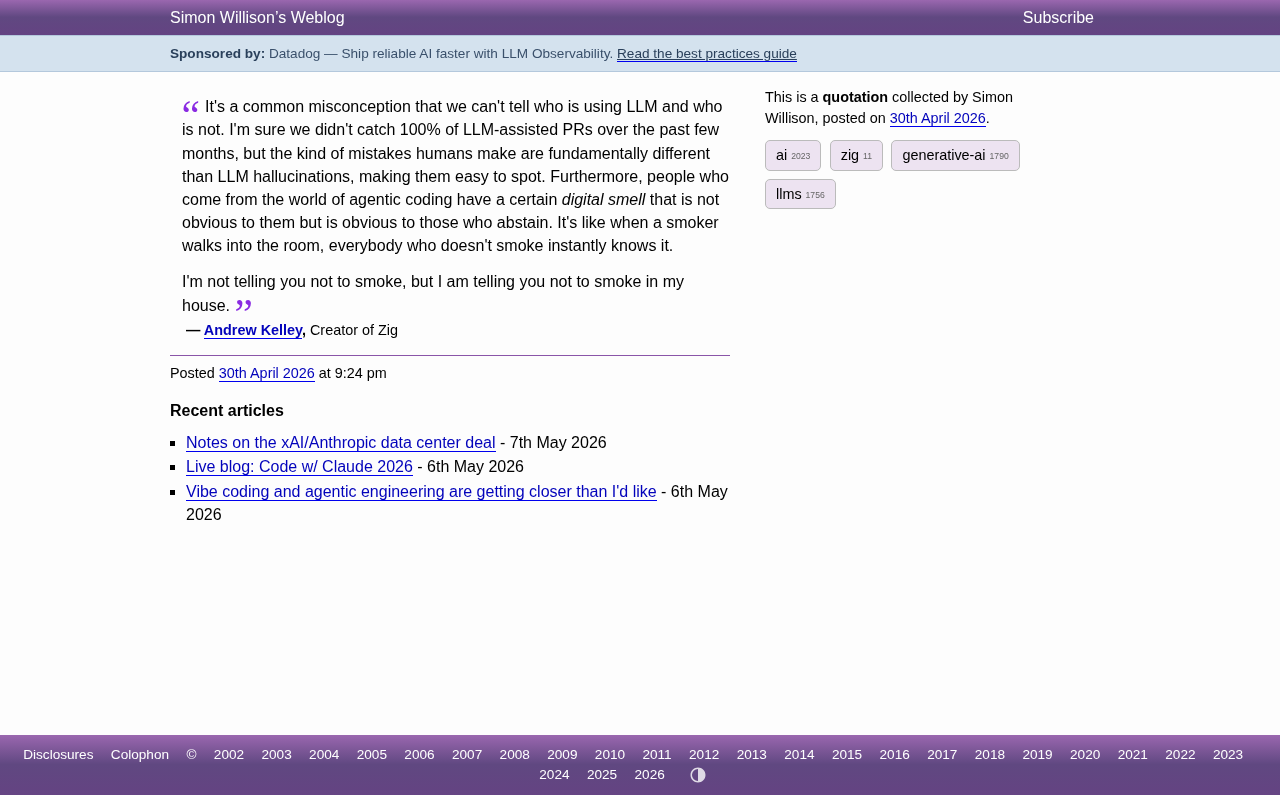
Zig Creator on AI Code Ban: You Can Smoke, But Not in My House
Zig creator Andrew Kelley uses a smoking analogy to address the AI code ban controversy: developers can use AI tools, but Zig's codebase won't accept LLM-assisted contributions.
Read more →
 Tutorials
·3 min
Microsoft's Open-Source Generative AI Course: 21 Lessons to Build AI Apps from Scratch (110K Stars)
Microsoft's official open-source Generative AI for Beginners course features 21 lessons covering LLM fundamentals, Prompt Engineering, and hands-on AI app development. 110K+ GitHub Stars, Jupyter Notebook-based learning for developers.
Read more →
 Expert Opinions
·3 min
Why Zig Strictly Bans AI Contributions: Investing in Contributors, Not Code
Zig implements open source's strictest anti-LLM policy, banning all AI contributions. Explore its "Contributor Poker" philosophy—why Zig values cultivating contributors over merging code, and how Bun's 4x performance patch can't be upstreamed.
Read more →
 Expert Opinions
·2 min
The Vibe Coding Era: Why We Need RSS to Share Personal Micro-Apps
AI coding makes building micro-apps as easy as blogging, but how do we share them? Matt Webb proposes RSS for distributing vibe coding output, and Simon Willison has already put it into practice.
Read more →