#developer tools
6683 related articles
 Product Reviews
·3 min
Cube Studio: A Comprehensive Analysis of Tencent's Open-Source Cloud-Native AI Platform
Deep dive into Tencent Music's open-source Cube Studio cloud-native AI platform, covering distributed training, LLM fine-tuning & inference, Pipeline orchestration, and domestic hardware adaptation.
Read more →
 Tutorials
·3 min
GitHub 8K Stars: Deep Dive into the Most Comprehensive LLM Resource Repository
Deep analysis of the GitHub project awesome-LLM-resources with 8,200+ Stars, covering multimodal AI, Agents, MCP protocol, model training, inference optimization, and coding assistants.
Read more →
 Tutorials
·2 min
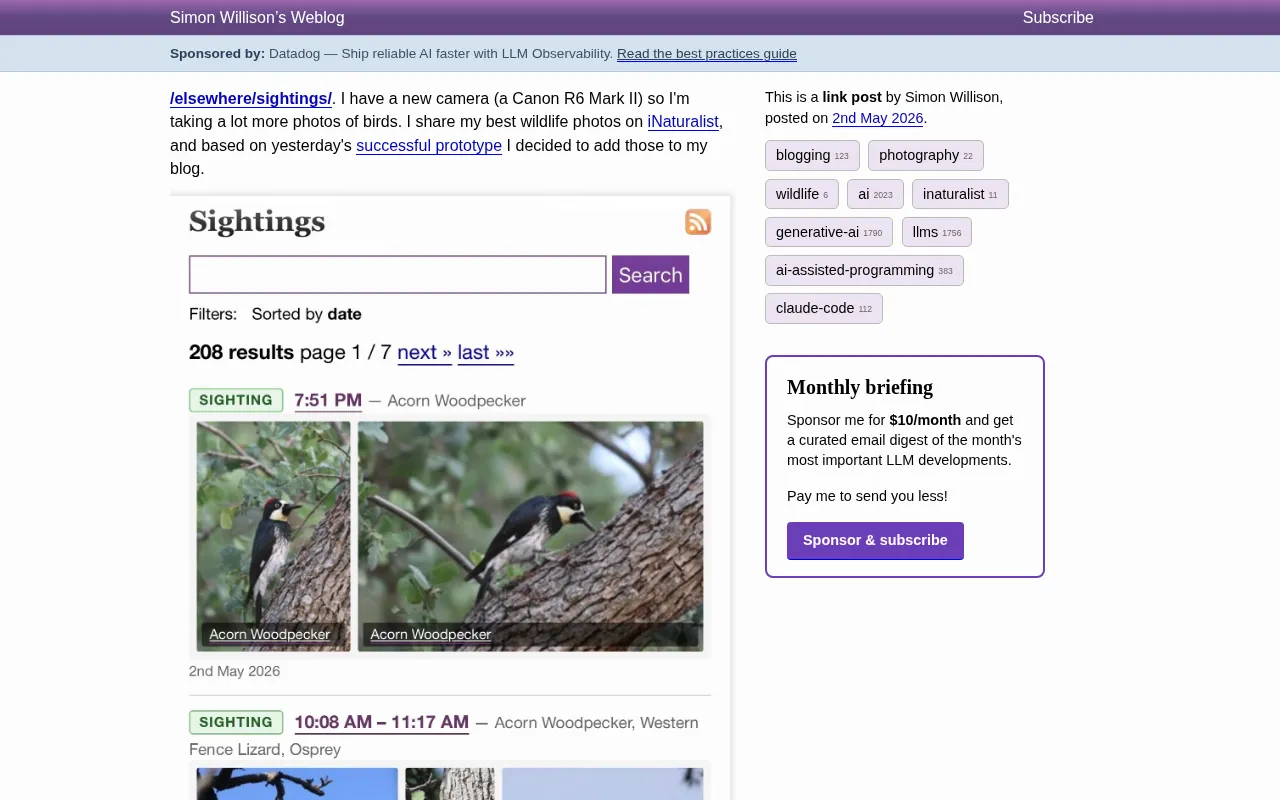
Simon Willison Built a Wildlife Sightings Feature for His Blog Using Claude Code on His Phone
Simon Willison used Claude Code for web on his phone to aggregate a decade of iNaturalist wildlife data into his blog. A look at the architecture, Beats system, and how AI is reshaping dev workflows.
Read more →
 Product Reviews
·3 min
Onlook: Open-Source AI Visual React Design Tool — Cursor for Designers
Onlook is an open-source AI-powered visual React design tool that lets designers edit real code visually. With 25,700+ GitHub Stars, it generates UI via natural language, bridging the design-development gap.
Read more →
 Tutorials
·3 min
Phone + Claude Code: Building an iNaturalist Observation Display Tool While Camping
Simon Willison built a complete iNaturalist observation display tool using only his phone and Claude Code while camping. A breakdown of the three-layer architecture: Python CLI, Git Scraping automation, and pure frontend display.
Read more →
 Product Reviews
·3 min
Stock-MCP: An Open-Source MCP Server That Gives AI Agents Real-Time Access to Chinese and US Stock Data
Stock-MCP is an open-source MCP-based financial data server supporting China A-shares, US stocks, and crypto. Learn its core features, architecture, and use cases for building AI investment research assistants.
Read more →
 Expert Opinions
·4 min
In the Vibe Coding Era, Why Do We Need RSS for Distributing Personal Apps?
Vibe Coding makes building apps as easy as writing blog posts, but personal tools lack good distribution channels. This article explores using RSS as a lightweight app distribution protocol.
Read more →
 Expert Opinions
·2 min
In the Vibe Coding Era, Using RSS to Share and Discover Personal Apps
AI-assisted programming makes building tools as easy as blogging, but how are these personal apps discovered? Matt Webb proposes RSS for vibe-coded apps, and Simon Willison quickly validates the idea.
Read more →
 Product Reviews
·2 min
Unsloth: 80% VRAM Reduction — The Best Open-Source Tool for Local LLM Fine-Tuning
Unsloth is an open-source LLM training tool with 63K+ GitHub stars, supporting Gemma 4, Qwen 3, DeepSeek. Reduces VRAM by 50–80%, enabling RTX 4090 to fine-tune 7B models with a no-code Web UI.
Read more →
 Tech Frontiers
·3 min
Guardrails AI Hit by Supply Chain Attack: A Complete Breakdown of Operation Mini Shai-Hulud
Guardrails AI's PyPI package guardrails-ai 0.10.1 was hit by the Mini Shai-Hulud supply chain attack, along with TanStack and Mistral. Full analysis and developer remediation guide inside.
Read more →
 Tech Frontiers
·2 min
Kimi K2 Official Verification Tool K2-Vendor-Verifier: One-Click API Vendor Model Accuracy Detection
Moonshot AI open-sources K2-Vendor-Verifier to verify third-party Kimi K2 API vendor inference accuracy. Learn how this tool helps developers detect over-quantization, model substitution, and other API market risks.
Read more →
 Expert Opinions
·3 min
Why the Zig Project Strictly Bans AI Contributions: Investing in People, Not Code
The Zig programming language enforces the strictest anti-LLM policy in open source, banning AI in PRs and Issues. Its "Contributor Poker" philosophy reveals why: open source value lies in cultivating people, not merging code.
Read more →
 Tech Frontiers
·3 min
CL4R1T4S Project: Massive Leak of Major AI System Prompts Sparks Transparency Debate with 25,000+ Stars
GitHub project CL4R1T4S leaked system prompts from ChatGPT, Claude, Gemini and other major AI products, earning 25,000+ Stars and igniting debate over AI transparency vs. security.
Read more →
 Tutorials
·2 min
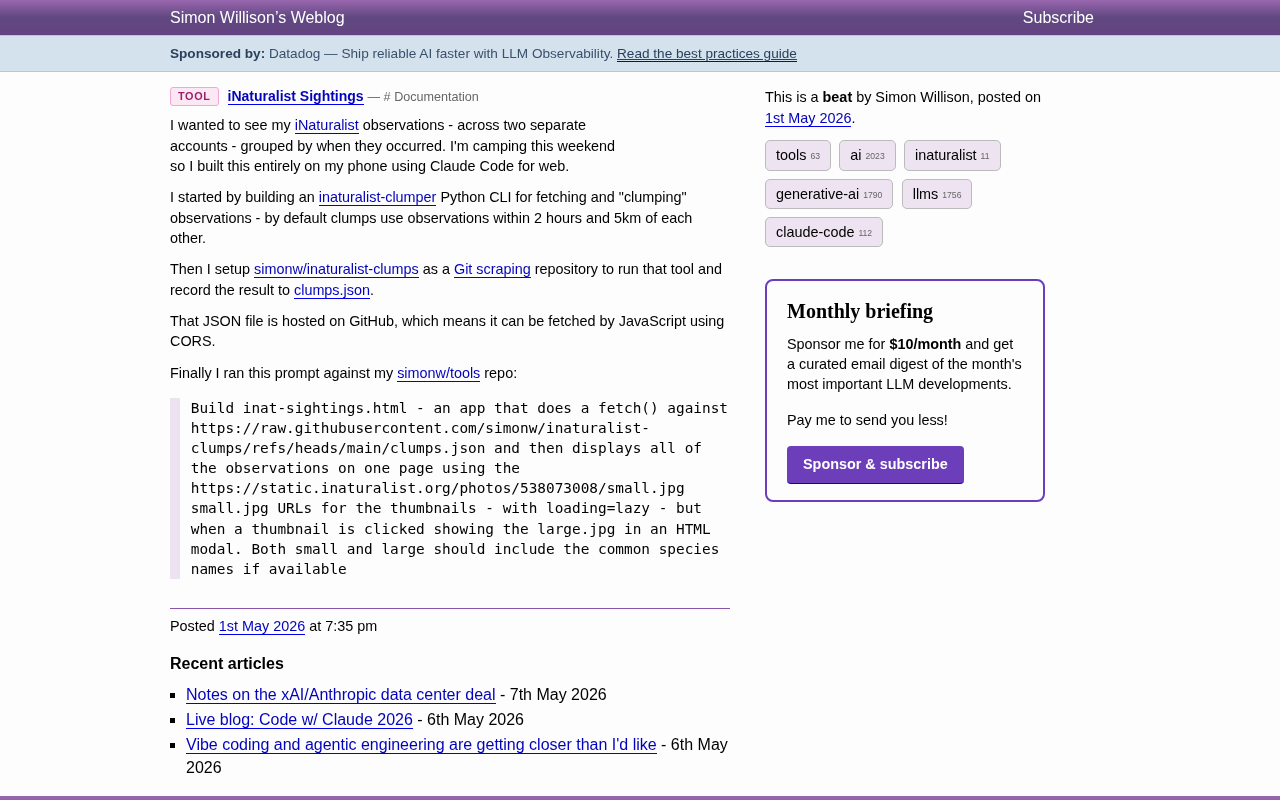
Building an iNaturalist Observation Display Tool Entirely on a Phone with Claude Code
Simon Willison built an iNaturalist observation display tool on his phone while camping using Claude Code, Git Scraping, and GitHub Actions with zero servers.
Read more →
 Tech Frontiers
·3 min
Kimi-Writer: An Open-Source AI Novel Writing Agent Powered by Deep Reasoning
Deep dive into the Kimi-Writer open-source project — an AI novel writing Agent built on Kimi-K2-Thinking with deep reasoning, autonomous planning, and long-form narrative capabilities.
Read more →
 Expert Opinions
·2 min
The Real Reason Zig Bans AI Code Contributions: Investing in People, Not Code
Zig implements the strictest anti-AI policy in open source, banning all LLM-generated contributions. Learn about their "Contributor Poker" philosophy, why Bun's 4x speedup can't be upstreamed, and implications for open source governance.
Read more →
 Expert Opinions
·3 min
In the Vibe Coding Era, Why We Need RSS to Share Personal Apps
AI programming makes building micro-apps as easy as blogging, but distribution is the new bottleneck. Matt Webb proposes RSS for sharing vibe-coded apps, and Simon Willison is already doing it.
Read more →
 Deep Dives
·3 min
AI Café Disaster: Where Exactly Are the Ethical Boundaries for Autonomous Agents?
Andon Labs let AI Agent Mona autonomously run a Stockholm café. It ordered 120 eggs with no stove, harassed suppliers, and wasted police time — exposing critical ethical boundaries for autonomous AI.
Read more →
 Tech Frontiers
·2 min
LLM 0.32 Refactoring Deep Dive: Message Sequence Input and Streaming Multi-Type Response Design
Deep dive into LLM 0.32 alpha's two core refactorings: message sequence API aligned with OpenAI format, stream_events for typed streaming responses, serialization design, and backward compatibility.
Read more →
 Expert Opinions
·2 min
The Vibe Coding Era: Why We Need RSS to Share Personal Micro-Apps
Vibe coding makes AI programming as simple as blogging, driving an explosion of personal micro-apps. Matt Webb proposes RSS for sharing micro-apps, and Simon Willison has already implemented it.
Read more →