#eval harness
267 related articles

·3 min
Xberg v1 Open-Source Document Extraction Engine: CPU-Only Local Processing Supporting 101 Formats
Xberg v1 is an MIT-licensed open-source local document extraction engine. CPU-only, supporting 101 formats with built-in SPLADE and ColBERT retrieval, Rust-powered for RAG and ML pipelines.
Read more →

·3 min
How Large a Software Project Can AI Complete Independently? Capability Boundaries and Human-AI Collaboration Models
Analysis of AI programming tools' limits for independent software projects, covering context windows, architectural consistency, long-range planning constraints, and optimal human-AI collaboration patterns.
Read more →

·2 min
Tomte: A Free Local AI Runtime Framework Built Specifically for Gemma
Tomte is a free local AI framework optimized for Apple Silicon to run Gemma models. Learn about its features, performance advantages, and how it compares to ChatGPT for private, fast local AI deployment.
Read more →

·3 min
Two Working Modes of Agentic AI: The Greenhouse and Lens Framework Explained
Deep dive into the Greenhouse and Lens modes of Agentic AI — understanding how agents excel in breadth exploration vs. precision convergence to optimize AI programming workflows.
Read more →

·3 min
GPT-5.6 Dominates Math but Stumbles on Puzzle Games? Two API Settings Unlock 3x Performance
GPT-5.6 Sol conquers frontier math but struggles on ARC-AGI-3 puzzles. The fix? Not a smarter model, but two API settings that tripled scores and cut token costs 6x.
Read more →

·3 min
The AI Replacement Wave: Can Switching to a Trade Really Save You?
Can switching to plumbing or electrical work really protect you from AI long-term? This article analyzes white-collar vs. blue-collar replacement timelines, the durability of the physical moat, and personal strategies more important than picking the right career track.
Read more →

·3 min
DeerFlow: Deep Dive into ByteDance's Open-Source Long-Horizon SuperAgent Framework
Deep analysis of ByteDance's open-source DeerFlow long-horizon SuperAgent framework, covering six core components, architecture design, use cases, and industry significance.
Read more →

·3 min
AI Can't Build Usable Products — Developers' Jobs Haven't Disappeared
AI can generate code snippets and demos, but usable products still require human engineers' judgment and responsibility. This article analyzes AI coding tools' limits and developers' evolving roles.
Read more →

·2 min
qm: A Deep Dive into the Multiplayer AI Agent Harness for Team Collaboration
Deep dive into qm, a multiplayer AI Agent collaboration framework that uses state sync, real-time observability, and human takeover mechanisms to transform Agents from solo tools into team infrastructure.
Read more →

·1 min
HarnessRouter: One API to Access the World's Top AI Agents
HarnessRouter provides a unified API to access top AI agents worldwide, encapsulating sandbox isolation, task orchestration, fault-tolerant retries, and cost control for production deployment.
Read more →

·1 min
HarnessRouter: One API to Access the World's Top AI Agents
HarnessRouter provides a unified API to access top AI agents worldwide, encapsulating sandbox isolation, task orchestration, fault-tolerant retries, and cost control for production-ready integration.
Read more →

·3 min
Numbat Open Source: A Cross-Framework AI Agent Security Detection and Response Solution Explained
Numbat is an open-source AI Agent security detection and response tool supporting cross-framework deployment with Agent behavior visibility and pre-execution interception capabilities.
Read more →

·2 min
Qwen Scribe: A Deep Dive into the Local Speech Transcription Tool for Apple Silicon
Qwen Scribe is a local speech transcription tool optimized for Apple Silicon, running fully offline with Qwen models. Explore its technical features, privacy benefits, and comparison with Whisper.
Read more →

·3 min
Can Claude Opus 5 Refactor 25-Year-Old Legacy Code? The Real Capability Boundaries of AI Programming
Reddit debates whether Claude Opus 5 can independently refactor a 25-year, 50K-line undocumented legacy codebase. Analyzing AI programming's real capability boundaries and human-AI collaboration.
Read more →

·2 min
CodeCrucible: A New Paradigm for LLM-Driven Static Code Security Analysis
Explore how CodeCrucible uses LLMs to revolutionize static code security analysis (SAST), comparing traditional tool limitations with semantic-driven vulnerability detection approaches.
Read more →

·2 min
CodeCrucible: A New Paradigm for LLM-Driven Static Code Security Analysis
Explore how CodeCrucible uses LLMs to revolutionize static code security analysis (SAST), comparing traditional tool limitations with semantic-driven vulnerability detection.
Read more →

·3 min
How Does a Rear Center Tank Extend Range? An In-Depth Look at Aviation Fuel Systems
In-depth analysis of how a Rear Center Tank (RCT) works: how ~20,000 liters of extra fuel capacity extends range by 1,000 NM, plus the engineering trade-offs between payload, CG management, and operational economics.
Read more →

·3 min
How Does a Rear Center Tank Extend Range? A Deep Dive into Aviation Fuel Systems
Deep dive into how Rear Center Tanks (RCT) work: how ~20,000 liters of extra fuel extends range by 1,000 NM, plus the engineering trade-offs of payload, CG management, and operational economics.
Read more →
·4 min
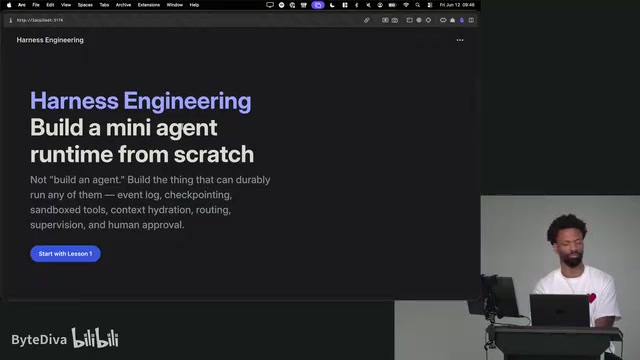
Harness Engineering: The Core Infrastructure for Taking AI Agents from Demo to Production
Deep dive into Harness Engineering: why AI Agents need memory management, durable execution, guardrails & approvals to go from demo to production.
Read more →

·4 min
Harness Engineering: The Core Infrastructure for Taking AI Agents from Demo to Production
Deep dive into Harness Engineering: why AI Agents need memory management, durable execution, guardrails & approvals to reach production. Based on Scott Moss's workshop.
Read more →