#fUS imaging
66 related articles

·3 min
UAV Disaster Zone Rescue Priority Assessment: A Deep Feasibility Analysis for Final Year Projects
A deep feasibility analysis of a UAV disaster-zone rescue priority assessment project, covering SARD/HERIDAL/VisDrone datasets, pose detection, YOLO models, and ethical boundaries — a practical reference for CV final-year projects.
Read more →

·3 min
Chain of Thought (CoT) Explained: Teaching AI to Reason Step by Step
A deep dive into Chain of Thought (CoT) prompting: from prompt construction to reasoning chain generation, revealing the three mechanisms behind AI's improved reasoning. Covers math, medical, and financial use cases.
Read more →
Indian Scientists Create Most Detailed…
·2 min
Indian Scientists Create Most Detailed 3D Human Brainstem Atlas Ever, Filling a Critical Gap in Neuroscience
Indian scientists have completed the most detailed 3D human brainstem atlas ever, with sub-millimeter precision covering dozens of neural nuclei — advancing neurosurgery, Parkinson's research, and AI brain modeling.
Read more →

·2 min
Real-Time Data Augmentation for Single-Class Segmentation Models: Frequency, Combinations, and Boundary Precision Explained
How many augmentations per image is enough? This guide breaks down on-the-fly augmentation strategy for single-class segmentation with 3,000 labeled images, covering controlled mixing, domain matching, and mask boundary precision.
Read more →
Watercolor vs. Gouache: A Deep Dive in…
·3 min
Watercolor vs. Gouache: A Deep Dive into Composition, Optical Principles, and Technique
Watercolor and gouache share water-based formulas but differ fundamentally in opacity, optical behavior, and technique. Learn the science behind both media.
Read more →

·2 min
Melody First or Lyrics First? Neuroscience Reveals the Secrets of Music Perception
Why do some people notice the melody first while others remember the lyrics? Explore the neuroscience behind music perception and the brain's dual-channel processing.
Read more →

·3 min
Will Vibe Coding Ruin Programmers? Coding Anxiety and How to Break Through in the AI Era
As Vibe Coding rises, many developers can't write code without AI. We break down the risks, whether traditional coding skills still matter, and how to rebuild them.
Read more →

·2 min
Multi-Sensor Kalman Fusion in Practice: A Complete Breakdown of the Shahed Drone Tracking System
A deep dive into a multi-sensor Kalman fusion drone tracking system: upgrading from single camera to camera+RF, covering CA motion models, OOSM handling, trajectory prediction, and achieving 3.36px RMSE fusion accuracy.
Read more →

·3 min
Sony RX10 V Superzoom Deep Dive: Stacked Sensor + 25x Zoom Mark a Major Upgrade
Sony revives the RX10 series after nine years with the RX10 V — featuring a new 1-inch stacked CMOS sensor and Zeiss 24-600mm f/2.4-4 lens. Full specs breakdown inside.
Read more →

·4 min
Hands-On with GPT-5.6: A Single Prompt Builds a Real-Time Voice Anime App
Hands-on with GPT-5.6 Sol: auto-generate real-time voice anime characters from one prompt, write physics engines from scratch, and build unfamiliar toolchains autonomously. In-depth review of coding, agentic tasks, benchmarks, and its hallucination weakness.
Read more →

·3 min
Building a Variational Autoencoder from Scratch: A Hands-on Guide with PyTorch + PIL
A deep dive into building a Variational Autoencoder (VAE) from scratch with PyTorch and PIL. Covers the encoder, decoder, reparameterization trick, and KL divergence loss to help you truly understand the fundamentals of generative AI.
Read more →

·4 min
Multi-Sensor Kalman Fusion in Practice: A Complete Breakdown of a Drone Tracking System
An in-depth look at how an open-source drone tracker achieves breakthroughs via multi-sensor Kalman fusion: constant-acceleration motion models, heterogeneous sensor covariance, OOSM rewind-and-replay, and RMSE dropping from 5.47px to 3.36px.
Read more →

·7 min
Training Machine Learning Models from Scratch: A Complete Beginner's Guide
A complete walkthrough of training machine learning models from scratch—covering problem definition, data preprocessing, algorithm selection, hyperparameter tuning, and evaluation, with tool recommendations for beginners.
Read more →

·7 min
Grok 4.5 Launch: Coding AI Market Reshuffle, Anthropic Claims Half the Territory
Grok 4.5 launches at just $0.49 per task, 90% cheaper than rivals. Anthropic's Claude Code claims 50% of the AI coding market. SambaNova raises $1B. Read the latest AI market shifts.
Read more →
AI-Generated Videos That Activate the …
·3 min
AI-Generated Videos That Activate the Brain: Breakthroughs and Concerns in Neuroscience Closed-Loop Optimization
Scientists use AI closed-loop optimization to auto-generate videos that maximally activate specific brain regions. Explore the science, medical potential, and ethical concerns around neural manipulation.
Read more →

·7 min
Airliner Engine Failure Damages Cabin Window: The Physics of High-Altitude Decompression and a Passenger Survival Guide
A Ryanair flight suffered engine failure and window damage, nearly sucking a passenger out. Explore the physics of high-altitude decompression, historical cases, and how passengers should respond.
Read more →

·3 min
Velorn: Open-Source NLE Editor Where AI Agents Handle Editing and Mixing
Velorn is an open-source NLE with ComfyUI generation and a local MCP server of 100+ tools, letting Claude and Cursor agents edit timelines and mix audio — no cloud credits required.
Read more →
·6 min
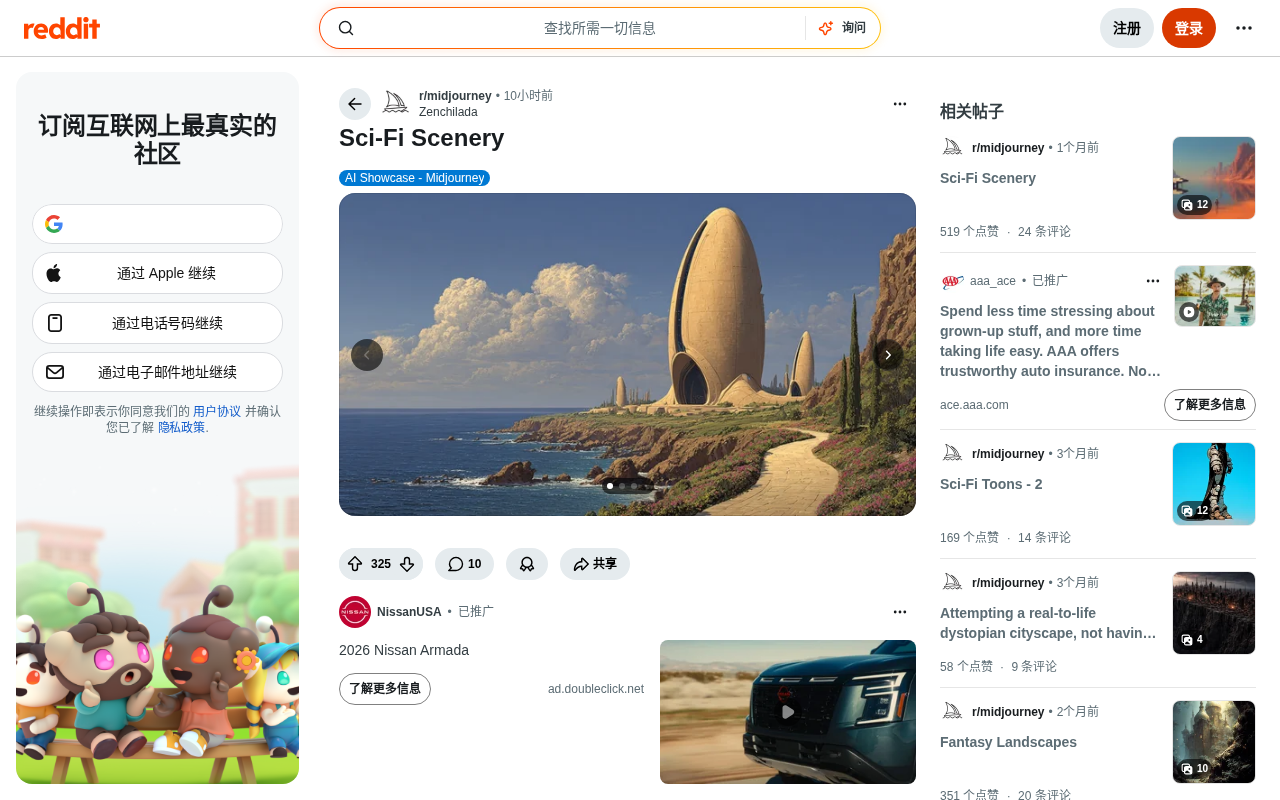
AI-Generated Sci-Fi Scenery: A Visual Revolution and the Democratization of Imagination
Explore how AI image generation makes sci-fi aesthetics concrete—from futuristic architecture to alien landscapes, AI is bringing dream-crafting within reach. Analyzing the tech evolution, cultural resonance, and democratization of concept design behind Reddit's trending works.
Read more →

·5 min
Nothing Phone 4b In-Depth Review: The Ultimate Value Play at €330
Nothing Phone 4b review: 6.77-inch high-refresh AMOLED, 5200mAh battery, Snapdragon 6 Gen 4. What are the trade-offs at €330? An in-depth look at its screen, camera, performance, and software.
Read more →

·7 min
Complete Guide to Training Small Models on Kaggle's Free Compute: GPU Quotas and Practical Tips
In-depth guide to Kaggle's free-tier compute: P100/T4 GPU with 30 hours/week quota, 12-hour sessions, suitable models like CNN and BERT fine-tuning, plus tips like mixed precision and checkpointing to start deep learning at zero cost.
Read more →