#indie game AI tools
130 related articles

·2 min
A Game With No Assets: Generating All Graphics and Sound Effects in Real-Time Using Sine Waves
Indie developer Zanzlanz built a game with zero asset files—all textures and sounds are generated in real-time using sine wave math functions. Exploring the tech behind procedural generation.
Read more →

·2 min
Garden of Mind: A Mindfulness App That Turns Subconscious Intentions into a 3D Garden
Garden of Mind visualizes subconscious intentions as a 3D garden. Write intentions as seeds, nurture them with 2-min daily meditation, and watch plants grow. Free to try, one-time €29 purchase.
Read more →

·2 min
Terminal Candy: A macOS Terminal Skinning Tool with 84 Color Schemes + Custom Skins
Terminal Candy is a native macOS terminal app with 84 color schemes, CRT retro effects, a visual Skin Builder, and a global hotkey—all for a one-time $10 purchase.
Read more →

·5 min
Servey: The Ultimate iPhone-to-Mac Remote Control Tool with a Built-in Terminal in Your Pocket
Servey is a remote desktop tool built for Apple's ecosystem, letting iPhone/iPad control Mac with LAN hardware acceleration, P2P private connections, and a built-in terminal for developers.
Read more →

·2 min
Monolite Review: Is This Scan-to-Join Audience Interaction Tool Worth Trying?
In-depth review of Monolite, analyzing its instant QR join, custom branding, and data reports. Compared with Kahoot, Mentimeter, and Slido for meetings, teaching, and events.
Read more →

·2 min
LTX 2.3 + ComfyUI Local Video Generation Hands-On: A New Open-Source AI Video Option
A deep dive into the LTX 2.3 + ComfyUI combo for local AI video generation, covering deployment advantages, VRAM requirements, community ecosystem, and real-world output quality assessment.
Read more →

·3 min
GitHub Daily · August 1: The Rise of SuperAgents and Generative AI's Mass Education Moment
GitHub trending Aug 1: ByteDance's deer-flow SuperAgent, Microsoft's GenAI course, 3D generation, voice cloning, and privacy-first tools shape the AI landscape.
Read more →

·3 min
Nommer.ai: Turning Recipes into 2-Player Cooperative Cooking Mode
Nommer.ai is an iOS recipe app that intelligently splits any recipe into 2-player cooperative mode, enabling two cooks to work in parallel and complete dishes together with seamless coordination.
Read more →

·2 min
Weekend Game Jams: The New Paradigm of AI-Assisted Indie Development
Two developers built a genre-blending experimental game in one weekend. Exploring how AI tools lower game development barriers and enable a new 'small and fast' indie paradigm.
Read more →

·2 min
SDL_GPU: Deep Dive into a Single-Header High-Performance 2D Graphics Library
Deep analysis of the SDL_GPU single-header 2D graphics library covering its design philosophy, GPU acceleration principles, use cases, and technical trade-offs.
Read more →

·2 min
Forgeon: Transforming Books into Interactive, Gamified Story Experiences
Forgeon is an interactive story platform blending choice branches, RPG mechanics, music, and illustrations to make books as engaging as games. Learn how it empowers human creators.
Read more →

·2 min
yatta!: The Minimalist To-Do List That Cheers for You After Every Completed Task
yatta! is a minimalist iOS to-do app with just three categories—Today, Later, Someday—that celebrates each completed task with cute characters and fireworks. Free and fully offline.
Read more →

·2 min
AI Builds the Largest Open-World MMO in History: A New Paradigm for Game Development
Exploring how AI drives large-scale MMO development, from scalable content generation to dynamic NPC interaction, analyzing technical pathways, challenges, and industry implications.
Read more →

·2 min
Godot Engine VR Development Log: Lessons and Pitfalls from Porting to PSVR2
An in-depth analysis of an indie developer's experience using Godot to develop VR games and port to PSVR2, covering OpenXR integration, performance optimization, and console certification challenges.
Read more →

·4 min
Pure Vibecoding Builds a 130+ Card Multiplayer CCG: Full AI Tech Stack Breakdown
An indie dev built a 130+ card multiplayer CCG entirely through vibecoding with Claude Code, GPT, and ElevenLabs. Full AI tech stack breakdown and analysis of vibecoding's capabilities and limits.
Read more →

·4 min
9 Hours, 4 Million Tokens: AI Creates a Stunning WebGPU Snow Rendering Masterpiece with Claude Code
Reddit user Noniv used Claude Code with the Opus model to build SNOWFLOW, a stunning WebGPU real-time snow renderer, in just 9 hours using 4 million tokens. A deep dive into prompt strategy, snow shaders, and performance optimization.
Read more →

·2 min
Vimgolf.ai: Learn Vim Through a Level-Based Game
Vimgolf.ai is a gamified Vim learning tool that helps users progressively master Vim commands through level-based challenges. We analyze its approach and compare it with VIM Adventures and similar tools.
Read more →
·2 min
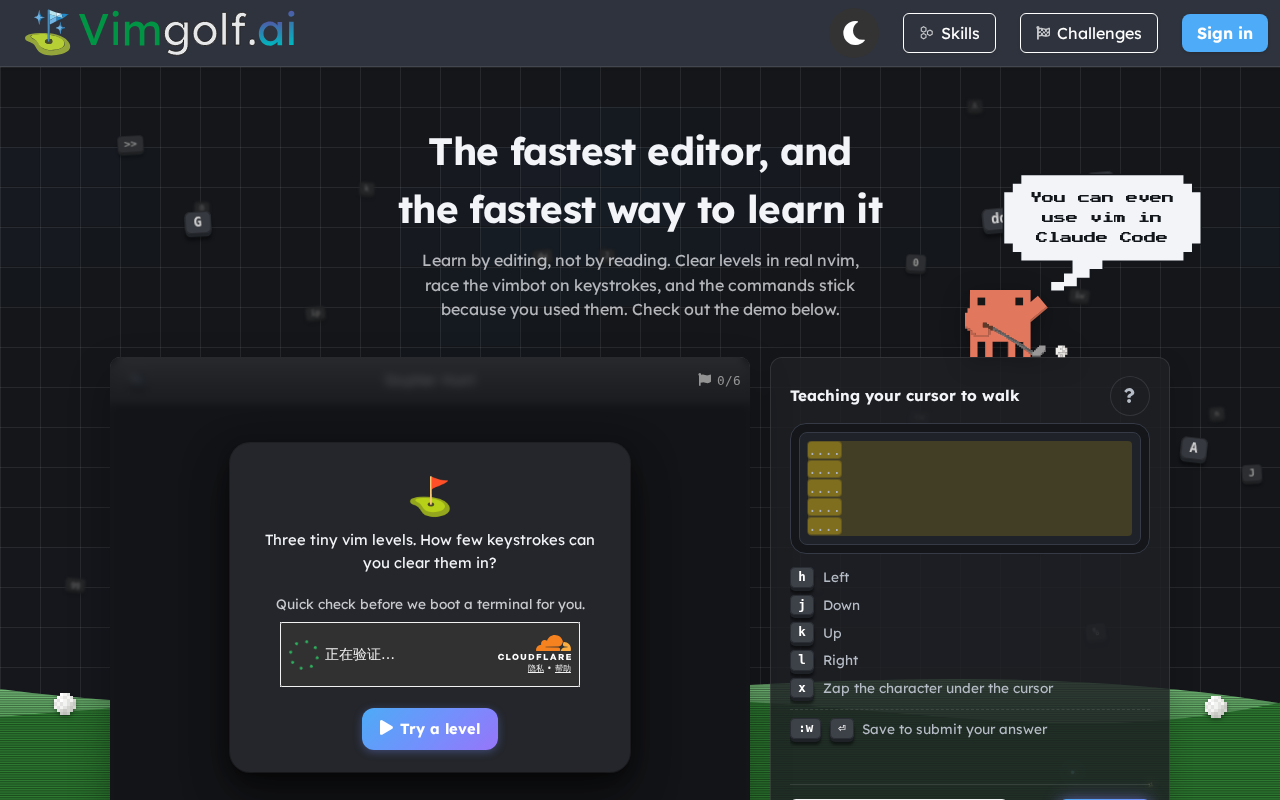
Vimgolf.ai: Learn the Vim Editor Through a Level-Based Game
Vimgolf.ai is a gamified Vim learning tool that helps users progressively master Vim commands through level-based challenges. We explore its core philosophy, gamification advantages, and compare it with tools like VIM Adventures.
Read more →

·4 min
Project Rai-chan Technical Breakdown: A Complete Guide to Building a Fully Local AI Companion
Deep dive into Project Rai-chan's tech stack: Ollama+Gemma local LLM, Unity rendering, VOICEVOX speech synthesis, and more — exploring the technical path for local AI companions.
Read more →

·3 min
Should You Open Source Your Project? A Layered Open Source Strategy Using Project Replay as a Case Study
Should indie developers open source their projects? Using the game custom achievement tool Project Replay as a case study, this article analyzes the open source decision and offers a practical layered strategy.
Read more →