#intent routing
312 related articles

·2 min
AI Emotional Dependency: A Reddit Help Post Reveals a Deeper Crisis
A Reddit user's emotional breakdown over sudden AI output changes reveals deep concerns about AI emotional dependency, silent model updates, and product responsibility boundaries.
Read more →

·4 min
Infrastructure Architecture for Agent Applications: Four Core Patterns Explained
A deep dive into infrastructure architecture patterns for production-grade Agent applications, covering state persistence, sandbox isolation, LLM observability, and cost control.
Read more →

·4 min
Infrastructure Architecture for Agent Applications: Four Core Patterns Explained
Deep dive into infrastructure architecture patterns for production-grade Agent applications, covering state persistence, sandbox isolation, LLM observability, and cost control.
Read more →

·3 min
Long Documents Don't Work: Why AI Agents Can't Follow Your Rules
Analysis of why AI Agents can't reliably follow long policy documents, covering context dilution, rule conflicts, and soft constraint limitations, with more reliable governance architectures.
Read more →

·4 min
11-Node LangGraph in Practice: Complete Architecture Breakdown of a Compliance-Grade RAG Agent
Deep dive into an 11-node Agentic RAG agent built with LangGraph, featuring 6-way intelligent routing, hallucination guards, PII masking, circuit breakers, and zero-cost deployment.
Read more →

·2 min
Gemini 3.5 Flash-Lite: A Low-Cost, High-Throughput Powerhouse for Scaling AI
Deep dive into Google's Gemini 3.5 Flash-Lite model. This lightweight model is designed for high-frequency repetitive tasks like ticket sorting and data extraction, solving enterprise AI scaling challenges through ultra-low cost and high throughput.
Read more →

·2 min
Gemini 3.5 Flash-Lite: A Low-Cost, High-Throughput Powerhouse for Scaling AI
A deep dive into Google's Gemini 3.5 Flash-Lite model. Designed for high-frequency repetitive tasks like ticket sorting and data extraction, it tackles the core cost challenge of enterprise AI scaling through ultra-low pricing and high throughput.
Read more →
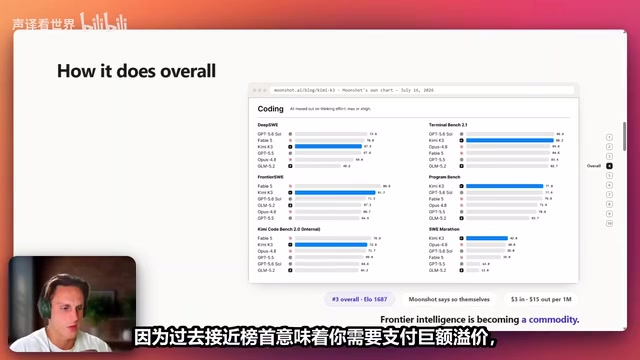
·3 min
Kimi K3 Hands-On Tutorial: Claude Code Sub-Agent Configuration & GPT-5.6 Comparison Test
Complete guide to configuring Kimi K3 as a Claude Code sub-agent, including API setup, YFlow workflow building, and head-to-head comparison with GPT-5.6 and Claude Fable 5.
Read more →

·3 min
Agent Skill Routing: Engineering Trade-offs Between Retrieval and LLM, and the Two-Stage Layered Architecture
Deep dive into Agent skill routing: comparing pure model vs. pure retrieval approaches, with a detailed two-stage layered architecture balancing accuracy, latency, and cost.
Read more →

·3 min
Kimi K3 Deep Dive: How a 3 Trillion Parameter Open-Weight Model Reaches the Frontier
Deep dive into Kimi K3: the largest open-weight model at 3 trillion parameters, surpassing Opus-level models in Agentic coding with 896-expert MoE architecture, 1M token context, at Sonnet pricing.
Read more →

·4 min
Laguna S 2.1 Deep Dive: Hands-On Local Deployment of a 118B Parameter Coding Model
In-depth review of Poolside's Laguna S 2.1 open-source coding model: MoE architecture, RL training, DGX Spark local deployment, and real-world agentic coding tests with 8B active parameters.
Read more →

·4 min
WebMCP in Practice: How MakeMyTrip Is Reshaping the Travel Booking Experience
India's largest OTA platform MakeMyTrip uses WebMCP to standardize AI Agent interactions with web apps, replacing fragile DOM scraping with natural language-driven test automation and simplified complex booking scenarios.
Read more →

·5 min
WebMCP in Practice: Building Browser AI Agent Tools & DevTools Debugging Guide
A detailed guide to Google's WebMCP standard proposal, covering imperative and declarative tool building, smart home and car configuration demos, and Chrome DevTools debugging for AI agent tools.
Read more →

·4 min
WebMCP in Practice: How MakeMyTrip Is Reshaping the Travel Booking Experience
India's largest OTA platform MakeMyTrip uses WebMCP to standardize AI Agent interaction with web apps, solving DOM scraping fragility, enabling natural language test automation, and simplifying complex international flight bookings.
Read more →

·3 min
Deconstructing Agents: Task Decomposition, Context Compression, and the Case Against Heavy Frameworks
A deep engineering analysis of Agent internals: how LLMs decompose tasks via tool calling, why context compression and memory are essential, and why solo developers should avoid heavy frameworks.
Read more →

·4 min
AI Agent Development in Practice: A Complete Path from Zero to Production
A systematic guide to AI Agent development covering core modules, framework selection, tool calling, data preparation, and production deployment to help developers build production-ready Agent applications.
Read more →

·5 min
Complete Breakdown of Core Competencies for AI Agent Engineers: From Demo to Production-Grade Systems
Deep breakdown of 4 core AI Agent engineer competencies: business decomposition, multi-Agent architecture, quantitative evaluation, and engineering delivery—bridging the gap from Demo to production.
Read more →

·4 min
Remote Surgery at 199ms Latency? What Network Latency Really Means Across Different Scenarios
Gamers struggle above 50ms, yet remote surgery works safely at 199ms latency. This article explains why, covering jitter stability, motion prediction algorithms, and dedicated medical networks.
Read more →

·3 min
Claude Opus 5 High Reasoning Mode: The Concerns and Insights of Overthinking
Claude Opus 5's high+ reasoning mode has been jokingly called an "anxious overthinker." This article analyzes why LLMs over-reason, the diminishing returns tipping point, and how to balance reasoning intensity.
Read more →

·3 min
Agent Intent Recognition: Engineering Practices Behind the Three-Layer Funnel Architecture
An in-depth look at the three-layer funnel architecture for agent intent recognition: rules for fast interception, context for routine intents, and LLM as fallback. Exploring the engineering trade-offs of accuracy, latency, and cost.
Read more →