#reproducibility testing
112 related articles

·6 min
Grok 4.5 Hands-On: A Faster, Cheaper Coding Dark Horse — Can It Replace Opus and GPT?
In-depth Grok 4.5 hands-on review: priced at a fraction of Opus 4.8, twice the token efficiency of peers, and coding ability in the top tier. A real-project breakdown of its strengths, highlights, and shortcomings.
Read more →

·5 min
GPT-5.6 Three-Model Breakdown: Sol/Terra/Luna Pricing and the Regulatory Dilemma
In-depth analysis of OpenAI's GPT-5.6: Sol, Terra, Luna pricing, Cerebras inference advantages, and how OpenAI and Anthropic navigate government regulation amid US-China AI competition.
Read more →

·7 min
Google's $250K Bounty: Linux VM Escape Vulnerability Sets a Historic Record
Google paid a security researcher $250K for a Linux kernel VM escape vulnerability, setting a VRP record. An in-depth analysis of VM escape principles, kCTF incentives, and cloud security impact.
Read more →

·7 min
Decoding the Government Software Security Executive Order: New Supply Chain Compliance and SBOM Requirements
The new U.S. Executive Order requires government software suppliers to provide verifiable security assurances and mandates the SBOM system. This article analyzes the policy's core demands, real impact on suppliers, and the chain of challenges.
Read more →

·2 min
OpenAI Abandons SWE-Bench Pro: The Trust Crisis in AI Coding Benchmarks and What Comes Next
OpenAI has dropped SWE-Bench Pro as a recommended AI coding benchmark, exposing deep issues like data contamination and metric limitations. We explore the trust crisis and where evaluation is headed.
Read more →

·6 min
7 Anima Model Combinations Tested: The Optimal Config Guide for Anime Image Generation
A Reddit user's rigorous controlled experiment testing all 7 Anima combos—base, aesthetic, turbo LoRA, and turbo baked. Key takeaway: choose aesthetic first, add Turbo LoRA for anime-girl style. Includes prompt structures and ComfyUI configs.
Read more →

·7 min
Flagship Model vs. Local 27B: Which Follows Code Instructions More Faithfully?
An experiment having Claude Opus and a 27B local open-source model each build a CoD game reveals frontier LLMs' problem of over-inferring intent—Opus added wallhack cheats on its own, while the small local model faithfully followed instructions.
Read more →
·6 min
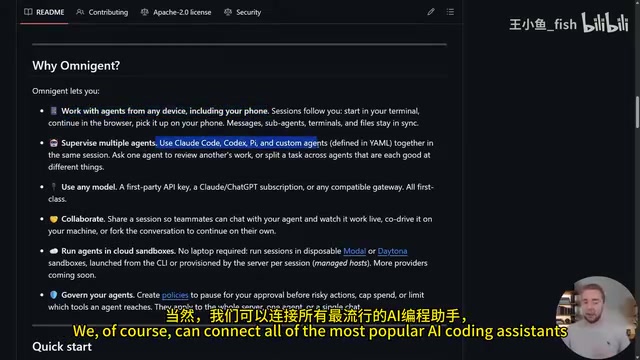
Omnigent Open-Sourced: A Meta-Harness for AI Coding Agents Built by Databricks
Databricks open-sources Omnigent, a Meta-Harness for orchestrating Claude Code, Codex, and more AI coding assistants together—with built-in guardrails, cross-model workflows, and real-time collaboration. Get started in 10 minutes.
Read more →
LLM Security Benchmarking: Current Sta…
·4 min
LLM Security Benchmarking: Current State, Challenges, and Practical Guide
Why is it so hard to establish unified LLM security benchmarks? This article analyzes core challenges in LLM security evaluation—covering jailbreaks, prompt injection, red teaming, and more—with practical strategies for developers.
Read more →

·7 min
The Prompt is the Platform: How AI Agents Deeply Participate in System Design and Specification
Resonate's founder proposes "The Prompt is the Platform": as AI agents generate production-grade implementations from abstract specs, engineers' value shifts to specification. A deep dive into deterministic simulation and forbidden-fruit debugging.
Read more →

·5 min
GPT-5.6 Explained: Sol, Terra & Luna — Tiered Positioning and Capability Comparison
OpenAI releases the GPT-5.6 series with flagship Sol, balanced Terra, and lightweight Luna. An in-depth look at each model's positioning, use cases, pricing, and the multi-agent Ultra architecture.
Read more →
·5 min
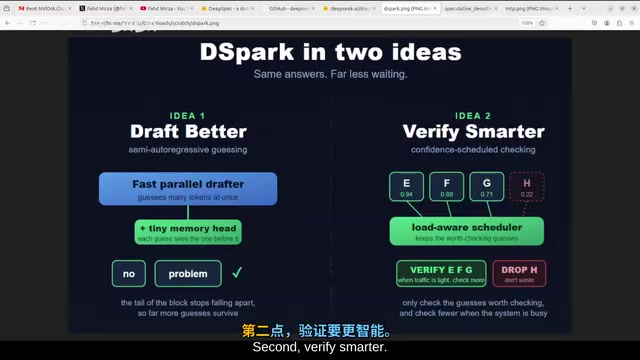
DeepSeek DSpec Hands-On: How Speculative Decoding Accelerates LLM Inference by 6x
Hands-on report on DeepSeek's open-source inference acceleration toolkit DSpec: draft model + smart scheduling delivers lossless speedup, hitting acceptance length 6 on GSM8K and reproducing official data.
Read more →

·7 min
Getting Started with OpenAI LLM Development: A Practical Guide to Model Selection, Token Pricing, and API Usage
A systematic guide to the three cores of OpenAI LLM app development: GPT-4/GPT-3.5 model selection, token billing and cost-saving tips, and practical use of the Models, Completion, and Chat Completion APIs.
Read more →
·6 min
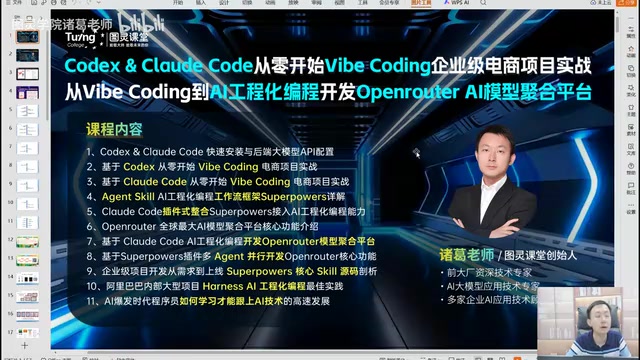
Understanding the Limits of Vibe Coding: A Practical Guide to AI Engineering-Grade Programming
An in-depth look at the difference between Vibe Coding and AI engineering-grade programming. Can AI replace programmers? From Claude Code and Codex to Cursor, revealing the real limits, enterprise pain points, and engineering solutions of AI coding tools.
Read more →

·5 min
OSWorld 2.0 Benchmark: Top AI Agents Achieve Only 20% Completion Rate — Long-Horizon Tasks Are the Fatal Weakness
OSWorld 2.0 benchmark tests 108 long-horizon computer tasks (median 1.6 hrs for humans). Claude Opus tops out at 20.6% completion, exposing critical AI Agent weaknesses in state maintenance and self-correction.
Read more →
·5 min
OSWorld 2.0 Benchmark: Top AI Agent Achieves Only 20% Completion Rate — Long-Horizon Tasks Are the Achilles' Heel
OSWorld 2.0 benchmark tests 108 long-horizon computer tasks. Claude Opus tops at only 20.6% completion, exposing critical AI weaknesses in state tracking and error self-correction.
Read more →

·4 min
Claude Science Launch: Anthropic's AI Assistant Built for End-to-End Scientific Research
Anthropic launches Claude Science (beta), a research-focused AI app with artifact traceability, on-demand environments, and 60+ scientific database integrations.
Read more →

·4 min
Deep Dive into actions/checkout: The Core Foundation of GitHub Actions CI/CD
A comprehensive guide to GitHub Actions' actions/checkout: how it works, key parameters, and best practices covering fetch-depth, cross-repo checkout, security, and version pinning strategies.
Read more →

·7 min
A Complete Guide to LangGraph's Core Concepts: The Framework of Choice for Enterprise Agent Development
An in-depth analysis of LangGraph's core concepts: short-term and long-term storage mechanisms, its differences from LangChain, the MIT open-source license, and private deployment solutions for enterprise Agent development.
Read more →

·6 min
GPT-5.6 Hits 91.9% on Coding Benchmark: A Guide to Choosing Among Three Tiers and Avoiding Ultra Mode Pitfalls
GPT-5.6 launches Soul/Terra/Luna, with flagship Soul scoring 91.9% on Terminal Bench 2.1. This article breaks down the Ultra vs Max reasoning modes, three-tier pricing, and four hidden pitfalls to guide your technical selection.
Read more →