#synthetic data
203 related articles

·2 min
Microsoft's VibeVoice Goes Open Source: A Deep Dive into the Frontier Voice AI Behind 50K Stars
Microsoft's open-source voice AI project VibeVoice rapidly gained 50K+ GitHub Stars, focusing on emotional expression and natural prosody. A deep dive into its technology, strategy, and applications.
Read more →

·2 min
Firemaps Spain: Real-Time Wildfire Monitoring Map with Wind Flow Visualization
Firemaps Spain is an open-source real-time wildfire monitoring tool for Spain and Portugal, combining fire hotspot data with wind flow visualization to help assess fire spread direction.
Read more →

·2 min
AI Treasure Hunting on the Ocean Floor: How AE Studio Uses Algorithms to Locate Shipwreck Treasures
AE Studio uses AI to fuse historical shipping archives, marine geographic data, and satellite remote sensing to locate shipwreck treasures via machine learning models.
Read more →

·2 min
AI Treasure Hunting Underwater: How AE Studio Uses Algorithms to Locate Shipwreck Treasures
AE Studio uses AI to fuse historical shipping archives, ocean geographic data, and satellite remote sensing to locate underwater shipwreck treasures via machine learning models.
Read more →

·3 min
The Collapse of the Lexical Assumption: Analyzing the Implicit Feature Inheritance Challenge in AI Alignment
Deep analysis of implicit feature inheritance in AI alignment: Anthropic's research reveals model behavior can propagate independently of semantics, fundamentally challenging traditional RLHF safety mechanisms.
Read more →

·3 min
Should the ACM Digital Library Open Up to Large Language Models? The Battle Between Academic Corpora and AI Training
Exploring whether the ACM Digital Library should open to LLM training. Analyzing the value of academic corpora for AI, data exhaustion concerns, copyright battles, and pragmatic paths including licensing and RAG.
Read more →

·3 min
Gemini Batch API Major Upgrade: 80% Latency Reduction, Success Rate Exceeds 99.998%
Google's Gemini Batch API completes major infrastructure upgrade with 80% lower p95 latency, 99.998%+ success rate, 98% fewer expirations, and new partial batch support for large-scale AI inference.
Read more →

·3 min
Kimi K3 Hands-On Review: 2.5 Trillion Parameter Open-Source Model Challenges Claude
Kimi K3 hands-on review: Moonshot AI's 2.5T parameter MoE model matches Claude in coding, surpasses it in 3D game development, with API pricing at one-tenth the cost of competitors.
Read more →

·3 min
Kimi K3 Hands-On Review: 2.5 Trillion Parameter Open-Source Model Takes on Claude
Hands-on review of Kimi K3, Moonshot AI's latest 2.5T parameter MoE model. Coding ability ties with Claude, surpasses it in 3D game dev, with API pricing at one-tenth of competitors.
Read more →

·3 min
Kimi K3 Launch: A 2.8 Trillion Parameter Flagship Model Makes Its Grand Entrance
Moonshot AI launches Kimi K3 with 2.8 trillion parameters and 1M token context. Google delays Gemini 3.5 Pro, AI coding tools upgrade collectively as competition shifts to coding and Agent capabilities.
Read more →

·3 min
Kimi K3 Deep Dive: How a 3 Trillion Parameter Open-Weight Model Reaches the Frontier
Deep dive into Kimi K3: the largest open-weight model at 3 trillion parameters, surpassing Opus-level models in Agentic coding with 896-expert MoE architecture, 1M token context, at Sonnet pricing.
Read more →

·4 min
AI Companies Buy Books, Scan Them, Then Destroy Them: Pulping of Rare Books Sparks Cultural Preservation Debate
Some AI companies are mass-purchasing physical books for destructive scanning and pulping to obtain training data, even targeting rare antiquarian volumes. This article analyzes the technical motivations, legal gray areas, and cultural preservation controversies.
Read more →

·4 min
AI Companies Buy, Scan, and Destroy Books: Pulping Rare Volumes Sparks Cultural Preservation Debate
Some AI companies are mass-purchasing physical books for destructive scanning and pulping—even rare and antiquarian volumes—to obtain training data, sparking heated cultural preservation debates.
Read more →

·4 min
Deep Dive into AI Short Drama "Nido de Villanas": How AIGC Mass-Produces Binge-Worthy Content
Using AI-generated Spanish short drama Nido de Villanas as a case study to analyze AIGC script generation, character consistency, multilingual dubbing, and the commercial logic of scaled AI drama production.
Read more →

·4 min
Deep Dive into AI Short Drama "Nido de Villanas": How AIGC Mass-Produces Binge-Worthy Content
Using AI-generated Spanish short drama "Nido de Villanas" as a case study, this deep dive analyzes AIGC script generation, character consistency, multilingual dubbing, and the industry trends of scaled AI drama production.
Read more →

·4 min
Drug Interdiction on the U.S.-Mexico Border: CBP's Multi-Layered Interception System and Technical Analysis
In-depth analysis of CBP drug interdiction operations in the San Diego sector, covering behavioral recognition, K-9 units, portable spectroscopic detection, air cargo inspection, and highway pursuit techniques.
Read more →
·3 min
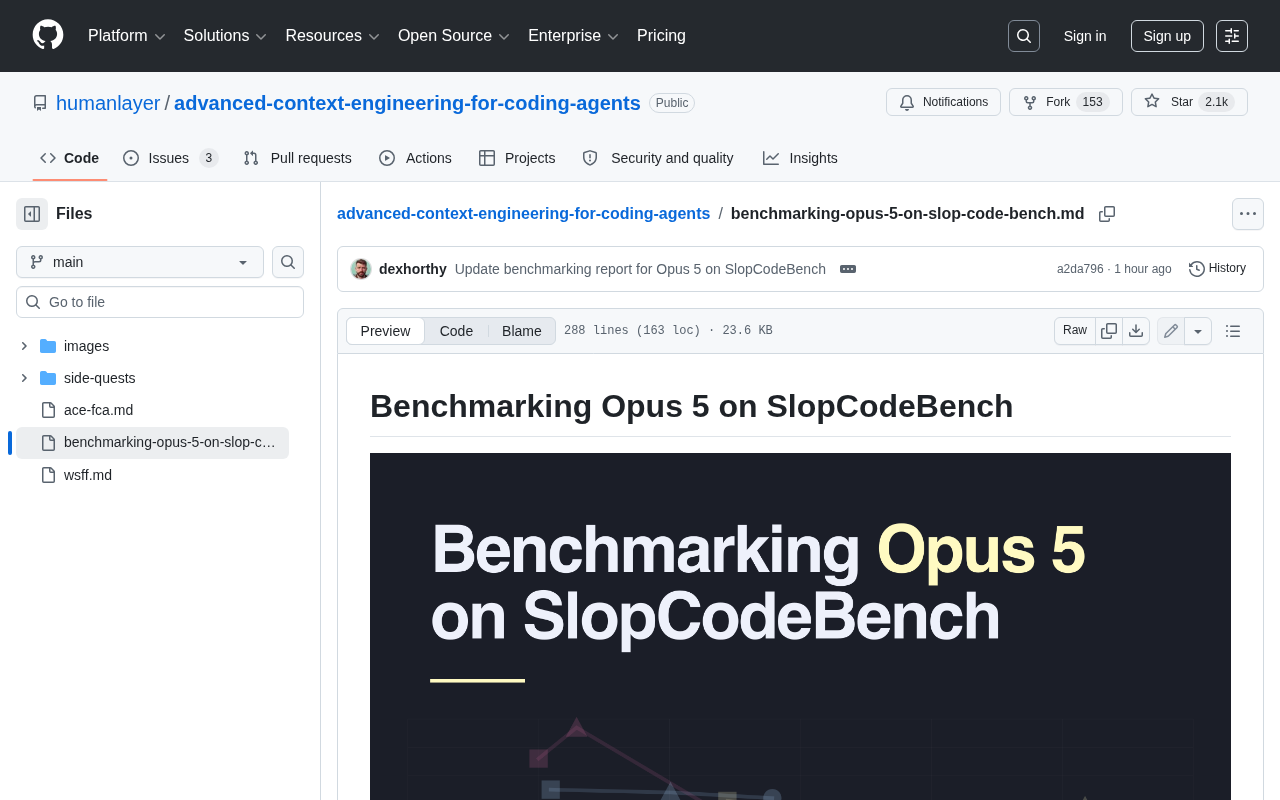
SlopCodeBench: Why AI Code Benchmarks Are Failing
SlopCodeBench sparks deep reflection on AI code evaluation. From benchmark contamination to pass-rate pitfalls, exploring why current benchmarks fail to measure real code quality.
Read more →
·3 min
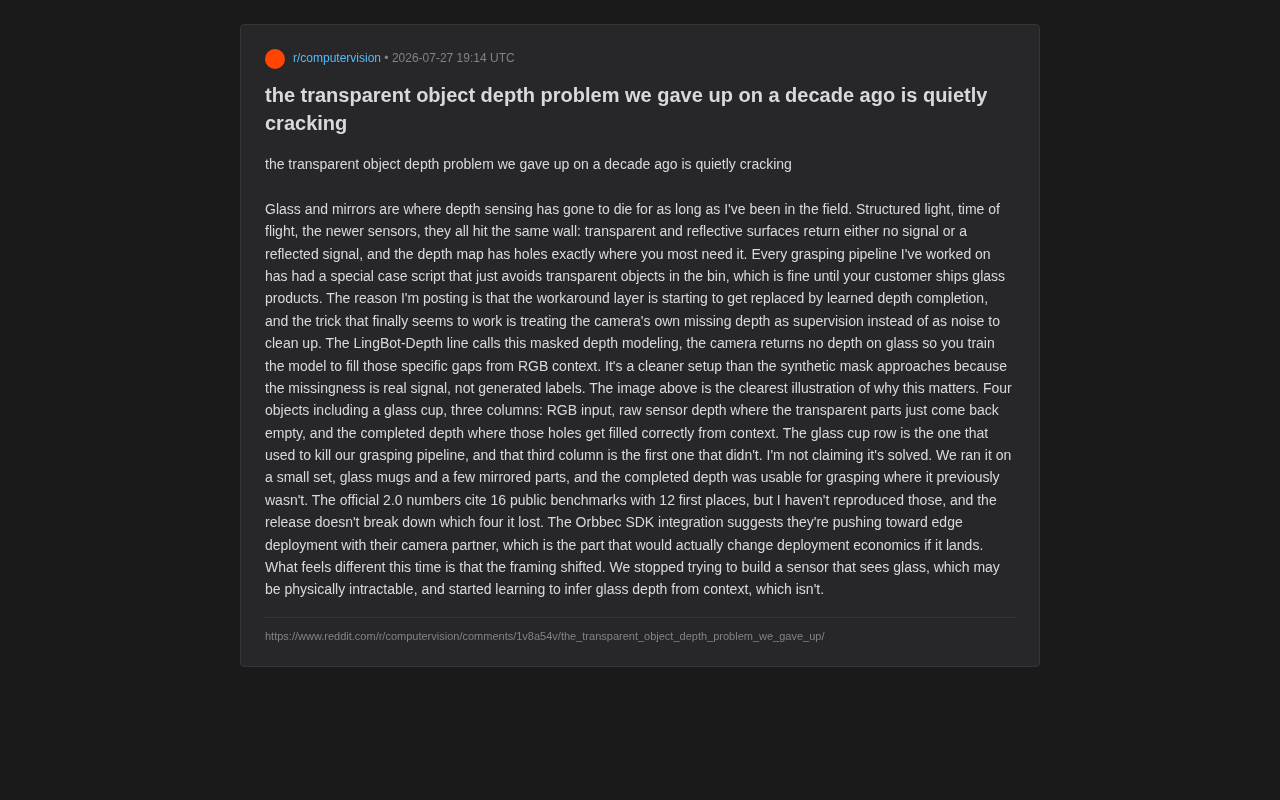
The Depth Perception Challenge for Transparent Objects: How LingBot-Depth Breaks Through with Masked Depth Modeling
Depth perception for transparent and reflective objects has long been a core challenge in robotic grasping. LingBot-Depth uses masked depth modeling to turn sensor failure into supervisory signals, inferring glass depth from RGB context.
Read more →

·4 min
What Is the True Nature of Large Language Models? A Super Compressor Analogy to Help You Fully Understand
Large models aren't search engines — they're more like super compressors. This article explains how LLMs compress data to learn semantic patterns, and explores the phenomenon of intelligent emergence.
Read more →

·3 min
FeyNoBg: A Deep Dive into the Open-Source Background Removal Model and Training Library
Deep analysis of FeyNoBg, an open-source background removal project with pre-trained models and training library, compared to remove.bg and rembg solutions.
Read more →