#task DAG generation
245 related articles
 Product Reviews
·3 min
Cube Studio: A Comprehensive Analysis of Tencent's Open-Source Cloud-Native AI Platform
Deep dive into Tencent Music's open-source Cube Studio cloud-native AI platform, covering distributed training, LLM fine-tuning & inference, Pipeline orchestration, and domestic hardware adaptation.
Read more →
 Deep Dives
·3 min
LangGraph Deep Dive: An Open-Source Framework for Building Resilient AI Agents
Deep dive into LangGraph's core architecture, StateGraph design, multi-Agent collaboration, and deployment. Learn how this 31K+ Star project helps build reliable AI Agents.
Read more →
 Tutorials
·2 min
OpenClaw Orange Book: An In-Depth Guide to the Open-Source AI Agent Framework
In-depth look at the OpenClaw Orange Book open-source project covering AI Agent framework components, tech ecosystem, and practical development methodology.
Read more →
 Tutorials
·3 min
LangGraph E-commerce AI Agent in Practice: From RAG Q&A to Automated Return Workflows
Deep dive into the E-commerce-Smart-Agent open-source framework built with LangGraph and FastAPI, covering RAG knowledge base Q&A, return workflow automation, and graph-based orchestration.
Read more →
 Product Reviews
·3 min
Datus-agent: An AI-Native CLI Tool Reshaping Data Engineering with Context Engineering
Deep dive into Datus-agent, an open-source AI-native CLI SQL client that brings Context Engineering to data engineering with natural language queries and modern data stack support.
Read more →
 Deep Dives
·3 min
oh-my-kimi: Deep Dive into a Multi-Agent Orchestration Framework for Kimi Code CLI
Deep analysis of the oh-my-kimi open-source project, a multi-agent orchestration framework for Kimi Code CLI featuring Worktree Runtime, DAG planning, MCP hooks, Quality Gates, and Local Graph Memory.
Read more →
 Product Reviews
·2 min
Deep Dive into LobeHub: The 75K-Star Open Source Multi-Agent Collaboration Platform
Deep dive into LobeHub, a trending GitHub open-source project with 75,900+ Stars. Explore its multi-agent collaboration mechanisms, low-code team design, and competitive advantages over AutoGen and CrewAI.
Read more →
 Product Reviews
·2 min
LobeHub Open Source Project Deep Dive: How a Multi-Agent Collaboration Platform is Reshaping AI Workflows
Deep dive into LobeHub's open-source multi-agent collaboration platform, covering core features, technical architecture, and industry trends. Learn how this 75K+ Star GitHub project redefines human-AI collaboration through Agent team design and multi-agent coordination.
Read more →
 Product Reviews
·2 min
Cursor Coding Team: Practices and Prospects of Multi-Agent Collaborative Programming
Deep dive into cursor-coding-team: an open-source project orchestrating multiple AI agents via Cursor Cloud Agents API for parallel development, code review, and automated collaborative workflows.
Read more →
 Tech Frontiers
·3 min
Strands Agents: An Open-Source SDK for Building AI Agents in Just a Few Lines of Python
Strands Agents is a trending GitHub project using model-driven design to let developers build AI Agents in just a few lines of Python. Learn its philosophy, use cases, and advantages over LangChain.
Read more →
 Product Reviews
·3 min
Artificial: A Go-Based Framework for Orchestrating Claude Code and Multiple AI Coding Assistants
Artificial is a Go open-source multi-agent orchestration framework that unifies Claude Code, OpenAI Codex, Cursor Agent, and local models for parallel AI coding workflows.
Read more →
 Product Reviews
·4 min
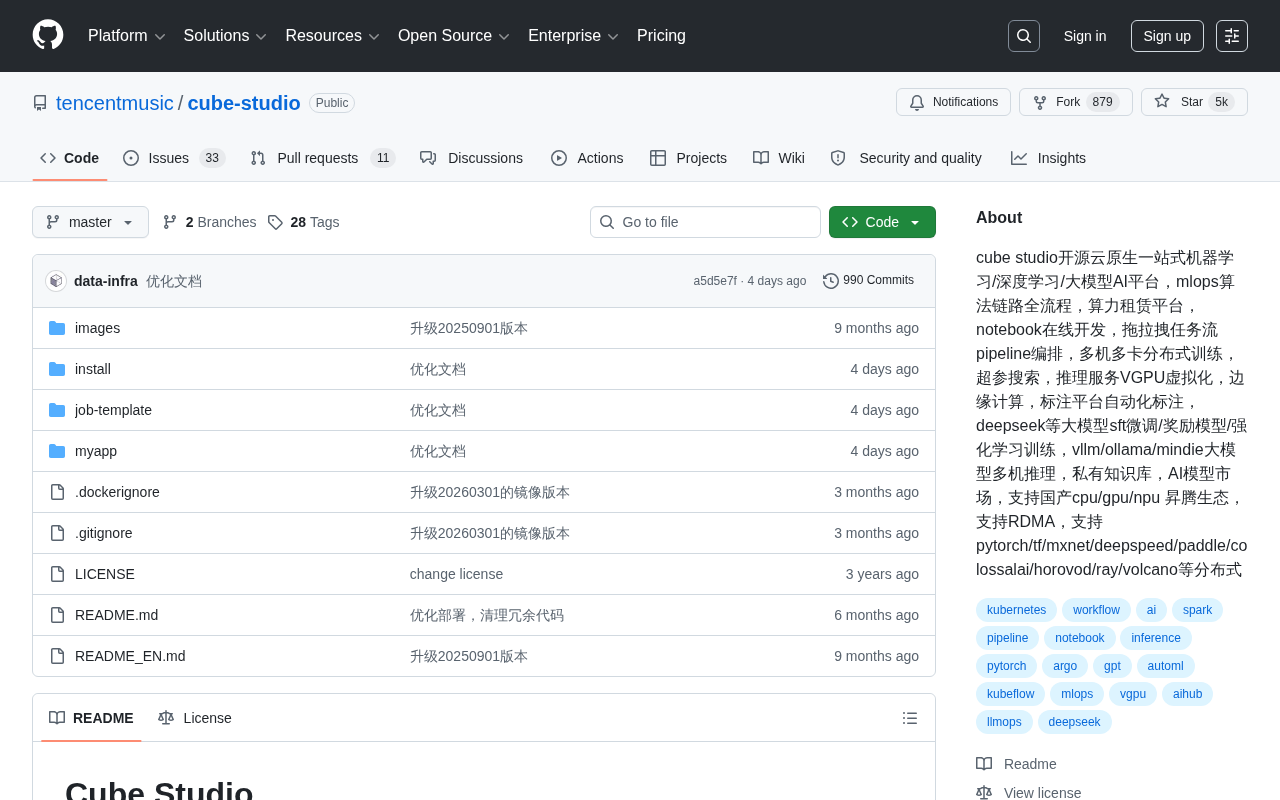
Cube Studio: Tencent's Open-Source All-in-One AI Platform Covering the Full Pipeline from Large Model Training to Inference
Deep dive into Tencent Music's open-source Cube Studio cloud-native AI platform, covering distributed training, LLM fine-tuning, vLLM inference, VGPU virtualization, and Huawei Ascend adaptation.
Read more →
 Product Reviews
·4 min
Deep Dive into Cube Studio: Tencent's Open-Source All-in-One AI Platform
Deep dive into Tencent's open-source AI platform Cube Studio, covering distributed training, large model fine-tuning and inference, Pipeline orchestration, VGPU virtualization, and Huawei Ascend support for enterprise cloud-native MLOps.
Read more →
 Product Reviews
·2 min
Full Record: Simon Willison Develops Blog Wildlife Sighting Feature Using Claude Code on His Phone
Simon Willison used Claude Code on his phone to build an iNaturalist wildlife sighting sync feature for his blog, backfilling a decade of data. A deep dive into the technical details and AI-assisted mobile development.
Read more →
 Tech Frontiers
·2 min
LLM 0.32a0 Major Refactor: A Deep Dive into Message Sequences and Typed Streaming Responses
Simon Willison releases LLM Python library 0.32a0 alpha with message sequence prompts and typed streaming responses, redesigning model interaction abstractions for multimodal output, tool calls, and modern LLM features.
Read more →
 Product Reviews
·4 min
Cube Studio Deep Dive: Tencent's Open-Source One-Stop Cloud-Native AI Platform
Deep dive into Tencent's open-source AI platform Cube Studio, covering distributed training, LLM fine-tuning, inference deployment, VGPU virtualization, and domestic hardware support for enterprise MLOps.
Read more →
 Product Reviews
·2 min
Simon Willison Uses Claude Code on His Phone to Add Wildlife Sighting Features to His Blog
Django co-creator Simon Willison uses Claude Code's web version on his phone to sync a decade of iNaturalist wildlife photography to his blog, showcasing pragmatic AI-assisted programming.
Read more →
 Deep Dives
·2 min
LLM 0.32 Refactoring Deep Dive: Message Sequences and Multimodal Streaming Event Design
Deep dive into LLM 0.32a0 alpha: a major refactoring from text conversations to message sequences and typed streaming events, supporting multimodal output, tool calls, and flexible serialization.
Read more →
 Tech Frontiers
·3 min
LLM 0.32 Refactoring Explained: Message Sequence API and Typed Streaming Responses
Deep dive into Simon Willison's LLM Python library 0.32 refactoring: new message sequence API, typed streaming responses, and universal serialization for multimodal AI and tool calling.
Read more →
 Deep Dives
·3 min
LLM 0.32 Refactoring Deep Dive: Message Sequence Input and Typed Streaming Response Design
Deep dive into Simon Willison's LLM 0.32a0 refactoring: message sequence inputs, typed streaming events, SQLite-decoupled serialization, and backward-compatible API evolution strategies.
Read more →