#technical blogging
18 related articles

·3 min
Complete Guide to Self-Hosted Music Servers: A Cross-Platform Navidrome Alternative to Spotify
Compare Navidrome, Jellyfin, and other self-hosted music servers. Covers cross-platform clients, remote access setup, and metadata management to replace Spotify.
Read more →

·2 min
Vibe Coding Beginner's Guide: The Right Way to Code with AI from Scratch
Vibe Coding is a new AI-era programming paradigm — just express your intent and let AI write the code. Learn what it is, why it matters, and how to get started from scratch.
Read more →

·1 min
Cursor's Compole Event: The Developer Community Strategy Behind Custom Keyboards
Cursor hosts the Compole in-person event with custom keyboard building as a highlight. Analyzing how AI coding tools use developer culture and community strategy to build brand loyalty amid fierce IDE competition.
Read more →
 Product Reviews
·2 min
Claude Code Hands-On: From Typing a Prompt to Launching a Website in Minutes
Claude Code demo hands-on: build and deploy a full-stack app via natural language in minutes — covering front-end UI, back-end logic, database, and deployment with zero handwritten code.
Read more →
Industry Insights
The Cnblogs Account Ban Incident: Why …
·3 min
The Cnblogs Account Ban Incident: Why a Legacy Tech Community Is Losing Its Creators
A veteran Cnblogs blogger was banned for 15 days over an AI programming tutorial. This article examines the incident, the platform's declining quality, and the survival crisis facing legacy tech communities.
Read more →
 Product Reviews
·2 min
One Person, One Month: Building a Chinese Writing Community from Scratch with AI Development Tools
A Bilibili creator used AI coding tools to single-handedly build a Chinese writing community called "YouTi" in one month. This article breaks down the product design, prompt-response mechanics, manual review strategy, and how AI tools are reshaping indie dev capabilities.
Read more →
 Product Reviews
·2 min
Ghostwriter Review: Can AI Ghostwriting with Auto-Publishing to LinkedIn and X Really Work?
In-depth review of Ghostwriter, an AI social media writing tool that auto-generates and publishes LinkedIn and X content. Is it worth paying for?
Read more →
 Industry Insights
·2 min
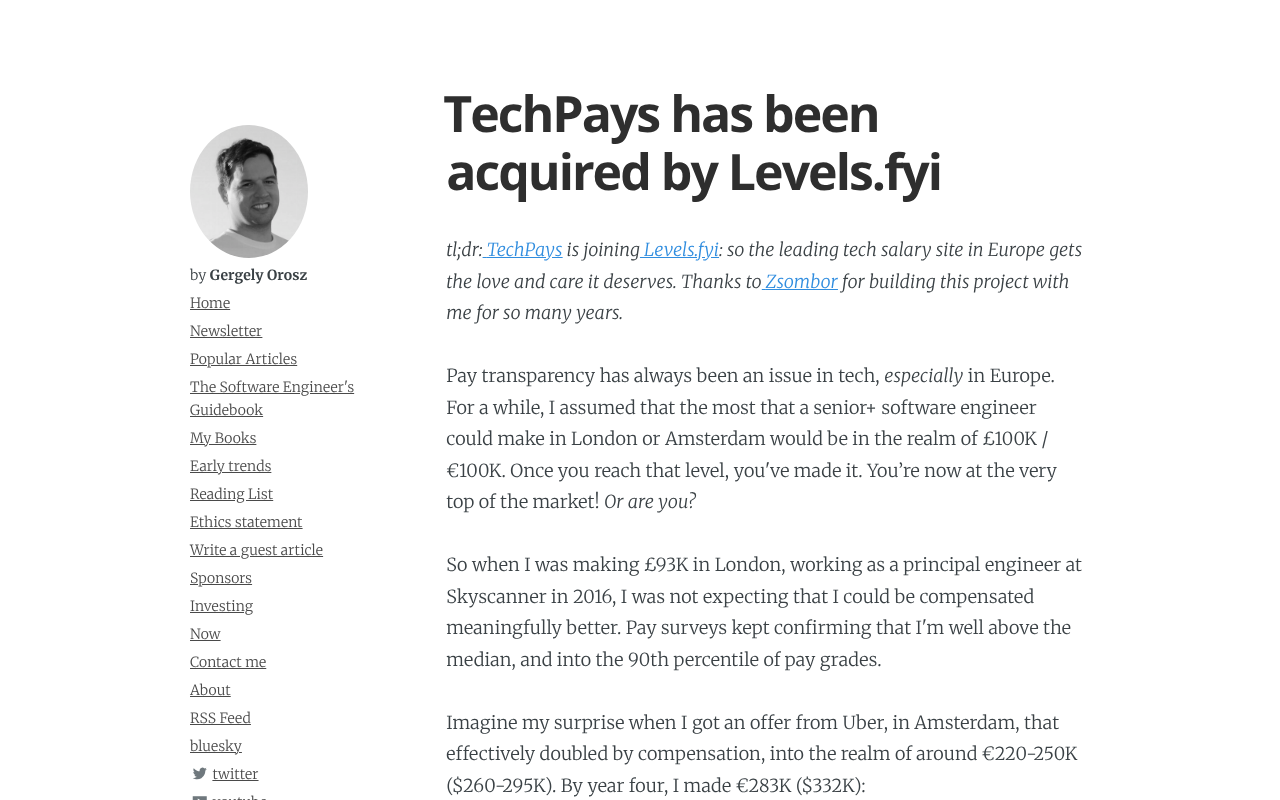
TechPays Acquired by Levels.fyi: A New Era for Tech Salary Transparency in Europe
TechPays acquired by Levels.fyi marks a turning point for European tech salary transparency. Analysis of the deal's impact on developers and EU Pay Transparency Directive implications.
Read more →
 Product Reviews
·3 min
BuildingAI Open Source Project Deep Dive: Building AI Apps Like Stacking Blocks
Deep dive into BuildingAI, an open source block-based AI app builder with 1600+ Stars. Explore its architecture, use cases, and how it compares to Dify and Coze.
Read more →
 Expert Opinions
·2 min
In the Vibe Coding Era, Using RSS to Share and Discover Personal Apps
AI-assisted programming makes building tools as easy as blogging, but how are these personal apps discovered? Matt Webb proposes RSS for vibe-coded apps, and Simon Willison quickly validates the idea.
Read more →
 Expert Opinions
·3 min
In the Vibe Coding Era, Why We Need RSS to Share Personal Apps
AI programming makes building micro-apps as easy as blogging, but distribution is the new bottleneck. Matt Webb proposes RSS for sharing vibe-coded apps, and Simon Willison is already doing it.
Read more →
 Expert Opinions
·2 min
The Vibe Coding Era: Why We Need RSS to Share Personal Micro-Apps
Vibe coding makes AI programming as simple as blogging, driving an explosion of personal micro-apps. Matt Webb proposes RSS for sharing micro-apps, and Simon Willison has already implemented it.
Read more →
 Tech Frontiers
·2 min
LLM CLI Tool 0.32a0 Released: One Interface to Call All Large Language Models
Simon Willison releases LLM 0.32a0 preview—an open-source CLI tool that calls GPT-4, Claude, Gemini, and more through a unified interface with plugins.
Read more →
 Expert Opinions
·2 min
The Vibe Coding Era: Why We Need RSS to Distribute Personal Apps
As vibe coding makes app development as easy as blogging, personalized micro-tools are proliferating. This article explores why RSS/Atom is the ideal solution for app discovery and distribution in the AI-assisted programming era.
Read more →
 Product Reviews
·2 min
Full Record: Simon Willison Develops Blog Wildlife Sighting Feature Using Claude Code on His Phone
Simon Willison used Claude Code on his phone to build an iNaturalist wildlife sighting sync feature for his blog, backfilling a decade of data. A deep dive into the technical details and AI-assisted mobile development.
Read more →
 Expert Opinions
·2 min
The Vibe Coding Era: Why We Need RSS to Share Personal Micro-Apps
AI coding makes building micro-apps as easy as blogging, but how do we share them? Matt Webb proposes RSS for distributing vibe coding output, and Simon Willison has already put it into practice.
Read more →
 Expert Opinions
·2 min
In the Vibe Coding Era, Why RSS Is the Best Solution for Sharing Personal Apps
Vibe Coding makes building apps as easy as blogging, but how are these personal micro-apps discovered? Matt Webb proposes RSS for distributing vibe-coded apps, and Simon Willison has already implemented it.
Read more →
 Expert Opinions
·2 min
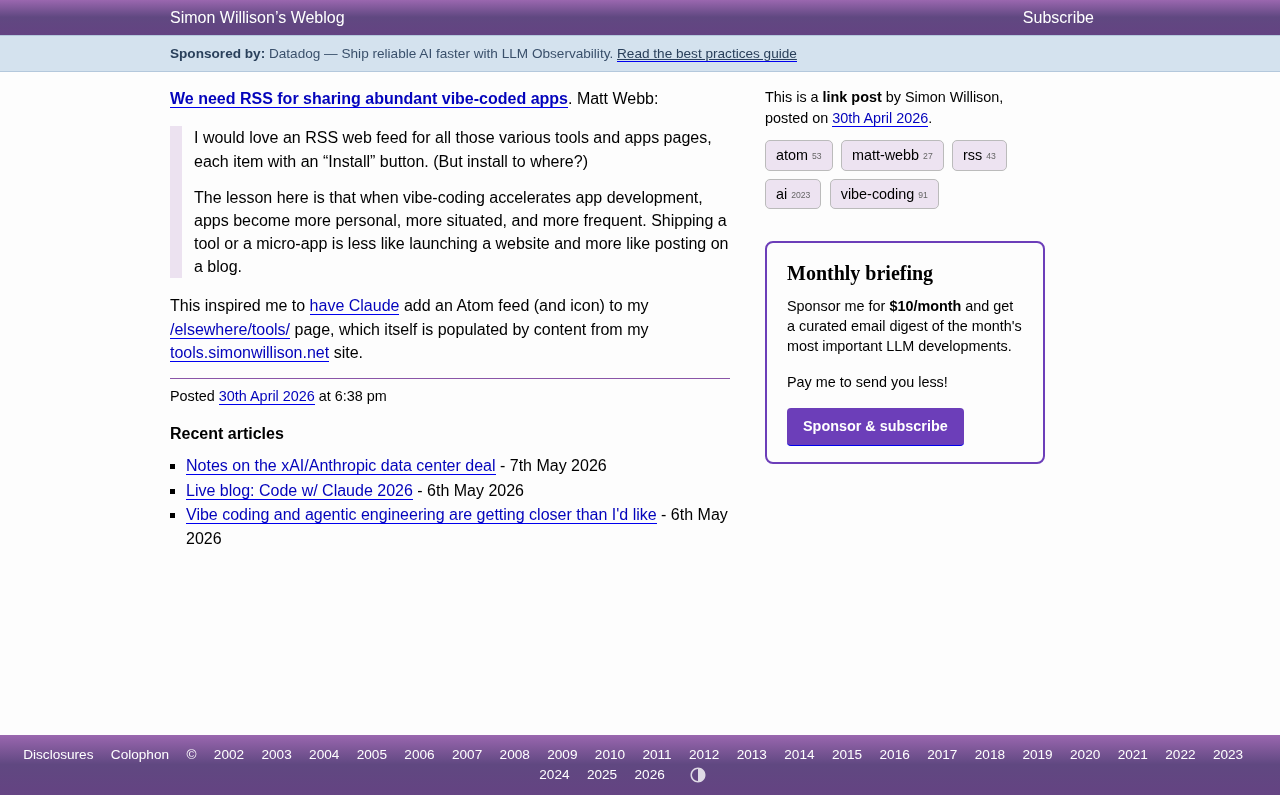
In the Vibe Coding Era, Share Your AI-Built Personal Apps via RSS
Vibe coding makes building apps as simple as blogging. Matt Webb proposes using RSS to distribute vibe-coded micro-apps, and Simon Willison puts it into practice. Exploring open protocols' new potential in the AI programming era.
Read more →