13 Best Agent Gateways in 2026: MCP, A2A, and LLM Traffic Governance
MarkTechPost reviews 13 Agent gateways in 2026, ranked by model, MCP tool, and A2A traffic governance.
The article explains why Agent gateways are emerging: as large models enter production, governance of model calls, MCP tool calls, and inter-Agent collaboration traffic becomes essential. Agent gateways add model/Agent identity recognition, MCP tool permission management, and A2A link logging on top of traditional API gateways, and evaluation should focus on these three traffic layers. Kong represents the API gateway extension route, while Bifrost, AgentCore, and Arcade are closer to the Agent runtime, with uneven coverage across the three layers. Selection should consider deployment form, pricing model, and coexistence with existing gateway systems. The list lacks full scoring details and is best treated as a starting point.
When enterprises move large models from demos into production, the first problem to surface is often not model capability but traffic governance: which model is being called, which Agent a given tool call comes from, how many tokens a cross-Agent collaboration consumes, and who is accessing MCP tools without authorization. The Agent gateway is exactly the infrastructure layer that emerged to answer these questions. MarkTechPost has compiled the 13 best Agent gateways in 2026, ranked by their ability to govern model traffic, MCP tool traffic, and Agent-to-Agent (A2A) traffic, and verified each vendor's pricing and deployment options.
What Is an Agent Gateway, and Why It Suddenly Matters
Traditional API gateways handle routing, authentication, and rate limiting for HTTP requests. Agent gateways do three additional things: identify which model or Agent is behind a request, manage permissions for MCP tool calls, and record the full chain of cross-Agent collaboration.
These three things are not yet obvious in single-Agent scenarios. Once multiple Agents call each other within a system, the traffic structure becomes as complex as that of microservices. Without a unified entry point, model costs, tool permissions, and audit logs end up scattered across each Agent's implementation. MarkTechPost's ranking approach starts precisely from these three dimensions rather than simply comparing throughput.
Three Types of Traffic Governance Determine a Gateway's Trade-offs
According to MarkTechPost's classification, evaluating an Agent gateway primarily involves three layers of traffic:
Model traffic — how requests are routed across multiple LLM vendors, how failures fall back, and how costs are aggregated. This layer is close to a traditional LLM gateway.
MCP tool traffic — when Agents call external tools via the Model Context Protocol, the gateway handles authentication, rate limiting, and call logging. MCP has become the de facto standard for tool integration, and capability differences at this layer directly determine whether a gateway can truly rein in an Agent's "hands and feet."
A2A traffic — task dispatch and result return between Agents. This is the youngest layer and the one that most tests a vendor's understanding of multi-Agent architectures.
Coverage across these three layers is uneven among gateways. Some products extend from API gateways, with mature model traffic governance but limited A2A support; others started as Agent runtimes, with native A2A but enterprise-grade governance features still being filled in.
Model Context Protocol (MCP) is an open protocol proposed by Anthropic that has gradually become the industry de facto standard for connecting large model applications to external tools, data sources, and services in a unified way. Before MCP, every Agent framework defined its own way of invoking tools, making tool reuse difficult and permission management fragmented. MCP abstracts tool exposure as "servers," with Agents acting as "clients" that discover and call tools through standardized interfaces—this allows a gateway to uniformly intercept, authenticate, and log all tool calls at the protocol layer. For Agent gateways, MCP traffic governance means being able to answer "which Agent called which tool, at what time, with what parameters, and what result was returned"—the foundation for auditing and cost aggregation. The MCP protocol is still evolving rapidly, with differences in authorization models and transport methods across versions; the degree to which a gateway supports different MCP versions is also a detail to confirm during selection.
Agent-to-Agent (A2A) refers to a collaboration pattern in which multiple Agents dispatch tasks, synchronize state, and return results through message passing. Unlike model calls and tool calls, A2A traffic involves Agent identity and the transfer of task context across multiple execution units, making the chain longer and harder to trace. Currently, A2A lacks a unified industry protocol like MCP; different vendors and frameworks use their own implementations, such as message queues, RPC, or event buses. As a result, a gateway's governance capability at the A2A layer depends heavily on the depth of its integration with specific Agent runtimes. For teams building multi-Agent systems, the core requirements of A2A traffic governance include: tracing the complete call chain of a cross-Agent task, preventing unauthorized task delegation between Agents, and aggregating token costs by task.
Representative Products on the List
The four products named in the title cover different starting points. Kong is a veteran in the API gateway space, and its path toward Agent traffic is the most natural, with the advantage that an enterprise's existing gateway operations system can be reused directly. Bifrost, AgentCore, and Arcade represent routes closer to the Agent runtime, with more complete native support in MCP and A2A scenarios, though their enterprise integration experience is relatively new.
MarkTechPost emphasizes that this list verified each vendor's pricing and deployment options and pointed out "the trade-offs omitted from vendor marketing materials." This statement is worth noting: the Agent gateway market currently has no unified standard, and vendors often showcase only their strongest traffic layer in marketing, while real enterprise needs typically span all three layers. When selecting a product, it is more important to focus on performance in weak areas rather than on strengths.
Kong is an open-source API gateway and API management platform built on Nginx and OpenResty, offering routing, authentication, rate limiting, and plugin extensibility, and is widely used in microservice architectures. Its enterprise edition, Kong Konnect, provides a unified control plane and multi-cluster management. Kong's path toward AI/Agent traffic is through its AI Gateway plugin set, which adds LLM vendor routing, key management, and usage statistics on top of its existing gateway system. The advantage of this route is that an enterprise's existing gateway operations system, plugin ecosystem, and permission model can be reused directly, but A2A and deep MCP governance capabilities are relatively new and require additional integration.
Bifrost, AgentCore, and Arcade represent routes that started from the Agent runtime or tool invocation layer. These products typically natively support MCP tool registration and call governance, offer more granular identification of Agent identity, and provide more complete link tracing in A2A collaboration scenarios. Their weakness is that enterprise-grade gateway features—such as high-availability deployment, fine-grained RBAC, and integration with existing IAM systems—are still being filled in. For enterprises that already have a mature API gateway system, adopting such products may mean maintaining two control planes.
Three Easily Overlooked Questions During Selection
Deployment form. Agent gateways sit on the data path, so whether they can be deployed on-premises and whether they can run within a VPC directly determines whether they can enter data-sensitive industries. The list treats deployment options as a verification item, indicating that this remains a differentiating factor rather than a standard feature.
Pricing model. Whether billing is by number of requests, by token volume, or by number of Agents will significantly affect the cost structure at scale. Agent traffic is characterized by the fact that a single task may trigger a large number of tool calls, and request-based billing tends to become distorted in Agent scenarios.
Relationship with the existing gateway system. If an enterprise is already using an API gateway such as Kong, introducing a new Agent gateway means adding another control plane; if the new gateway can coexist with the existing system, the operational burden will be much smaller. This is the most tangible advantage of products that extend from the API gateway route.
The distortion of request-based billing in Agent scenarios deserves separate elaboration. Traditional API gateways bill in units of HTTP requests, where one request corresponds to one business operation and costs are predictable. But in Agent scenarios, a single user task may trigger dozens of model calls and tool calls, and the number of calls varies greatly across tasks—a simple query may require only one model call, while a complex task may involve multiple rounds of planning and dozens of MCP tool calls. If a gateway bills by number of requests, costs will fluctuate sharply with task complexity, making budget planning difficult. By contrast, token-based billing is closer to the actual consumption of model costs, while per-Agent billing suits scenarios where the number of Agents is stable but call frequency fluctuates widely. When evaluating pricing models, enterprises should combine them with the distribution of their own Agents' task complexity to judge which billing method is more controllable.
The Boundaries of This List
It should be noted that MarkTechPost's ranking is based on its verification of governance capabilities and pricing, and the original article did not disclose the complete scoring criteria or item-by-item comparison data for the 13 products. Therefore, this list is better treated as a starting point for a selection checklist rather than a final conclusion. For teams building multi-Agent systems, a more pragmatic approach is to first clarify which traffic layer causes the greatest pain, then use the list to shortlist two or three products for actual testing.
The Agent gateway category is still evolving rapidly, and the details of the MCP and A2A protocols are still changing. Today's ranking will likely need to be redone once the protocols stabilize.
One-line Summary
MarkTechPost reviews 13 Agent gateways in 2026, ranked by governance capability across three traffic layers: model, MCP tool, and A2A.
Paragraph Summary
The article introduces the background of the rise of Agent gateways: after large models enter production, governance of model calls, MCP tool calls, and inter-Agent collaboration traffic becomes essential. Agent gateways add three capabilities on top of traditional API gateways—model/Agent identity recognition, MCP tool permission management, and A2A link logging—and evaluation should revolve around these three traffic layers. Kong, named in the list, represents the route extending from API gateways, while Bifrost, AgentCore, and Arcade represent routes closer to the Agent runtime, and coverage across the three traffic layers is uneven among products. During selection, attention should be paid to three easily overlooked issues: deployment form, pricing model, and the relationship with the existing gateway system. The article also notes that the list does not disclose complete scoring criteria and is better used as a starting point for selection rather than a final conclusion.
Related articles
When Claude Writes 90% of the Code, Should Developers Say Goodbye to Hand-Writing?
Tech creator Theo discusses how AI tools like Claude now write over 90% of code: hand-writing is fading, nostalgia is fine but shouldn't belittle AI builders—curiosity and adaptability are the next generation's core edge.
Perplexity Launches Orchestrator API: Unified Multi-Model Access with Failover
Perplexity releases the Orchestrator API, enabling single-endpoint access to OpenAI, Anthropic, Google, xAI, and open-weight models with same-model provider failover, unified billing, and a preview perplexity/auto auto-routing option.
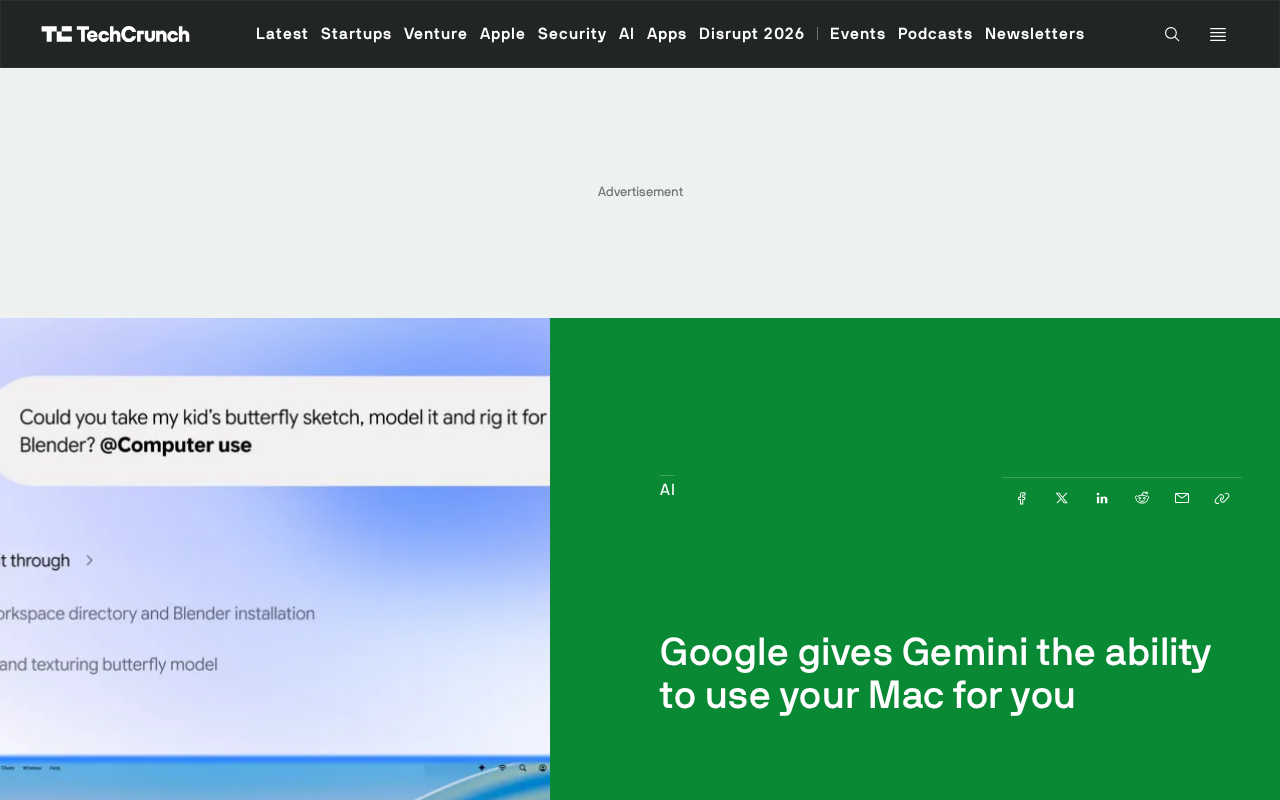
Google Gemini Comes to Mac: AI Agent Now Operates Your Computer for You
Google's latest Gemini update brings AI agent capabilities to Mac, letting it organize files, fill forms, and handle multi-step workflows—moving AI from conversation to operating your computer.