5 Grokbot AI Agents in Action: Automate Your Daily Work Without Writing a Single Line of Code

Build 5 cloud AI Agents with Grokbot — zero code, full automation for work and life.
Bilibili creator "i闪" demonstrates how to build 5 cloud-based personal AI Agents using Grokbot without writing any code. Use cases include auto-generating follow-up proposals from WhisperFlow meeting transcripts, monitoring used car listings and product prices on a schedule, scanning Gmail to cancel unused subscriptions and track unpaid invoices, connecting Apollo.io via MCP for bulk outreach emails, and training a personalized LinkedIn ghostwriter that auto-publishes daily posts. The article also flags compliance risks around bulk emailing and auto-posting, and notes the video's strong product-recommendation tone.
5 Grokbot AI Agents in Action: Automate Your Daily Work Without Writing a Single Line of Code
Most people's experience with AI still revolves around generating memes, making funny videos, or even AI companions. But Bilibili creator "i闪" offers a different perspective in his video: AI's real value lies in building a personal assistant that manages your life for you. Using Grokbot (Grok's latest AI agent version), he built 5 cloud-based agents without writing a single line of code — agents that handle outreach, bills, shopping, content creation, and other repetitive tasks on his behalf.
This article breaks down the core logic and specific use cases of this automation setup as a reference for anyone interested in trying AI Agents. Note that the prices mentioned in the video (such as a $20/month subscription or amounts in Indian rupees) are based on the creator's personal experience and are provided for reference only.
What Is Grokbot: A Cloud-Based AI Agent Running 24/7
As the creator describes it, Grokbot is an app available for download on macOS and iPhone that lets you create various agents by interacting directly with Grok. Its most critical feature is that it runs in the cloud — even when your laptop is asleep, agents continue working in the background, executing tasks on schedule and only alerting you when there's a result.
This is the most fundamental difference from ordinary conversational AI. Traditional AI requires you to actively ask questions and wait for responses, while Grokbot's agents function more like scheduled tasks (cron jobs): you describe your needs clearly, and they handle everything automatically in the background.
The creator mentions that access can be obtained through a SuperGrok subscription or similar plan. He describes the core cost of these cloud agents as "paying one monthly subscription fee to replace roles that would previously have required hiring multiple full-time employees."
AI Agent vs. Chatbot — What's the Real Difference? The fundamental distinction between an AI Agent and an ordinary chatbot lies in autonomous action capability. A regular conversational AI can only respond to your input and return text. An Agent, on the other hand, can use tools, access external systems, break down multi-step tasks, and autonomously decide the order of execution. By analogy, a conversational AI is like a consultant — it gives you advice; an Agent is like an assistant who can actually get things done — it handles the work for you. A cron job is a scheduled task scheduler in Unix/Linux systems, long used by developers to automatically execute scripts (such as backing up a database every night). Grokbot brings this "trigger on schedule, run in the background" logic to everyday users who don't know how to code: you describe your requirements and timing rules in natural language, and the platform maintains the task on cloud servers without requiring your device to stay on or connected.
Meeting Notes Automation: Whisper Note Tool Fills the Context Gap
Personal AI agents have one inherent weakness — a lack of context. Your agent didn't attend your meeting with a client, so it naturally can't help you write a follow-up proposal.
The creator's solution is to introduce the note tool launched by WhisperFlow. It records all the meetings you attend, generates full text transcriptions and meeting summaries, and can even answer questions based on the transcript — such as "What exactly does the other party want from me?"
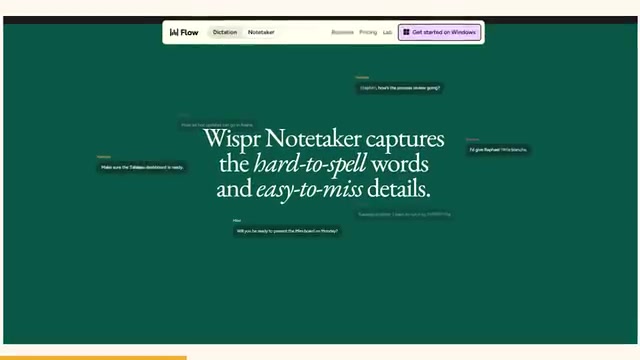
A more practical step is connecting the toolchain: by adding the note tool as a plugin to ChatGPT, you can have ChatGPT generate complete proposals directly from real meeting transcripts. The creator says the entire process takes under 5 minutes, with no more copy-pasting notes or recapping meeting content to anyone. This combination of "transcription tool provides context + general-purpose LLM delivers the output" is the most replicable idea in the entire setup.
Shopping and Discount Monitoring: Delegate Repetitive Searches to an Agent
The second agent the creator demonstrates is a "car listing bot." He wants to buy a used Mercedes GLC, so he had the agent visit used car sites like CarValue every evening, filter listings matching his criteria (black, specific model, mileage cap, specific region), and push a notification the moment a match appears.

He emphasizes that the essence of this kind of need is "the most repetitive action" — manually refreshing a website every day to check for new inventory. This is exactly the kind of scenario agents are best suited to take over. The same logic applies to waiting for an iPhone price drop or tracking the price of a book or TV.
The underlying mechanism: Grokbot creates a cloud browser for the task, automatically opens the target website at a set time (e.g., 6 PM every day), searches and extracts key information, and forms an editable, publishable scheduled task.
Financial Manager: Subscription Cleanup and Payment Tracking
The third category of agents focuses on finance, addressing two common pain points.
The subscription bot scans Gmail, lists all your current paid subscriptions, and flags the services you barely use, making it easy to decide what to cancel. The creator uses his own ElevenLabs subscription as an example — many people continue to be charged simply because they forget to cancel.
The payment bot tackles the most time-consuming reconciliation problem for creators and freelancers: it checks Gmail and invoice platforms to figure out which payments haven't arrived yet and which companies still haven't settled their invoices, directly flagging overdue accounts and saving hours of manually combing through bank statements.
Outreach and Content Creation: From Finding Emails to Auto-Posting
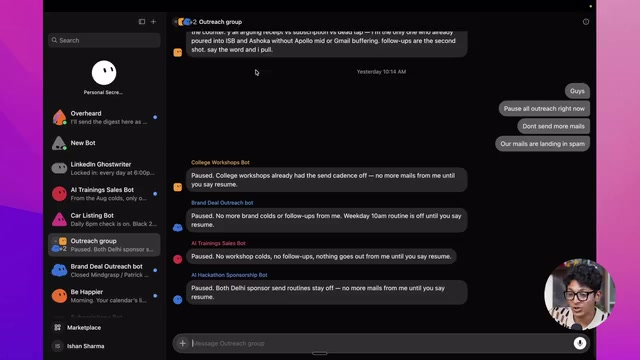
The creator calls the AI training sales bot the most "wild" one. He connected Grokbot to Apollo.io (a platform for obtaining company contact emails) via the MCP protocol: first pulling email addresses for relevant people at target companies from Apollo, then using a Gmail connector to batch-send emails at regular intervals in his own name, inquiring about interest in AI workshop partnerships — with the ability to directly see who has replied.
For content creation, the creator did a live demo of building a "LinkedIn ghostwriter" agent from scratch: feeding it his past LinkedIn posts, writing tips (hooks, frameworks), and tone samples so it could learn to write in his own style.
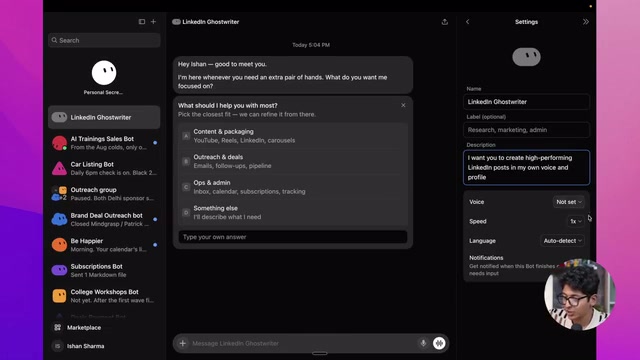
He then gives the agent a topic via voice, and the agent generates a post drawing on web research and statistics. Going a step further, he set up a daily scheduled task running at 6 PM: automatically researching the latest AI and workplace culture headlines, generating three LinkedIn posts from the perspective of a young Indian professional, and even logging into the account to auto-publish.
There's also a "personal styling bot" connected to Pinterest — drop in a screenshot of an outfit, and the agent browses multiple e-commerce sites to find the same items and generates a shopping list with prices as a PDF.
What Is MCP? MCP (Model Context Protocol) is an open standard interface specification proposed and open-sourced by Anthropic in late 2024. Its goal is to standardize how AI models connect to external tools and data sources. Before MCP, every AI platform needed custom development to integrate third-party tools; MCP follows the philosophy of a USB interface — as long as a tool implements the protocol, any compatible AI can call it plug-and-play. When the creator mentions using MCP to connect Grokbot with Apollo.io, it means the agent can call Apollo's contact database via standardized commands without manually exporting a CSV and re-importing it. The protocol has since gained follow-on support from major vendors including OpenAI and Google, and is on its way to becoming the de facto standard for AI tool integration. Understanding it helps in evaluating which tools can be called by agents in the future.
5 Essential Agents Everyone Should Build
The creator offers a priority recommendation that can serve as a starter checklist:
- Email assistant: Avoid missing important emails and losing opportunities
- Outreach agent: Essential for job hunting, client acquisition, and securing brand partnerships
- Financial manager: Clean up unused subscriptions and track incoming payments
- Savings agent: Monitor discounts on cars, products, and more
- Content creation agent: Produce LinkedIn posts, short videos, tweets, and other content faster
He sees the Grokbot Marketplace as its biggest advantage — you can directly connect a wide range of productivity, communication, and design apps, reuse agents created by others, and organize multiple agents into groups for unified management.
A Word of Caution
This setup showcases the imaginative potential of AI Agents for personal automation, but it's worth keeping a level head. The video has a strong product-recommendation undertone, with tools like Grokbot, Whisper, and Apollo.io repeatedly highlighted — readers should independently verify functionality and pricing claims.
More importantly, automatically sending outreach emails and auto-publishing social content carry platform policy and compliance risks. Bulk sending may also trigger anti-spam policies, so careful evaluation is needed before deployment. Whether agents can complete tasks reliably and how dependable cloud browsers are remains to be tested through long-term use.
That said, two ideas — "use a transcription tool to fill in context, then hand off to an LLM for output" and "turn repetitive searches into scheduled tasks" — offer genuine practical value for any knowledge worker looking to work more efficiently.
Compliance Risks of Automated Bulk Outreach Automatically sending bulk outreach emails in practice carries two main categories of risk. The first is technical: email providers like Gmail identify bulk sending behavior through signals such as send frequency and template similarity, which can trigger restrictions or even account bans. Usage terms for platforms like Apollo.io also typically impose explicit constraints on how their data can be used. The second is legal: in regions such as the EU (GDPR) and the US (CAN-SPAM Act), sending commercial emails to recipients without their consent must meet specific conditions, and violations can result in fines. Similarly, auto-publishing social content violates the bot usage policies of platforms like LinkedIn and X, putting accounts at risk of being deprioritized or banned. These risks don't negate the value of the underlying technology — they simply signal that anyone replicating this kind of setup needs to conduct a compliance assessment based on their own jurisdiction and the rules of their target platforms, rather than directly copying the configurations demonstrated in the video.
Related articles

AI Compute Is the New Oil, But the Market Mechanism Has Yet to Take Shape
Hacker News compares AI compute to the new oil, noting the lack of price discovery, concentrated supply, and no hedging tools. The article analyzes structural issues in compute trading and explores a possible three-tier market of spot, contracts, and derivatives, plus the real impact on AI practitioners' cost management.

Running Full iOS 16.5 Firmware on Android Devices: Technical Demo or Marketing Gimmick?
A Hacker News post claims full iOS 16.5 firmware can run on Android, with 315 upvotes. This analysis argues it is more likely a web UI simulation than a true firmware port, and explores the value and risks of such projects.

Etsy Cracks Down on AI Slop: Addressing Buyer and Seller Anxieties
Etsy introduces stricter rules limiting AI-generated content in listings, addressing buyer confusion over AI products and seller fears of original work being diluted by AI slop.