After 6 Billion Tokens, Here's What I've Learned About AI Agents

A 6-billion-Token power user shares the unvarnished truth about living and working with AI Agents.
After consuming over 6 billion Tokens, a heavy AI Agent user shares real-world insights around three core questions: willingness to pay for AI, willingness to invest time in AI, and readiness to let AI reshape your life. The article explores the true cost structure of AI services, why calibration and context-building matter, and the psychological toll of always-on AI productivity — ultimately arguing that AI should amplify you, not turn you into its workstation.
After a power user racked up over 6 billion Tokens, his reflections on AI Agents have gone far beyond the question of "do they work well." Recently, a Chinese tech content creator known as "Da Ban Zhuan" shared his real-world experience from long-term, heavy use of AI Agents (especially Codex-style coding agents) and posed three questions that cut to the heart of the matter: Are you willing to spend money on AI? Are you willing to spend time on AI? And are you ready to let AI change your life?
First, let's clarify a key concept: a Token is the basic unit of measurement for how large language models process text — think of it as the smallest granule the model "reads" and "generates." A single Chinese character typically corresponds to 1.5 to 2 Tokens, while an English word maps to roughly 1 to 1.5 Tokens. Consuming 6 billion Tokens is roughly equivalent to processing millions of meaningful, in-depth conversational interactions, with substantial electricity and compute costs behind it. An AI Agent (intelligent agent) is one of the most important technical paradigms in AI today, and it's fundamentally different from an ordinary chatbot. Traditional large language models operate in a passive "question-and-answer" mode, whereas Agents can autonomously plan, invoke tools, and execute multi-step workflows — receiving a user's high-level goal, breaking it down into tasks, calling external tools, and dynamically adjusting strategy.
These three questions seem simple, yet they precisely target the core misconceptions the general public holds about AI tools today. This article draws on his insights to explore the gap that most people have yet to cross when it comes to AI Agents.
Question 1: Are You Willing to Spend Money on AI?
Recently, when the Chinese AI app Doubao introduced paid plans, it sparked a wave of online backlash, with many complaining, "Why should we pay for an AI this dumb?" The creator offered a sharp analogy: it's like your boss telling you, "Your work is so mediocre — how can you keep asking for raises?" to which you respond, "You pay me this little, so this is all you get." The analogy may seem like a double standard, but the logic holds — most people think, "I'll do as much work as I'm paid for."

The crux of the issue lies in the changing cost structure. In the past, whether an app served 100 users or 1,000, the marginal cost was negligible. But today, every single conversation you have with AI consumes Tokens, backed by real compute and energy costs. Specifically, when a user sends a message, both the input prompt and the model's generated response must pass through a neural network with billions of parameters for matrix operations, each of which requires actual GPU compute power. This is fundamentally different from traditional SaaS pricing logic — where marginal costs approach zero and user growth only adds a tiny increment of server bandwidth. Every AI service call represents real computational resource consumption. For a GPT-4-class model, a single in-depth conversation of a thousand characters might consume thousands of Tokens, corresponding to non-trivial electricity and chip depreciation costs. In other words, even if you're just making small talk, the AI is "burning money."
The creator's stance is clear: if a tool can genuinely amplify your capabilities, don't use only the free tier while complaining that it's not giving you its best. Whether it's Doubao, ChatGPT, or Claude Code, a monthly investment of a few dozen yuan or $20, if genuinely applied to work and life, is "almost certainly a better deal than buying a video streaming subscription or eating a few extra late-night snacks." He personally spends $200 a month and "can handle $300 worth of work on my own." At its core, this is a return-on-investment judgment — paying for capability, not entertainment.
Question 2: Are You Willing to Spend Time on AI?
Beyond money, there's time. The creator observed that many people hold two extreme views of AI: either they think it's "not smart enough, only good for basic Q&A," or they find it "too much hassle to configure skills, install plugins, and go back and forth communicating." Their ideal scenario is to give the AI a single sentence and have it do everything — and if it can't, they won't bother at all.

To this, he poses a counter-question: Dating takes time to build a connection, and even bosses need to spend a while explaining tasks — so why do people expect an AI Agent to "read all your needs from a single glance"?
The reason AI "doesn't understand you well enough" is largely that it has too little information about you — it doesn't know your work habits, your judgment criteria, or what a completed result looks like to you. This isn't a flaw of intelligence; it's a lack of information and calibration. From a technical perspective, an AI Agent's capability ceiling depends not just on the underlying model's intelligence, but also on its available toolset, the amount of context it can access, and the quality of the workflows the user builds for it. When you take the time to provide detailed background information, configure the right tool chain, and establish clear acceptance criteria, you're essentially building a personalized "contextual knowledge base" — evolving the Agent from a generalized assistant into a customized collaborator that understands your specific needs.

His insight is genuinely illuminating: as long as a significant portion of your work is done at a computer, there are definitely parts you can hand off to an Agent — the only questions are how much and who verifies the output. When helping companies implement Agents, he found that "the biggest obstacle is almost never the technology — it's our unwillingness to spend time reorganizing our own work." His recommendation: take three to five days, use a sufficiently capable AI to walk through your entire workflow end to end, and you'll most likely discover that a surprising amount of your work can be done differently.
Question 3: Are You Ready to Let AI Change Your Life?
The third question is the most profound. The creator's company previously built enterprise automation solutions (RPA, low-code platforms, etc.). He recalls that during every department assessment, he'd almost always hear: "Our field is different from others. My work isn't that simple. It requires human judgment."
Here it's worth reviewing the technological evolution from RPA to AI Agents. RPA (Robotic Process Automation) is the predecessor technology to AI Agents, widely deployed in enterprise digital transformation over the past decade, with UiPath, Automation Anywhere, and Blue Prism as leading vendors. RPA's core logic is "record and replay": it simulates human operations on a computer screen — clicking buttons, filling out forms, copying and pasting data — repeating these actions according to preset, fixed rules. Its fatal limitation is the inability to handle anything outside those rules: the moment a webpage layout changes, a form field shifts, or subjective judgment is required, RPA breaks down.
Some people worried that the automation product would undermine their own relevance, while others genuinely believed "things can't run without me." But he points out that was still the RPA era — limited to executing tasks according to fixed rules. Today's Agents can understand requirements, autonomously use tools, modify content, and even run entire workflows end to end. This is the core of the paradigm shift: AI Agents introduce large language models' understanding and reasoning capabilities, no longer dependent on fixed rules but able to comprehend task intent, adapt to environmental changes, and make human-like judgments. The gray areas that were previously "requires human judgment" — untouchable by RPA — are now being progressively covered by Agents. For those who lived through the previous generation of automation, the impact is especially jarring.

He admits that his cumulative Token consumption on Codex alone has exceeded 6 billion. To understand this, you need to grasp how Codex-style coding agents work: they go far beyond "auto-completing code." Taking OpenAI's Codex Agent and Anthropic's Claude Code as examples, these tools can understand requirements described in natural language, locate relevant files in a code repository, write new features or fix bugs, run test cases to verify results, and automatically debug and correct failures. The reason heavy users burn through such staggering Token volumes is that Agents need to repeatedly read code context, perform multiple rounds of reasoning, and self-correct when executing complex programming tasks — a single task can consume tens or even hundreds of times the Tokens of an ordinary conversation.
But the experience "hasn't all been pleasant" — before meals, before bed, even before going to the bathroom, he'd think, "Shouldn't I get the Agent running first?" Work and life have genuinely become more efficient than before, but also more anxiety-inducing: when AI can work around the clock, you start feeling like you shouldn't stop either.
Agents Bring More Than Efficiency — They Reshape Boundaries
This candid account reveals a dimension that's often overlooked: the changes AI brings aren't just about efficiency gains or job displacement — they're reshaping our perception of time, attention, and the boundary between work and rest.
From a psychological perspective, the phenomenon described closely resembles the persistent work anxiety found in "Always-On" culture, but AI Agents give it an entirely new intensity. When an autonomously running Agent can continue producing results while you sleep, people unconsciously develop a kind of "opportunity cost anxiety" — every second you don't assign the Agent a task feels like wasted productivity. This mindset relates to the economic concept of "time discounting": when a tool dramatically increases the output value per unit of time, the psychological cost of "idle time" skyrockets alongside it. Silicon Valley has already seen discussions about "Agent-induced burnout," with some heavy users reporting decreased sleep quality and difficulty fully relaxing. This suggests that healthy models for human-AI collaboration are not just a technical challenge but a matter of deliberately designed psychological boundary management.
The creator's advice is rational and measured: you can give AI a little money and a little time, but more importantly, you need to learn to decide — what to hand over and what to keep for yourself; when to let it keep running and when to allow yourself to stop.
He offers a piece of advice worth revisiting: "Don't wait until AI can read your mind and do everything from a single glance before you start using it." Start now — carve out some time from scrolling videos, sleeping in, and repetitive tasks to give to AI. But you don't need to go as far as he does, "thinking about getting the Agent running even before going to the bathroom."
The most essential premise is this: AI is here to amplify you, not to turn you into its workstation.
Final Thoughts
These three questions — spending money on AI, spending time on AI, and letting AI change your life — are essentially three progressively higher thresholds. The first is about recognizing value. The second is about investing in calibration. The third is about managing your own mindset and boundaries.
For everyday users and enterprises still on the fence about AI Agents, this power user's experience — earned at the cost of 6 billion Tokens — may be more authentic than any product review: the technology is already in place. The real barrier is whether we're willing to pay the cost and invest the time to amplify ourselves, while maintaining a clear-headed line between efficiency and self.
Related articles
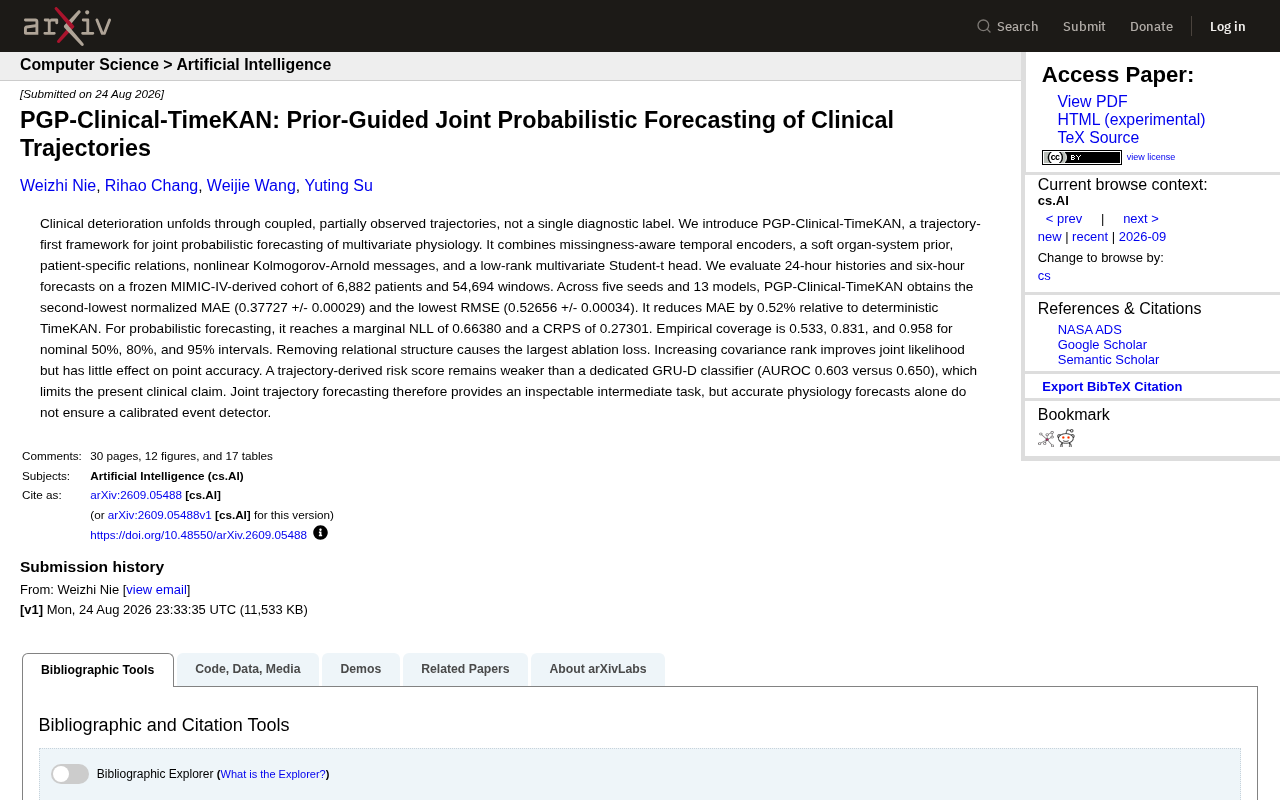
PGP-Clinical-TimeKAN: A Detailed Guide to the Multivariate Physiological Indicator Joint Prediction Framework
An in-depth analysis of the PGP-Clinical-TimeKAN framework for joint probabilistic prediction of multivariate physiological indicators, covering trajectory-first paradigm, KAN message passing, MIMIC-IV validation, and ablation studies.
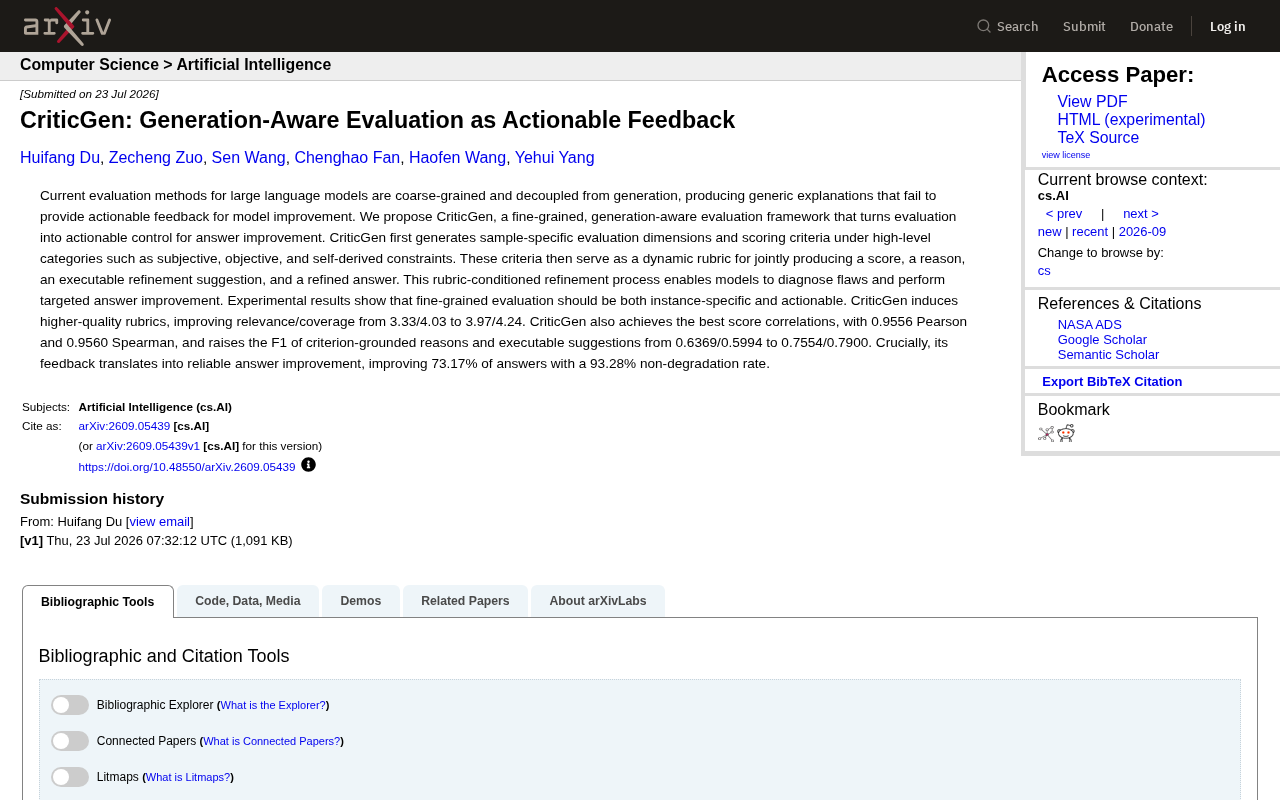
CriticGen: A New Framework That Transforms AI Evaluation into Actionable Improvement Feedback
CriticGen proposes a generation-aware evaluation framework that transforms AI assessment from passive scoring to an active optimization loop, achieving 73.17% answer improvement and 93.28% non-degradation rate.
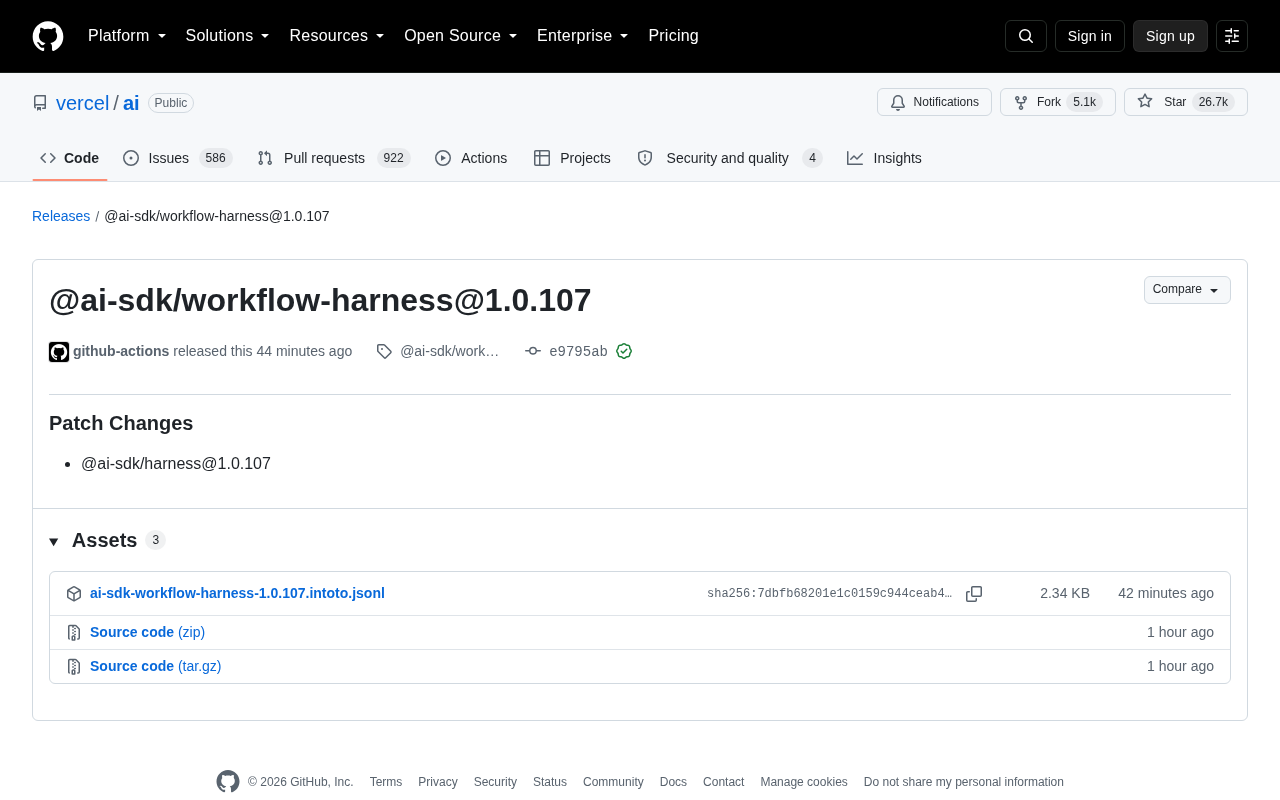
Vercel AI SDK workflow-harness Update Analysis
Deep analysis of Vercel AI SDK workflow-harness 1.0.107 update: architecture design, engineering practices, and developer value for building reliable AI apps.