AI Agent Beginner's Complete Guide: From Core Concepts to Hands-On Development

A structured four-module AI Agent course taking beginners from core concepts to job-ready skills.
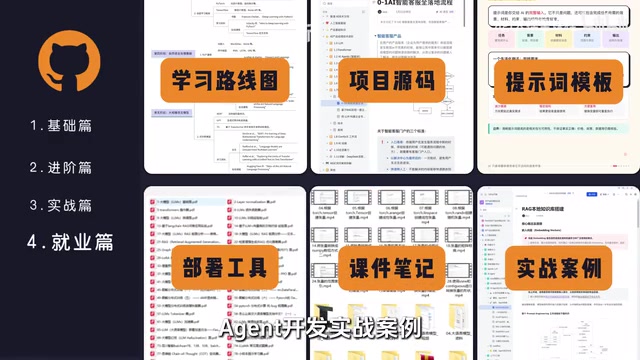
Addressing the common problem of fragmented Agent tutorials that leave learners unable to build real applications, this curriculum is divided into four modules: Fundamentals (Prompt engineering and workflow design), Advanced Concepts (RAG, tool calling, multi-agent collaboration), Hands-On Projects (knowledge base assistant, customer service agent, office automation), and Career Preparation (job market analysis, resume coaching, interview prep). Supporting resources include source code, Prompt templates, notes, and an interview question bank. Learners are advised to build alongside studying and to prioritize architectural thinking over specific tool APIs, given how rapidly the Agent ecosystem evolves.
Why Beginners Often Go Down the Wrong Path with AI Agents
AI Agents are one of the hottest areas in applied large language model development right now. But for beginners, most available tutorials share a common flaw: the knowledge is fragmented and lacks structure. One content creator on Bilibili spent a full month researching AI Agent tutorials before launching a new course. Whether analyzing viral videos with millions of views or niche content with just a few hundred, the conclusion was the same — after finishing these tutorials, learners still couldn't independently build a complete, working agent.
This pain point is worth examining carefully. Agent development spans multiple domains: LLM API calls, Prompt engineering, workflow orchestration, RAG knowledge bases, tool calling, and more. If any single piece is explained poorly, learners can't connect the dots into real engineering skill. An effective learning path needs to organize these scattered topics into a coherent, executable through-line — one that helps beginners both understand the underlying principles and actually ship working projects.
A Complete Learning System Built Around Four Modules
To address this problem, this curriculum breaks the learning journey into four modules: Fundamentals, Advanced Concepts, Hands-On Projects, and Career Preparation — forming a complete loop from beginner to job-ready.
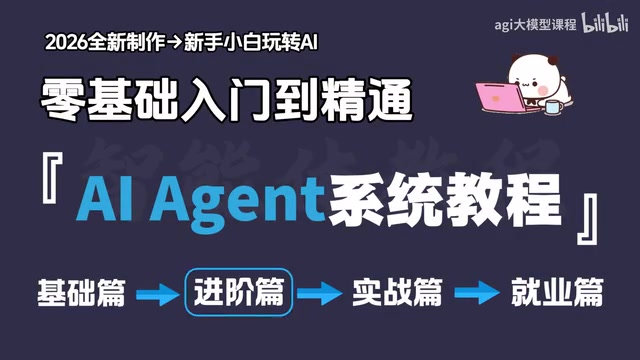
The Fundamentals module focuses on the foundational principles of agents, including Prompt engineering and workflow design. The goal at this stage is for learners to understand how an agent actually "thinks" and "acts" — how a large model generates decisions from prompts, and how workflows chain multiple steps together. This is the foundation everything else builds on.
The Advanced Concepts module goes deeper into agent architecture, covering core capabilities such as RAG knowledge bases, multi-agent collaboration, and tool calling, all developed using mainstream frameworks. RAG (Retrieval-Augmented Generation) addresses the problems of outdated knowledge and hallucinations in LLMs. Tool calling enables agents to actually interact with external systems. Multi-agent collaboration is the key to building complex applications. Mastering these capabilities is what it truly means to cross the threshold from "using" AI to "building" with it.
What is RAG? RAG (Retrieval-Augmented Generation) is one of the most important techniques in Agent development today and deserves a dedicated explanation. LLMs have a training data cutoff date and have no access to an organization's private information. This causes them to "hallucinate" when answering specialized or time-sensitive questions — confidently producing incorrect answers. RAG's solution: before the model generates a response, it first retrieves relevant content from an external knowledge base (such as documents or a database), then feeds that content as context to the model, giving it something concrete to reference. This mechanism preserves the LLM's language understanding and generation capabilities while introducing controllable, updatable external knowledge — making it the core technical approach for building enterprise-grade knowledge Q&A systems, customer service bots, and similar applications.
Hands-On Projects: Turning Knowledge into Capability
The most effective way to learn Agent development is to build things. The Hands-On Projects module covers three categories of typical applications, spanning the most common enterprise agent use cases.
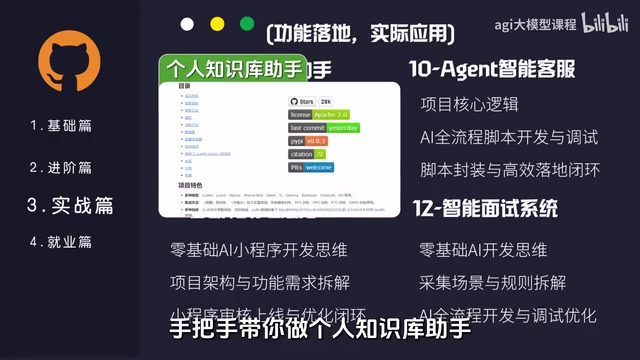
The first category is a personal knowledge base assistant — a direct application of RAG that enables an agent to answer questions based on private documents. The second is an intelligent customer service agent, which involves the integrated use of multi-turn conversation management, intent recognition, and tool calling. The third is an automated office assistant, which tests the agent's ability to orchestrate and execute real-world workflows.
These three projects progress from simple to complex, and they map directly to the highest-demand agent deployment scenarios in real business settings. By walking through the full development lifecycle, learners internalize the principles, frameworks, and techniques covered earlier as transferable engineering skills — moving beyond the frustrating state of "I understood it but can't build it."
What is Tool Calling? Tool Calling (also known as Function Calling) is the key mechanism that upgrades an agent from a "conversational system" to an "autonomous actor." Here's how it works: developers predefine a set of callable functions or APIs (such as checking the weather, querying a database, or sending an email) and provide their descriptions to the LLM. When a user makes a request, the model determines whether a tool needs to be invoked and outputs a structured call instruction. An external program executes the call, returns the result to the model, and the model integrates it into a natural language response. This mechanism bridges the gap between LLMs and real-world systems, enabling agents to manipulate files, call external services, and query live data — not just talk. Understanding the complete tool calling loop (intent recognition → instruction generation → external execution → result integration) is one of the core thresholds to clear in Agent engineering.
From Technical Skills to Job Readiness
One distinctive design choice in this curriculum is the Career Preparation module, which directly addresses job-seeking needs. This section breaks down the Agent development job market and hiring standards, guides learners in polishing their resumes and building portfolios, and walks through the most frequently asked interview questions.
For people looking to transition into or break into AI Agent development, technical ability and the ability to communicate that ability during job searches are two very different things. Many candidates with solid technical skills miss opportunities simply because they don't understand what employers are looking for or don't know how to present their project experience. Including career coaching in the curriculum is an extension of the "learn to apply" philosophy — the endpoint of learning isn't mastering knowledge, it's landing an offer with that knowledge.
Learning Resources and Practical Recommendations
According to the course creator, the accompanying resources include a complete learning roadmap, project source code, Prompt templates, deployment tools, lecture notes, and an interview question bank. For beginners, the real value of these resources lies in reducing the friction between theory and practice — having source code to reference and Prompt templates to reuse makes a meaningful difference in learning efficiency.
One important caveat: Agent development is a highly practice-intensive field, and watching videos alone is nowhere near enough. The recommended approach is to learn and build simultaneously — after finishing each module, immediately reproduce the corresponding demo. This is especially true for core topics like RAG and tool calling, where you only develop genuine understanding by working through the problems yourself. Additionally, the Agent ecosystem evolves quickly; mainstream frameworks and best practices are continuously being updated. Focus your learning on universal principles and architectural thinking rather than the API specifics of any particular tool.
Conclusion
The value proposition of this curriculum is clear: use a structured four-module framework to solve the "learned it but can't build" problem caused by fragmented tutorials. From foundational principles to advanced frameworks, from hands-on projects to career preparation, the path is reasonably well-designed end to end. For learners who want to systematically enter AI Agent development, it offers a clear reference route. That said, any course is just external scaffolding — what ultimately determines learning outcomes is the depth of your commitment to consistent, hands-on practice.
Related articles
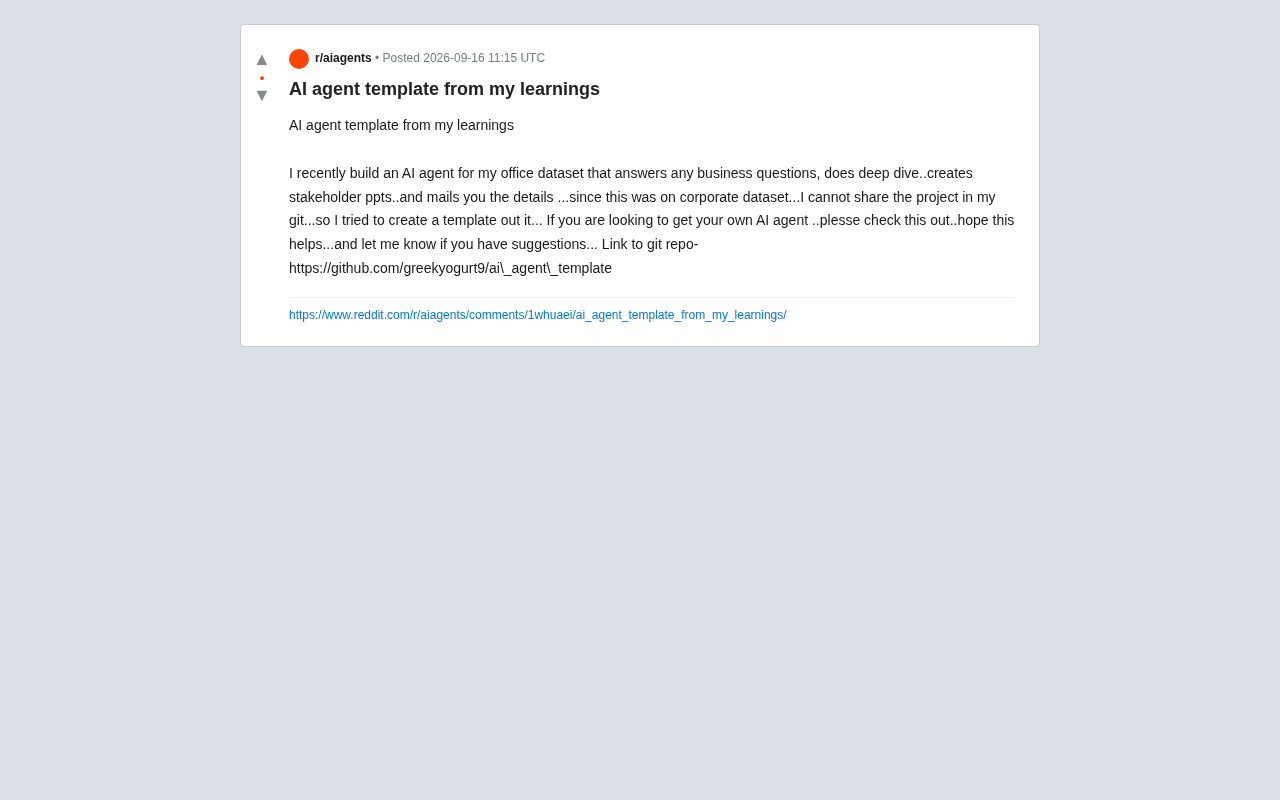
From Enterprise Practice to a Reusable Template: Lessons from Building an AI Agent
A developer shares an open-source AI Agent template built from an enterprise project, covering natural language data Q&A, analysis, auto-generated PPTs, and email distribution.

Nintendo's Open-World Design Evolution: Breaking Down Fire Emblem Fortune's Weave
Nintendo brings the open-world design philosophy of Breath of the Wild to Fire Emblem with the massive Switch 2 title Fortune's Weave. Here's what it means.
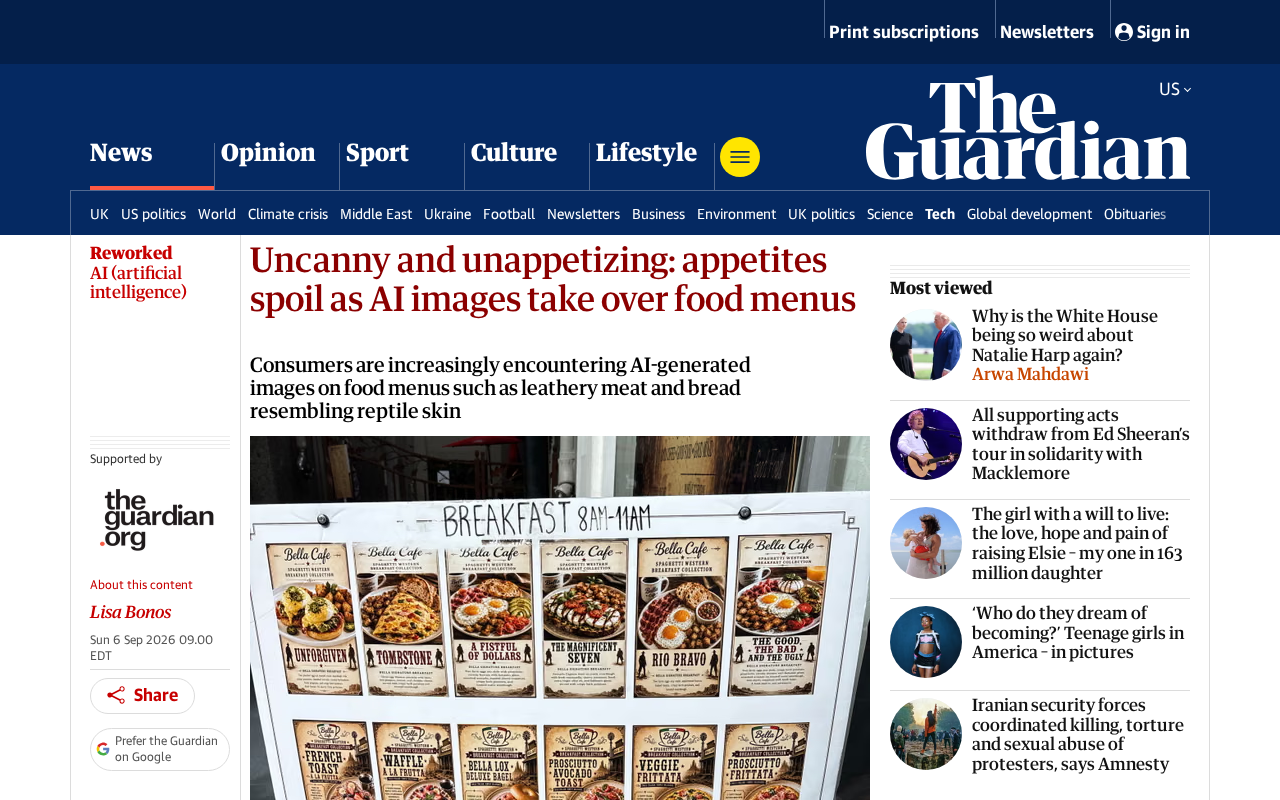
AI-Generated Food Photos Are Ruining Menus: How the Uncanny Valley Kills Appetite
AI-generated food images are flooding restaurant menus and delivery apps, but uncanny details kill appetite instead of sparking it. Here's why the uncanny valley effect hurts brands.