AI Coding Platforms Are Exploding in Popularity: Can Non-Technical People Really Build Money-Making Products?

An AI coding competition went viral, revealing the real opportunities and limits of building products with AI as a non-technical founder.
A competition hosted by an AI coding platform founder drew over 1,000 signups instead of the expected 200, reflecting strong public interest in AI-driven entrepreneurship. The platform aims to help non-technical users not just build products but achieve commercial success, particularly through vertical-industry Agents in fields like logistics, finance, and law. While the founder claims AI coding surpasses most programmers, this is largely marketing — AI output quality depends heavily on clear requirements, and complex systems still need engineering expertise. The real opportunity lies in packaging industry know-how as AI tools, but the hardest challenge remains monetization and user acquisition, not the building itself.
A Competition That Exceeded All Expectations
An AI coding platform founder shared a surprising experience on Bilibili: he had worried about low turnout and only hoped for 200 participants — but moments after posting the announcement in his community group, over 1,000 people signed up. The draw wasn't just the free entry; it was the tangible prizes — winners could walk away with an iPhone.
The central premise of the competition is genuinely provocative: Can someone with zero technical knowledge or coding experience actually build a money-making product using AI? Judging by the flood of sign-ups, a huge number of ordinary people are willing to find out.
Platform Vision: Not Just Building Products — Helping You Monetize Them
The founder repeatedly emphasized that his platform is far more than just an AI coding tool. The real value, he argues, lies in what happens after the product is built — commercial execution: driving growth, finding real users, and actually selling the product.
He positions the platform as a bridge for small and medium-sized businesses undergoing AI transformation. That transformation can't simply mean handing someone an AI coding tool and walking away. It requires delivering ready-to-use best practices tailored to specific industries — logistics, accounting, legal services. The key question is whether you can build Agents that genuinely work in these verticals and deliver real practical value.

The competition also serves a second purpose: collecting high-quality industry Agents. Participants who build Agents that truly work in real-world industry contexts don't just win prizes — the founder has promised to promote their work for free and split revenue from any sales. This "co-creation + revenue share" model transforms the competition from a skills showcase into a commercial partnership opportunity.
What is an Agent? An AI Agent is a program that can perceive its environment, autonomously plan, and execute multi-step tasks. Unlike a single-turn Q&A interaction with a language model, an Agent can call external tools (such as search engines, databases, or APIs), break down complex goals, and iterate until a task is complete. In a vertical industry context, a finance Agent might automatically read financial statements, reconcile entries, and generate analytical summaries — rather than simply answering accounting questions. Because an Agent's value is deeply tied to an understanding of specific business workflows, developers with a purely technical background often struggle to build truly usable industry Agents on their own. This is precisely why the platform emphasizes that the real key is combining industry know-how with AI tooling.
"AI Just Writes Spaghetti Code" — The Founder's Rebuttal
When critics argue that AI-generated projects are nothing but spaghetti code, the founder has a sharp response: AI coding has already surpassed the capabilities of most programmers.

His reasoning: as long as your requirements documents and design specs are written clearly, the code AI produces will be higher quality than what most programmers deliver. On that basis, he goes so far as to declare that "programmers are on their way out."
This is an undeniably bold claim and deserves a measured response. AI has made remarkable progress in code generation — especially in standardized, template-driven scenarios where its efficiency is genuinely impressive. But the assertion that AI code quality "surpasses most programmers" is largely marketing language. The quality of AI output is heavily dependent on the clarity of the requirements provided and the judgment of the person using it. Complex system architecture, edge case handling, performance optimization, and long-term maintenance still require people with real engineering experience. Rather than saying programmers are being replaced, it's more accurate to say that programmers who don't know how to use AI will be left behind.
"Spaghetti code" (also called legacy mess) is a term in developer culture for a codebase that is structurally chaotic and nearly impossible to maintain — lacking modular design, using arbitrary naming conventions, and so tightly coupled that making changes almost inevitably introduces new bugs. The core criticism of AI-generated code as "spaghetti" is this: today's leading code generation models prioritize making code run, rather than ensuring long-term maintainability, robust error handling, or scalability. For one-off demos or small utilities, this flaw is manageable. But as a product grows in scale, technical debt accumulates rapidly — and can eventually force a complete rewrite. This is a major reason why the engineering community remains cautious about whether AI can truly replace programmers.
The Opportunity for Ordinary People: Packaging Your Skills as AI Products
Setting aside the provocative rhetoric, one idea the founder raises is worth taking seriously: using AI coding to build products and packaging your own expertise into sellable AI tools could be one of the hottest trends of the next two to three years.

The logic holds up. In the past, turning a professional skill into a product meant clearing a significant technical hurdle — you had to code, or pay someone who could. AI coding tools are rapidly flattening that barrier, giving finance experts, lawyers, logistics professionals, and others with deep industry know-how but limited technical backgrounds a real shot at packaging their experience into marketable Agent products.
The real bottleneck, however, is rarely "can you build it" — it's "will anyone buy it once you do." This is exactly why the founder keeps coming back to commercialization and user acquisition. For the vast majority of non-technical founders, building the product is only step one. Finding users and generating revenue is the hardest gap to cross.
AI coding tools (such as Cursor, GitHub Copilot, and Replit Agent) work by taking natural language descriptions of requirements and feeding them into large language models, which generate the corresponding code. Users can iterate on product prototypes without deep programming knowledge. These tools dramatically lower the barrier to turning an idea into working software — but they haven't eliminated the full complexity of software engineering. Database design, server deployment, security patching, and API integration still require a degree of systematic technical knowledge. For industry-expert founders, the real value of these tools is closer to "dramatically shortening the time from zero to a working demo" than "completely replacing the software development process."
A Rational Take on the Hype
The 1,000+ sign-ups reflect genuine enthusiasm among ordinary people for the idea of "building a startup with AI." But a few things deserve a clear-eyed look:
- Free entry plus iPhone prizes are powerful sign-up incentives on their own. Registration numbers don't necessarily reflect actual product-building capability.
- "Non-technical people can build money-making products" is an appealing idea — but one that still needs to be proven. Building a demo is easy. Building a product with real user retention and sustainable revenue is hard.
- The practical value of industry Agents depends entirely on a deep understanding of specific business contexts. AI tools are accelerators, not substitutes for domain insight.
For ordinary people thinking about getting involved, competitions and platforms like this offer a genuinely low-stakes way to experiment. It's absolutely worth exploring out of curiosity — but don't let the hype around "programmers are done" or "anyone can get rich with AI" do your thinking for you. The people who actually break through will, as always, be those who both understand their industry deeply and are willing to put in the work to refine their product and operations.
Related articles

Australia Considers Following Canada's Lead to Deepen EU Ties
Australia signals it may follow Canada in deepening EU trade ties amid U.S. trade policy uncertainty, seeking diversification and risk hedging through closer EU engagement.
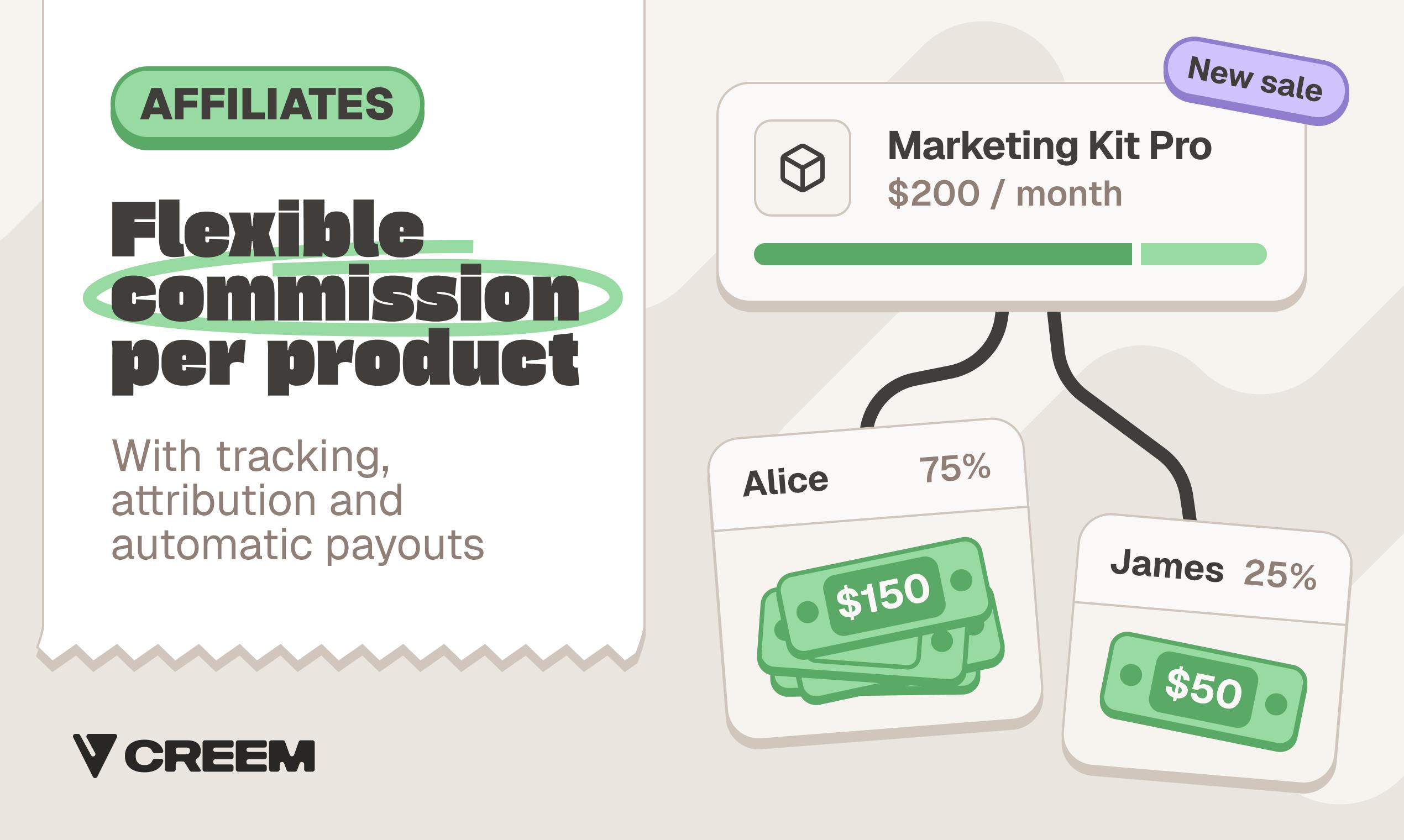
CREEM 2.0: The All-in-One Monetization Platform for AI Founders
CREEM 2.0 hit #1 on Product Hunt, offering AI founders a single platform for global payments, tax compliance, usage billing, affiliates, and payouts.
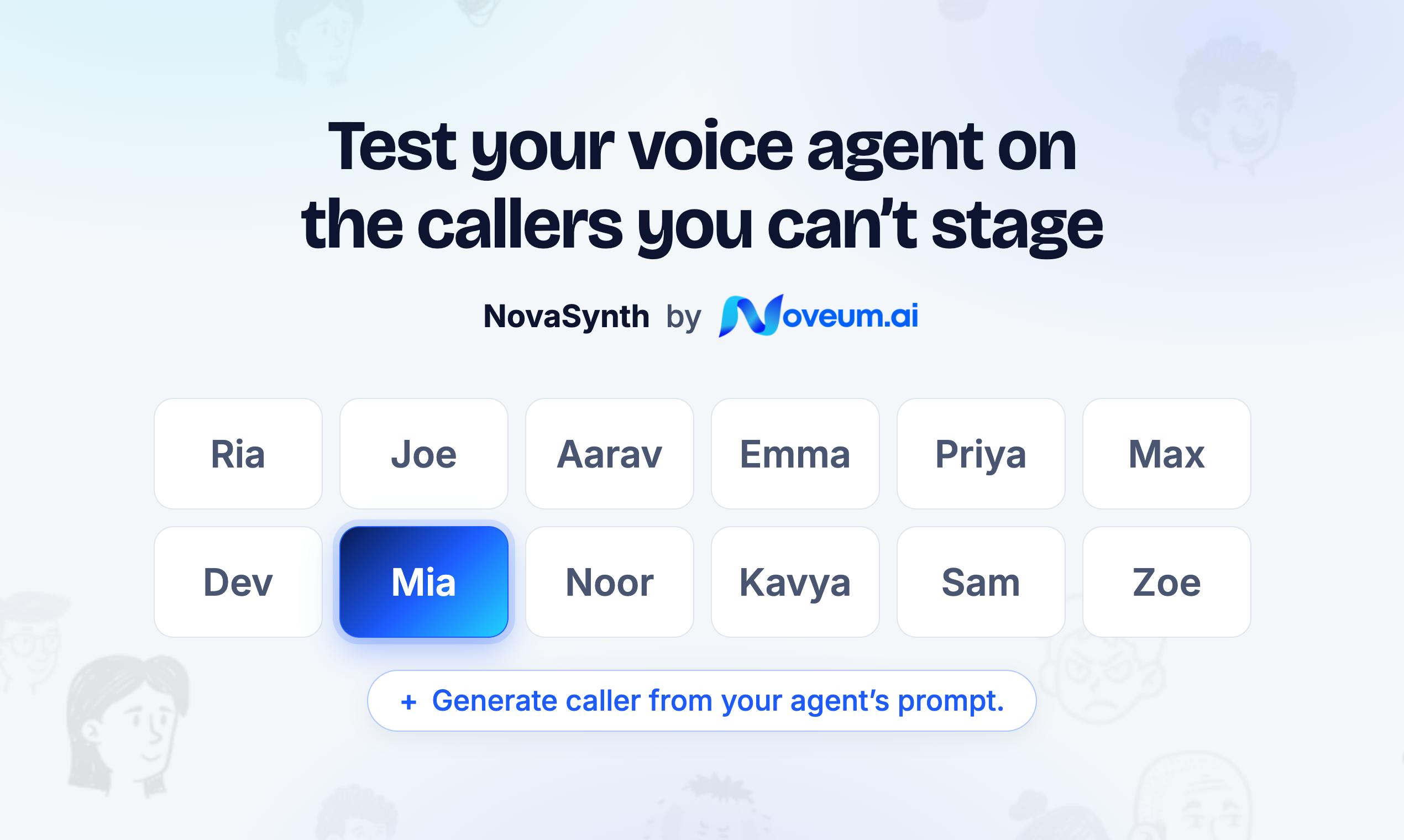
NovaSynth: Stress-Testing Voice AI Agents with Simulated Callers
NovaSynth by Noveum simulates real-world callers with accents, noise, and interruptions to stress-test voice AI agents across 30+ dimensions with actionable fix recommendations.