Backend Developer to AI Agent Engineer: A Practical Four-Step Learning Path

A four-step practical path for backend developers transitioning to Agent engineers: get models running, integrate tools, stabilize the system, and land offers with projects.
The article outlines the path for backend developers transitioning to AI Agent engineers, noting that existing backend engineering skills — API design, error handling, logging, permissions — are the core advantages for deploying Agents. Drawing on a Bilibili creator's video, it breaks the transition into four steps: get API calls and prompt control working, enable tool calling, build a deliverable system, and present results in project language. Action beats bookmarking.
AI Agent engineers are becoming highly sought after in the tech hiring market, and many backend developers want to seize this window of opportunity to transition — yet they get stuck in an awkward spot: "I've gone through a ton of tutorials, but I can't piece a project together." A Bilibili creator shared a hands-on path to getting an Agent running from scratch in a recent video, emphasizing learning driven by commercial projects rather than just collecting concepts. This article combines the video's insights with industry practice to break down the key steps for transitioning into an Agent engineer.
Why Backend Developers Have a Natural Advantage in the Agent Transition
At the start of the video, the creator mentioned the confusion of a backend developer with 6 years of experience: he wants to move into Agent work but doesn't want to switch roles directly — he lacks confidence for a P7 interview, yet interviewing for P6 raises questions about his growth potential. This reflects a common phenomenon — backend developers often underestimate the engineering skills they already possess.
The core of Agent development isn't training models — it's integrating large models into business systems so they can call tools, execute workflows, and deliver reliably. This is exactly where backend engineers excel: API design, error handling, logging and monitoring, permission control — these engineering capabilities are critical when deploying Agents. The creator put it bluntly: "Companies are increasingly asking not whether you can train models, but whether you can connect large models to business systems."
According to the creator's observation, the window for Agent positions is opening up, but the requirements are also changing rapidly. Simply knowing how to use LangChain is no longer enough — companies value end-to-end delivery capability more.
Step 1: First Make the Model "Usable" — Don't Obsess Over Model Selection
Many beginners get stuck at the first step because they keep comparing which model is the strongest and how to tune parameters. The creator's advice is direct: pick a model that works and get the call chain running. The goal at this stage isn't academic research — it's building stable API calling capability.
Two core skills need practice: first, API calls — including passing in prompts, getting responses, streaming output, and error handling; second, prompt control — getting the model to output in a specific format (like JSON), follow rules, and clearly say "I don't know" when uncertain. The creator emphasized: "If you can control the output, your Agent won't fall apart later."

At this stage, you don't need frameworks or production engineering — just a minimal loop that works reliably. Many tutorials jump straight into complex LangGraph orchestration, which leaves beginners lost in abstractions and neglects the most fundamental model interaction skills.
Step 2: Make the Model "Use Tools" — From Chatbot to Colleague
What makes Agents valuable is that they don't just talk — they do things. The creator suggests starting with three common toolchains: retrieval, function calling, and code execution or API calls.
He gave two examples: a document Q&A Agent needs to search the document library first, then organize answers with citations; a data analysis Agent needs to decide what analysis method to use, write code to run results, then explain conclusions in natural language. Once a model can call tools, it transforms from a chatbot into a "colleague" that can share the workload.
The key at this step is understanding the full tool-calling chain: how the model decides which tool to call, how parameters are passed, and how results are returned and integrated into subsequent reasoning. These mechanisms have corresponding implementations in LangChain and LangGraph, but the creator suggests writing a simplified version by hand first before reading framework source code — you'll understand it more thoroughly.
Retrieval-Augmented Generation (RAG) is one of the most frequently mentioned implementations of making models "use tools." The basic idea is: before the model generates an answer, retrieve the most relevant document fragments from an external knowledge base, then insert these fragments as context into the prompt so the model answers based on real materials and cites sources. RAG's value lies in mitigating knowledge staleness and hallucination issues in large models while avoiding the cost of retraining. In engineering terms, RAG involves document chunking, vector embedding, vector database retrieval, re-ranking, and other steps — the recall quality at each step affects the accuracy of the final answer, which is also a keyword that repeatedly appears when discussing enterprise-level Agent stability challenges later.
Function Calling is the standardized mechanism for models to interact with external tools. Developers describe available tool names, purposes, and parameter structures using JSON Schema; the model determines during inference whether to call a tool, which one to call, and generates parameters conforming to the schema. After the platform returns the tool execution result, the model integrates it into subsequent responses or next-step decisions. Understanding this chain is critical for troubleshooting: parameter format errors, unclear tool descriptions, and misjudged timing of calls can all cause abnormal Agent behavior. Writing a simplified function calling flow by hand helps developers see exactly what steps frameworks encapsulate behind the scenes.
Step 3: Turn the Agent into a Deliverable System
The demo runs fine but becomes unstable under real load — this is where many people stumble. The creator listed a bunch of challenges that "sound like engineering problems": context management, long conversation memory, knowledge base updates, retrieval quality, output validation, failure retry, logging, permissions. He emphasized: "This is why companies are willing to pay 50K — Agent engineers aren't toy engineers; they're the ones who turn toys into productivity."

Growth at this stage must be driven by real projects. The creator suggests following a complete commercial project from requirements to deployment, getting your hands dirty with every pitfall. Reading someone else's code and writing your own are completely different things — only by implementing it yourself can you clearly explain design trade-offs in interviews.
From industry practice, enterprise-level Agent stability challenges mainly center on retrieval-augmented generation (RAG) recall quality, multi-turn conversation state management, and exception recovery in tool calls. Solutions to these problems often aren't at the model level but at the system architecture level — backend experience directly translates into competitive advantage here.
Context management is the engineering problem most easily underestimated when an Agent moves from demo to production. Large models have limited context windows, and multi-turn conversations, tool return results, and retrieved documents quickly fill them up. Engineering-wise, you need strategies like context compression, summarization, key information extraction, and sliding windows to control token consumption while retaining necessary information. Additionally, long conversation memory needs to distinguish short-term session state from long-term user preferences — the former usually stays in context, while the latter often requires external storage with retrieval. These designs are highly aligned with caching, state machines, and session management concepts in backend systems — another area where backend experience transfers directly.
LangGraph is an orchestration framework in the LangChain ecosystem for building stateful, multi-step Agent workflows. It models the Agent's execution process as a graph structure: nodes represent model calls or tool executions, edges represent state transition conditions, and it supports loops, branching, and interrupt recovery. Compared to simple chained calls, LangGraph is better suited for complex scenarios requiring task planning, multi-turn tool calls, and failure retry. However, for beginners, jumping into graph orchestration too early can lead to getting lost in abstractions — it's better to hand-write simplified state transition logic first, understand "how state passes between nodes and how conditions determine the next step," then compare with framework source code for a much more solid understanding.
Step 4: Win the Interview with Project Language
Writing "familiar with large models, understands Agents" on a resume is basically equivalent to writing nothing. The creator suggests replacing vague skill lists with concrete system descriptions, for example: "Implemented an Agent supporting tool calls, with task planning, retrieval augmentation, and output validation capabilities, supporting multi-turn conversations and context management, reducing manual processing time from X to Y in a certain scenario."

Interviewers really just want to quickly judge whether you can get work done, so descriptions should focus on "what system you built, how it works, what problems it solved, what key mechanisms you used, and how you ensured stability." The creator also mentioned that preparing Agent-related interview questions in advance adds safety, but the core is still the authenticity of your project experience.
The Key to Transition Is Action, Not Bookmarking
The creator ended the video by calling out a common mindset: many people bookmark tutorials daily, scroll through concepts, watch "from beginner to master" videos, then continue to feel anxious, procrastinate, and get no responses to their resumes. The people who actually raise their salaries do something simple — they follow a commercial project and build an Agent that runs, works, and can be deployed.
For backend developers, transitioning to Agent engineer isn't starting from zero — it's migrating existing engineering capabilities to a new scenario. First get model calls working, then make the model use tools, then make the system stable, and finally present value in project language. This path doesn't require waiting until you've learned all the fundamentals — it's learn-by-doing, using delivery to force growth.
As the creator said: "Stop preparing. Just start. Build your first usable version first."
One-line Summary
A four-step practical path for backend developers transitioning to Agent engineers: get models running, integrate tools, stabilize the system, and land offers with projects.
Paragraph Summary
The article outlines the path for backend developers transitioning to AI Agent engineers, pointing out that existing backend engineering capabilities — API design, error handling, logging and monitoring, permission control — are exactly the core advantages for deploying Agents, rather than model training experience. Drawing on a Bilibili creator's video, the author breaks the transition into four steps: first get API calls and prompt control working with a usable model to build a stable minimal loop; then enable the model to call retrieval, function, and code execution tools, understanding the tool-calling chain; then turn the Agent into a deliverable system, solving engineering problems like context management, memory, retrieval quality, and failure retry; finally replace vague skill lists with concrete system descriptions to present deployment results in resumes and interviews. The core conclusion is that action beats bookmarking — use commercial projects to drive learning.
Related articles
AI Gains Confined to Tech? Non-Tech Industries See Little Payoff
Apollo analysis finds AI's economic returns remain highly concentrated in tech, with no quantifiable payoff yet in non-tech sectors. We break down the key arguments, Hacker News debate, and practical implications for enterprise AI investment and measurement.
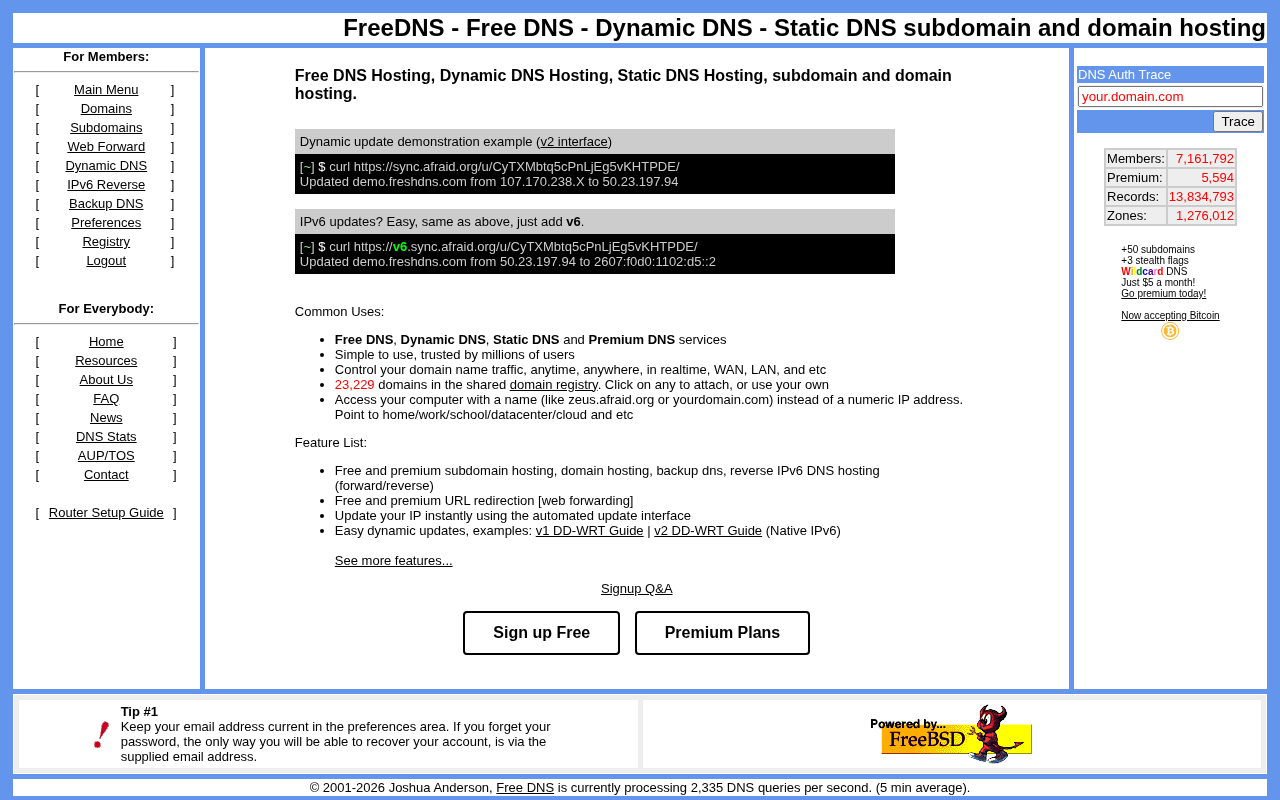
FreeDNS: A Classic Choice for Free Dynamic DNS Services
FreeDNS is a platform offering free dynamic DNS hosting, supporting a shared domain pool and HTTP updates. This article covers its core features, community reviews, use cases, and comparisons with other DNS solutions.

AI Agents on Your Phone: Where's the Line Between Convenience and Privacy?
A developer finds people accept AI agents operating laptops but feel uneasy about phones. This article analyzes the trust gap behind data density, permission models, and observability, exploring the specific task boundaries users are willing to hand to mobile AI agents.