Beginner's Guide to Building AI Agents and Private Knowledge Bases

A structured beginner's roadmap for building AI Agents and private knowledge bases with LLMs.
This article draws on a beginner-focused LLM tutorial from a senior tech engineer to outline the core path for getting started with AI projects. It explains that the real challenge isn't programming difficulty but the lack of a structured roadmap. The two most practical directions to focus on are AI Agents and private knowledge bases (via RAG). The recommended learning path moves from foundational concepts → toolchain (Python, APIs, vector databases, frameworks) → hands-on projects, with an emphasis on reproducible results and genuine depth over free-resource collecting.
Many beginners share a common struggle: they're interested in large language model (LLM) technology but can't find a clear path to get started. A self-described senior engineer with five years of LLM experience at a major tech company has published a beginner-friendly tutorial series on Bilibili covering AI Agent development and private knowledge base construction. The goal is to give aspiring learners a clear, structured learning roadmap. This article distills the core ideas from that tutorial and outlines the key concepts and practical considerations for getting started with AI projects from scratch.
What It Really Takes to Learn LLMs as a Beginner
People tend to fall into one of two extremes when it comes to large models: either they find the subject intimidatingly complex, or they dismiss it as trivial — "It's just AI, and the main language is Python, how hard can it be?" The tutorial author points out that once you actually roll up your sleeves, you quickly realize that many concepts are harder to grasp than they appear, with layers of implicit knowledge hidden beneath seemingly simple surfaces.

This gap between expectation and reality is exactly where most beginners give up. Learning to work with LLMs isn't just about picking up a programming language — it involves model API calls, prompt engineering, vector retrieval, Agent orchestration, and more. Without a structured roadmap, people with no engineering background often end up in a fragmented learning loop, picking up bits here and there, and never building a coherent skill set.
Why AI Agents and Private Knowledge Bases Are Worth Learning
The tutorial focuses on two of the most practically valuable directions right now: AI Agents and private knowledge bases. These two areas represent a critical leap — transforming LLMs from "chat tools" into genuine "productivity tools."
The core value of AI Agents is enabling large models to do more than just answer questions. An Agent can autonomously plan tasks, call external tools, and execute multi-step workflows. It's an upgrade from "question answering" to "getting things done" — and it's one of the most sought-after application patterns in both enterprise and developer contexts.
Private knowledge bases address a fundamental limitation of general-purpose LLMs: they don't know anything about your own data. By vectorizing enterprise documents or personal files and integrating them into a Retrieval-Augmented Generation (RAG) pipeline, a model can provide accurate, grounded answers based on private data. For individuals and small teams, this is the fastest path to deploying LLMs in real-world business scenarios.
What is RAG? Retrieval-Augmented Generation (RAG) is the core technical architecture behind private knowledge bases. The basic flow works like this: documents are split into chunks and converted into high-dimensional vectors using an embedding model, then stored in a vector database. When a user asks a question, the system vectorizes the query, retrieves the most semantically similar chunks from the database, and injects them as context into the prompt before passing it to the LLM to generate a response. The key advantage is that the model doesn't need to be retrained — it can effectively "read" private data, and every answer is traceable back to a source. Popular vector databases include Chroma, Milvus, Qdrant, and Weaviate, each with different performance profiles and deployment complexity. Beginners typically start with the lightweight Chroma.
How to Structure Your Learning Path from Zero
The author notes that the full tutorial series took three months to record and comes with mind maps, a learning roadmap, lecture notes, and e-books — all aimed at reducing the onboarding burden for beginners. From a content organization standpoint, most "beginner to advanced" paths follow a similar progression:
Build Foundational Understanding
Start by understanding the basic principles and capability boundaries of large models — what they can and can't do. This helps you set realistic expectations before diving in.
Master the Core Toolchain
Get comfortable with Python basics, LLM API calls, vector databases, and mainstream development frameworks. These are prerequisites for building any AI project.
A Quick Look at the LLM Dev Ecosystem The open-source tooling ecosystem for LLM application development has matured considerably. LangChain is the most widely used framework, with modules covering model calls, prompt management, tool integration, and Agent orchestration — well-suited for developers with some Python experience. LlamaIndex focuses more narrowly on data ingestion and retrieval, making it a stronger choice for RAG-heavy use cases. Dify is a low-code visual platform that lets users build AI Agent and knowledge base applications through a drag-and-drop interface, lowering the engineering barrier for non-programmers. For API access, providers like OpenAI, Zhipu AI, and Baidu Wenxin all offer standardized APIs, so beginners can get application logic running without the hardware burden of local model deployment — then gradually go deeper as needed.
Learn Through Real Projects
Use AI Agent and private knowledge base projects to tie scattered knowledge into a complete, working skill set. Project-driven learning works because every step has a clear goal and a visible result, making it much easier to stay motivated. The author repeatedly emphasizes that "persistence is the real victory" — a reminder that the biggest obstacle at the beginner stage usually isn't the difficulty of the material, but the temptation to quit halfway.

A Realistic Take on This Type of Tutorial
It's worth being clear-eyed here: the source material for this article is the tutorial's introductory segment, which focuses primarily on building confidence and encouraging engagement (e.g., "comment 666 to get free resources," "like and subscribe"). It doesn't walk through actual technical implementation steps. In that sense, it reads more as a motivational pitch than a technical deep-dive.

For anyone seriously considering this type of course, there are a few practical questions worth asking: Are the supplementary materials well-organized and cohesive? Are the project examples reproducible? Does the instructor explain the underlying principles, or just teach you to copy code? Free resources are appealing, but learning outcomes ultimately depend on content depth and your own effort.
AI Agents and private knowledge bases are genuinely worthwhile directions to invest in right now. The open-source tooling — LangChain, various vector databases, Dify, and more — is mature enough to support serious learning. With a structured approach, a career pivot from zero is entirely achievable. The key is picking the right direction, staying consistent with hands-on practice, and continuously testing and refining your understanding as you build.
Related articles
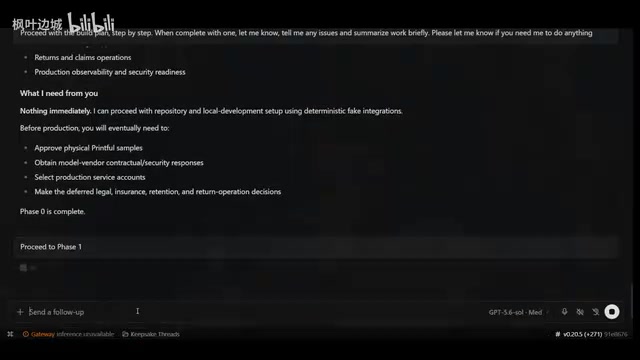
Building an AI-Powered E-Commerce Business from Scratch: A Real-World Account of Multi-Agent Architecture for Print-on-Demand
A blogger builds a print-on-demand e-commerce company from scratch using AI agents — documenting specialized Agent profiles, GPT-5.6 vs Claude Fable multi-model orchestration, and reusable skill accumulation.

AI Agent Earns $10K in One Week: 3 Key Upgrades Explained
A blogger shares how he earned $10K in a week with an AI Agent — not by adding more skills, but through verification, approval gates, and subagents to raise trust and enable true automation.
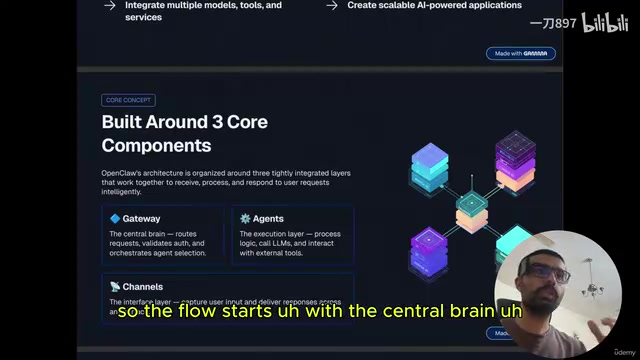
Getting Started with OpenClaw: Multi-Channel AI Agent Gateway and Automated Workflow Guide
OpenClaw is an open-source multi-channel AI agent gateway. This guide covers its three core components — gateway, agents, and channels — plus tool integration and memory mechanisms.