Building Enterprise-Grade AI Agents from Scratch: Core Concepts and a Four-Stage Learning Roadmap

A systematic breakdown of AI Agent core capabilities and a four-stage learning roadmap from concepts to production.
This article examines the core value of AI Agents and how to learn them effectively. It explains why Agents exist — native large models have four key limitations in memory, timeliness, internet access, and tool invocation — and maps Agent capabilities to four roles: Translator, Tool Expert, Memory Manager, and Task Manager. It traces the technical evolution from tool invocation to orchestration to production engineering, and presents a four-stage learning roadmap: fundamentals, principles, reinforcement, and production deployment. The key takeaway: understanding logic matters more than memorizing code, and readers should approach "fast-track" course marketing with healthy skepticism.
AI job requirements are evolving at a rapid pace. Simply calling large model APIs or building basic RAG pipelines is no longer enough to stay competitive as an AI practitioner. The rarer, more valuable skill today is the ability to independently design and develop intelligent Agents — systems that can reason autonomously, plan, invoke tools, and close the loop on complex tasks. This article, based on related tutorial content from Bilibili, breaks down the core concepts of Agents and outlines a practical learning roadmap.
Why Agent Development Is Worth Investing In Right Now
From the perspective of the source material, the large model application space is compared to the explosive growth of Java and Android development over a decade ago — high demand, scarce talent, and a market where what matters is technical skill and project experience, not academic credentials. This observation carries real practical value for those considering a career transition: traditional roles in Java, Python, big data, and QA tend to prioritize educational background, whereas large model application development currently rewards hands-on project capability far more.
That said, statements in the source material like "learning traditional tech will leave you lost" or "you must seize this historical opportunity" carry an obvious marketing tone aimed at course enrollment. Readers should evaluate these claims critically and not be swept up by anxiety-driven messaging. Technology choices should be based on your own background and interests. Agent development is genuinely worth exploring — but it's not the "only path forward."
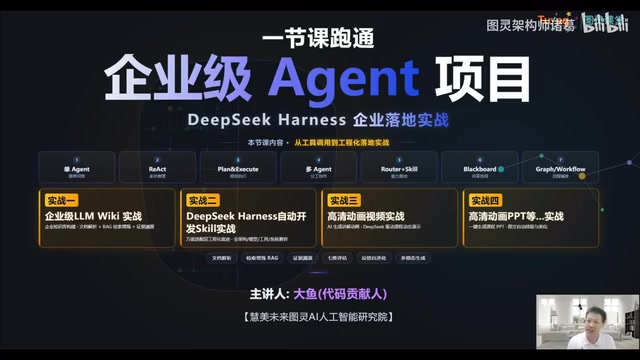
What Is an AI Agent: Bridges, Translators, and Assistants
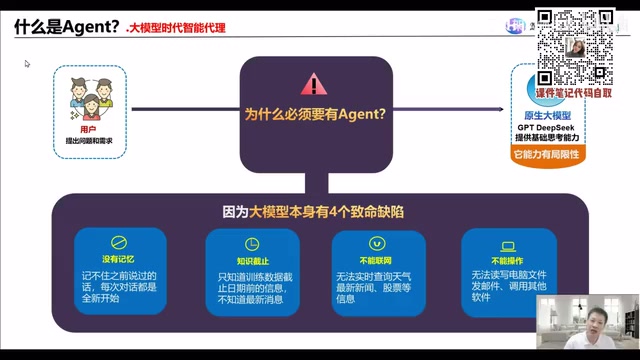
The source material uses an intuitive analogy: an Agent is like a translator bridging a Chinese speaker and an English speaker. When a user poses a question, the Agent interprets the need, invokes the appropriate tools, aggregates the results, and delivers a response. It serves as the "proxy" layer in the large model era.
The reason Agents are necessary stems from several fundamental limitations of native large models — whether GPT-based or DeepSeekAd-based:
- No memory: Each conversation starts fresh with no recollection of prior context;
- Knowledge cutoffs: Models have no awareness of events after their training cutoff and can confidently generate incorrect information;
- No internet access: Models can't look up real-time data like weather, stock prices, or policy updates;
- No access to local tools: Models can't interact with the tools or data on your own machine.
Agents exist precisely to address these shortcomings. In practice, they serve four core roles:
The Four Core Capabilities of an Agent
- Translator: Converts natural language from the user into instructions the model can process, and turns the model's output back into human-readable results;
- Tool Expert: Calls external APIs and tools, transforming a model from something that "can talk" into something that "can act" — enabling web browsing, data queries, and more;
- Memory Manager: Retains context, user preferences, and conversation history to keep multi-turn interactions coherent and prevent the system from "forgetting";
- Task Manager: Breaks complex problems into sub-steps, plans execution sequences, and proactively explores multiple solution paths when obstacles arise — much like a human would.
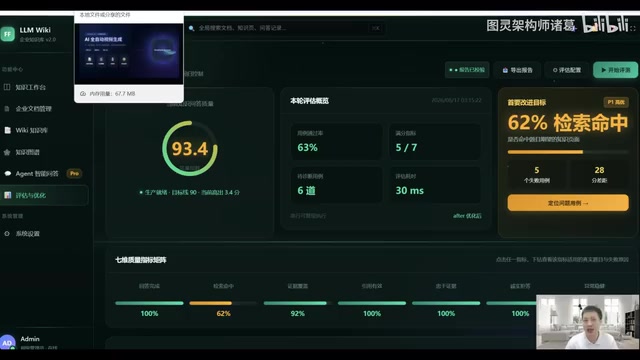
Familiar products like Doubao and DeepSeek chat interfaces, as well as AI coding tools like Cursor, are all Agent applications at their core. Take AI coding assistants as an example: they remember your entire project structure, autonomously select approaches, debug code, and iteratively verify results — all of which reflect the "Tool Expert" and "Task Manager" capabilities in action.
Three Technological Leaps in Agent Development
The source material traces Agent technology through an evolution from "tool invocation" to "orchestration" to "production engineering." Early Agents simply called individual tools; later iterations developed the ability to orchestrate multiple tools and multi-step workflows; today, the field has matured into production-grade deployments involving multi-agent collaboration and integration with complex business systems. Understanding this evolutionary arc provides a useful mental framework for grasping the full scope of Agent technology.
At the production engineering stage, LangChain and LlamaIndex are the two most widely used Agent development frameworks. LangChain provides standardized abstractions — Chain, Agent, Tool, Memory — that help developers rapidly compose components; LlamaIndex is more focused on data indexing and RAG retrieval scenarios. In recent years, as Agent applications have grown in complexity, LangGraph (a graph-based state machine orchestration framework) and AutoGen (Microsoft's multi-agent conversation framework) have also become mainstream choices for production deployments. Understanding the positioning and use cases of these frameworks helps developers make informed technology decisions in real projects, rather than blindly chasing what's trendy.
A Four-Stage Learning Roadmap: From Concepts to Production
The source material outlines a fairly clear four-stage progression that can serve as a self-study reference.
Stage 1: Large Language Model Fundamentals
Build a solid foundation in the underlying concepts — thoroughly understand the planning module, memory module, and tool invocation, the basic building blocks of any Agent — to set the stage for more advanced work. The goal of this stage is to understand the concepts.
Stage 2: Core Advancement — Mastering Principles and Paradigms
Develop a deep understanding of how Agents work, master classic paradigms like ReAct and Code Agent, and truly grasp the underlying execution logic. This stage marks the leap from "understanding concepts" to understanding principles — and it's also where you'll encounter the most pitfalls, making hands-on experimentation essential.
ReAct (Reasoning + Acting) is currently one of the most mainstream Agent reasoning paradigms, introduced by Google Research in 2022. Its core idea is to have the large model alternate between "Thought" and "Action" — after each action, it observes the result (Observation) and uses that to inform the next round of thinking, forming an iterative loop until the task is complete. This "Think → Act → Observe" cycle enables Agents to self-correct during execution, rather than generating a single one-shot answer. Code Agent is another paradigm in which the Agent completes tasks by generating and executing code. Compared to pure text-based reasoning, code execution produces more deterministic and verifiable results, making it especially well-suited for mathematical computation, data processing, and similar scenarios. Mastering the underlying logic of both paradigms is a critical foundation for understanding multi-agent collaboration and production deployment later on.
Stage 3: Advanced Reinforcement — Refining Output Quality
Dive deep into multi-agent collaboration — how multiple Agents divide responsibilities and work together — while also practicing prompt optimization to make Agent outputs more precise and controllable, giving your work real-world applicability.
Multi-agent collaboration refers to distributing a complex task across multiple Agents with different specializations, similar to how different departments in a company divide and conquer work. Common collaboration patterns include the "orchestrator-worker" model, where an Orchestrator Agent handles task decomposition and scheduling while Sub-Agents each handle specific subtasks, and the "pipeline" model, where Agents pass intermediate results to one another in sequence. Mainstream frameworks like LangGraph, AutoGen, and CrewAI all offer varying degrees of native support for multi-agent collaboration. Prompt optimization is equally critical at this stage — the design of the System Prompt directly shapes an Agent's role, output format, and behavioral constraints. Subtle wording differences can lead to significant variation in output quality, and building good intuition here requires repeated experimentation.
Stage 4: Production Deployment — Connecting to Real Business Problems
Technology ultimately proves itself through projects. Drawing on knowledge from the first three stages, build 2–3 complete end-to-end projects — such as an intelligent decision assistant, an office automation Agent, or a multi-agent collaboration system. The source material also mentions more enterprise-oriented directions including intelligent customer service, e-commerce Agents, and model fine-tuning, involving technical stacks like multimodal RAG retrieval, high concurrency, and microservices.
Learning Advice: Prioritize Mental Models Over Memorizing Code
One point in the source material is worth highlighting: many people spend a year or two learning across various platforms and still feel stuck. The reason is that technology moves too fast to keep up with, materials are endless, and most tutorials only teach a fixed "step 1-2-3" procedure — the moment you're asked to approach things in a different order, you're lost.
The most effective learning approach is to focus on understanding the logic, not memorizing code. Once you genuinely understand how a system works end-to-end, you can reproduce it, adapt it to your own use cases, and build transferable skills. This is the universal learning principle for fast-moving fields like Agent development.
Summary
The value of Agents lies in compensating for native large models' shortcomings in memory, timeliness, internet access, and tool invocation — through the four roles of Translator, Tool Expert, Memory Manager, and Task Manager — transforming models from systems that "can talk" into systems that "can act." For developers looking to enter the AI application space, a progression along the four stages of "fundamentals → principles → reinforcement → production" — with a consistent focus on mental models and real projects — represents a grounded and pragmatic path to growth. At the same time, maintain a healthy skepticism toward "fast-track" and "land a job immediately" marketing claims. There are no shortcuts in building genuine technical expertise.
Related articles

Chain of Thought Isn't Just for AI: How Humans Can Use CoT to Improve Thinking Quality
Chain of Thought isn't just a prompt trick for large models. Starting from a Hacker News discussion, this article analyzes why CoT works for human thinking too, breaks down actionable ways to transfer it, and highlights the key differences between human CoT and machine CoT.
Cloudflare Teams Up with OpenAI: Closi…
Cloudflare Teams Up with OpenAI: Closing the Loop from Vulnerability Discovery to Defense with AI
Cloudflare uses OpenAI Daybreak to investigate security vulnerabilities and generate reviewable remediation plans, while developers use Codex to boost coding efficiency and quality.

Orca Multi-Agent Orchestration in Practice: A Guide to Parallel Collaboration with Claude and Codex
Orca is Stable AI's free open-source agent workbench supporting 34 agents like Claude Code and Codex in parallel. Learn its Git worktree isolation, multi-model orchestration, and mobile management.