ChatGLM Large Model Development Tutorial: From Zero to Enterprise Deployment

A complete ChatGLM tutorial from theory to enterprise deployment, covering RAG, fine-tuning, and Agents.
This ChatGLM development tutorial offers a systematic learning path across three chapters—foundations, advanced skills, and practical projects. It covers Transformer principles, prompt engineering, RAG, private deployment, LoRA fine-tuning, and intelligent Agent development, paired with a roadmap and hands-on cases to build a large model engineer's core skill set.
Why We Need a Systematic Large Model Tutorial
As large model technology enters an explosive growth phase, more and more developers want to enter this field. However, the learning resources on the market vary greatly in quality: much of the content either scratches the surface and stays at the conceptual level, or dives deep into theory while lacking hands-on practice. According to this Bilibili content creator's observation, in creating this ChatGLM development tutorial he "went through nearly all relevant videos on Bilibili," and even specifically studied foreign teaching content on YouTube, ultimately concluding: "90% of the content that can truly guide you step-by-step through hands-on practice and thoroughly explain the knowledge points is extremely rare."
This pinpoints precisely the core pain point of large model learning: fragmented knowledge systems and a disconnect between theory and practice. For beginners, the mathematical principles of the Transformer architecture, the techniques of prompt engineering, and the engineering details of private deployment are often scattered across different tutorials, making it difficult to form a coherent learning path.

This tutorial positions itself as explaining large model knowledge "in the most original, most intuitive, and purest way," emphasizing stripping away fancy packaging so learners can directly absorb the core content. This "emphasize practice, minimize packaging" approach represents an important trend in current AI education content—shifting from pursuing breadth of coverage to pursuing actionable depth.
Three Chapters: A Complete Large Model Learning Path
The knowledge structure of this tutorial is divided into three progressive chapters, covering the complete journey from beginner to employment.
Foundations: Building a Solid Theoretical Base
The foundations chapter focuses on the core principles of large models and development preparation, including:
- Core Principles of Large Models: Understanding how generative models work
- Setting Up the AI Development Environment: Laying a solid engineering foundation for practice
- Prompt Engineering: Mastering how to communicate efficiently with models
- Transformer Architecture: Deeply understanding the backbone of modern large models
- Pre-training Mechanisms: Understanding the underlying logic of how models "learn"
About the Transformer Architecture: This technology was introduced by the Google Brain team in 2017 in the paper "Attention Is All You Need," fundamentally changing the landscape of the natural language processing field. Its core innovation is the "self-attention mechanism," which allows the model to dynamically attend to all other positions in a sequence when processing each word, thereby capturing long-range dependencies. Compared to the previously dominant RNN/LSTM architectures, the Transformer supports highly parallel computation, significantly improving training efficiency. Modern large language models such as GPT, BERT, and ChatGLM all use the Transformer as their underlying backbone, and understanding its attention mechanism is a key step in understanding the "way of thinking" of large models.
About Prompt Engineering: Prompt Engineering refers to the methodology of carefully designing input text to guide large language models to produce more accurate outputs that better match expectations. Common techniques include: zero-shot prompting, few-shot prompting, Chain-of-Thought (CoT) prompting, and role setting (System Prompt). Chain-of-Thought prompting was proposed by Google in 2022; by adding step-by-step reasoning examples in the prompt, it can significantly improve the model's performance on tasks such as mathematical reasoning and logical judgment. Although Prompt Engineering has a relatively low barrier to entry, it involves a deep understanding of the model's "way of thinking" behind the scenes, making it a key lever for optimizing model output quality at low cost.
About Pre-training Mechanisms: Pre-training is the foundation of a large language model's capabilities. Autoregressive language models, represented by ChatGLM and the GPT series, perform unsupervised learning by repeatedly predicting the "next Token" over massive text corpora, implicitly acquiring language patterns, factual knowledge, and reasoning abilities in the process. Pre-training typically requires thousands of GPUs running for weeks or even months, costing millions to hundreds of millions of dollars, making it one of the highest technical barriers in the large model field. Precisely because pre-training has already compressed a vast amount of general knowledge into the model weights, subsequent fine-tuning and RAG can adapt to specific tasks on this foundation at extremely low cost—this also explains why "open-source pre-trained models + domain fine-tuning" has become the mainstream paradigm for enterprise deployment, rather than training specialized models from scratch.
The value of this section lies in the fact that it doesn't skip the principles and jump straight to teaching API calls, but instead starts with the "tough nuts" like Transformers and pre-training. Only by truly understanding the attention mechanism and pre-training can you understand why large models produce "hallucinations" and why fine-tuning works—these are the parts that many crash-course tutorials deliberately avoid.
It's worth mentioning that "hallucination" itself is an important concept for understanding the limitations of large models: the goal of autoregressive models is to generate the "most probable next Token" rather than the "most truthful answer," which leads models to tend toward "fluently fabricating" rather than admitting ignorance when the boundaries of their knowledge are blurry. Understanding the causes of hallucination is a natural extension of understanding pre-training mechanisms, and also an important starting point for later learning solutions such as RAG and fine-tuning.
Advanced: Enterprise-Grade Core Skills
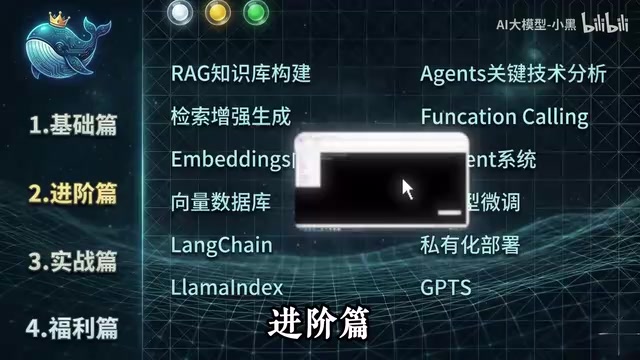
The advanced chapter is the most technically valuable part of the entire tutorial, providing an in-depth analysis of mainstream large models and covering several of the most critical capabilities in enterprise practice:
- RAG (Retrieval-Augmented Generation): The core solution to addressing the insufficient timeliness and specialization of large model knowledge
- Private Deployment: Key technology for meeting enterprise data security requirements
- Model Training and Efficient Fine-tuning: The core technology for transforming general models into specialized models
About RAG: RAG (Retrieval-Augmented Generation) was proposed by Meta AI in 2020, and its core idea is to combine the generative capabilities of large language models with the retrieval capabilities of external knowledge bases. The specific process is: user asks a question → the system retrieves relevant document fragments from a vector database → the retrieval results are injected into the prompt as context → the model generates an answer based on the context. RAG effectively addresses the model's knowledge cutoff date limitation and the "hallucination" problem, and at the same time is lower in cost compared to fine-tuning. Enterprises can connect to private knowledge bases without retraining the model, making it one of the most mainstream deployment solutions for enterprise knowledge management and customer service Q&A systems today.
The core infrastructure of a RAG system is the vector database, which is responsible for storing and retrieving semantic representations of text (Embedding vectors). Unlike traditional relational databases that match by exact fields, vector databases achieve "semantic retrieval" by computing the cosine similarity or Euclidean distance between vectors—even if the wording of the user's question doesn't exactly match the document, it can still find semantically similar content. Mainstream solutions include: Faiss (open-sourced by Meta, suitable for local research), Chroma (lightweight, suitable for rapid prototyping), and Milvus (cloud-native, suitable for production-grade high-concurrency scenarios). The choice of Embedding model is equally critical; domestically common options include Zhipu AI's text-embedding series and Baidu's ernie-embedding, and their quality directly determines the upper limit of retrieval accuracy.
About Model Fine-tuning: Fine-tuning is the technique of continuing to train a pre-trained large model on a domain-specific dataset to adapt it to a specific task or style. Traditional full fine-tuning requires computing power comparable to pre-training, making it extremely expensive. To address this, academia has developed various Parameter-Efficient Fine-Tuning (PEFT) methods, the most representative of which is LoRA (Low-Rank Adaptation), proposed by Microsoft in 2021. LoRA simulates weight updates by injecting low-rank matrices alongside the model's weight matrices, with the number of trainable parameters being only 0.1%–1% of full fine-tuning, yet it can achieve results close to full fine-tuning. Currently, the vast majority of domain adaptation work based on models such as ChatGLM and LLaMA in the open-source community is implemented using LoRA or its variant QLoRA.
RAG and fine-tuning are the two mainstream paths for enterprise deployment of large models today: RAG is low-cost and flexible, suitable for scenarios where knowledge is frequently updated; fine-tuning enables the model to deeply master the expression style and specialized knowledge of a specific domain. Mastering these two capabilities can basically handle the vast majority of enterprise needs.
Practical Projects: Real-World Deployment

The practical chapter emphasizes "hand-holding you through the deployment of real enterprise projects," covering several of the hottest application scenarios today:
- Intelligent Agent Development: Enabling large models to have autonomous planning and tool-calling capabilities
- Digital Human Applications: A cutting-edge direction combining multimodal technology
- Enterprise Knowledge Bases and Q&A Systems: The most typical commercial deployment form of RAG technology
- Medical Large Model Practice: In-depth application cases in vertical domains
About Intelligent Agents: An AI Agent refers to a large model application paradigm that can perceive the environment, autonomously plan steps, and call external tools to complete complex tasks. Unlike single-turn Q&A, Agents have "think-act-observe" cyclic reasoning capabilities, with representative frameworks including ReAct, AutoGPT, and LangChain's Agent module. Agents can call tools such as search engines, code interpreters, database queries, and API interfaces, upgrading large models from "knowledge retrieval machines" to "task executors." With OpenAI releasing Function Calling and the Assistants API, and domestic model vendors following suit with tool-calling capabilities, Agent development has become one of the core directions for enterprise AI deployment in 2024, and also one of the fastest-growing skill points in recruitment demand.
At the engineering implementation level, LangChain is currently the most widely used large model application development framework, open-sourced by Harrison Chase in October 2022. It abstracts common development patterns such as RAG pipelines, Agent reasoning loops, memory management, and tool calling into standardized components, greatly lowering the engineering implementation barrier. Developers don't need to build infrastructure such as document loading, text splitting, and vector retrieval from scratch, but can instead quickly assemble complete applications through LangChain's modular interfaces. Understanding LangChain's design philosophy helps learners quickly grasp the engineering implementation logic of Agents and RAG, making it worthwhile cognitive preparation before entering the practical chapter.
From Agents to digital humans to vertical industry applications, the design of these practical cases clearly aligns with the actual demands of enterprise recruitment, giving grounds to the "employable upon completion" positioning.
Teaching Methodology: Dense Knowledge Output and Practical Application
According to the creator, he spent three months "reorganizing the entire knowledge system of AI large models," incorporating vivid classroom expression and pairing it with numerous hands-on cases, allowing learners to "feel the thrill of densely delivered knowledge points every second."

To lower the learning barrier, the tutorial also comes with:
- A complete learning roadmap
- A full set of courseware and e-books
The combination of "video + roadmap + courseware + e-book" specifically addresses the two most common problems self-learners face: "not knowing where to start" and "forgetting after learning." The systematic roadmap helps learners establish a holistic understanding, while the accompanying courseware makes it easy to review and consolidate at any time.
How to Efficiently Use Such Large Model Tutorials
As a massive systematic tutorial, its content coverage is quite comprehensive. From a learning-methods perspective, here are a few points to keep in mind:
First, there's no need to watch everything linearly. If you play through episode by episode, it's very easy to become fatigued. A more efficient approach is to first browse the roadmap, clarify your goal (such as building an enterprise knowledge base Q&A system), and then study the corresponding modules in a targeted manner.
Second, prioritize hands-on reproduction. The tutorial emphasizes "hands-on practice," but true capability improvement comes from personally running through each case. Technologies like RAG and model fine-tuning are only truly mastered once you've personally stumbled through the pitfalls of environment configuration, insufficient VRAM, and effect tuning. It's worth noting that RAG involves engineering details such as vector database selection (e.g., Chroma, Milvus, Faiss) and Embedding model choice; LoRA fine-tuning requires attention to hyperparameter tuning such as learning rate, rank parameters, and training data quality, all of which require gradual accumulation of experience through practice. In addition, large model application development frameworks (such as LangChain or LlamaIndex) iterate quickly in terms of versions, so when practicing hands-on, it's advisable to prioritize referencing the framework's official documentation to confirm the latest usage of APIs, avoiding code that won't run due to version differences.
Third, cross-validate with official documentation. Large model technology iterates extremely fast, and some of the tool versions or APIs at the time of the tutorial's recording may have been updated. Using the tutorial to build a framework of understanding and official documentation to supplement the latest details is a more reliable learning strategy.
Conclusion
For beginners hoping to systematically enter the field of large model development, this kind of structurally complete, practice-oriented tutorial provides a clear entry path. From Transformer principles to RAG deployment, and then to intelligent Agents and vertical industry practice, its knowledge system basically covers the core skill set required of a large model engineer—including understanding the attention mechanism and pre-training logic, mastering Prompt Engineering methodology, skillfully applying the two deployment paths of RAG and LoRA fine-tuning, and possessing the engineering implementation capability of Agent frameworks. The real key lies in whether learners can transform the "densely delivered knowledge points" into projects completed by their own hands—this is the true watershed between "understanding" and "being able to do."
Key Takeaways
Related articles
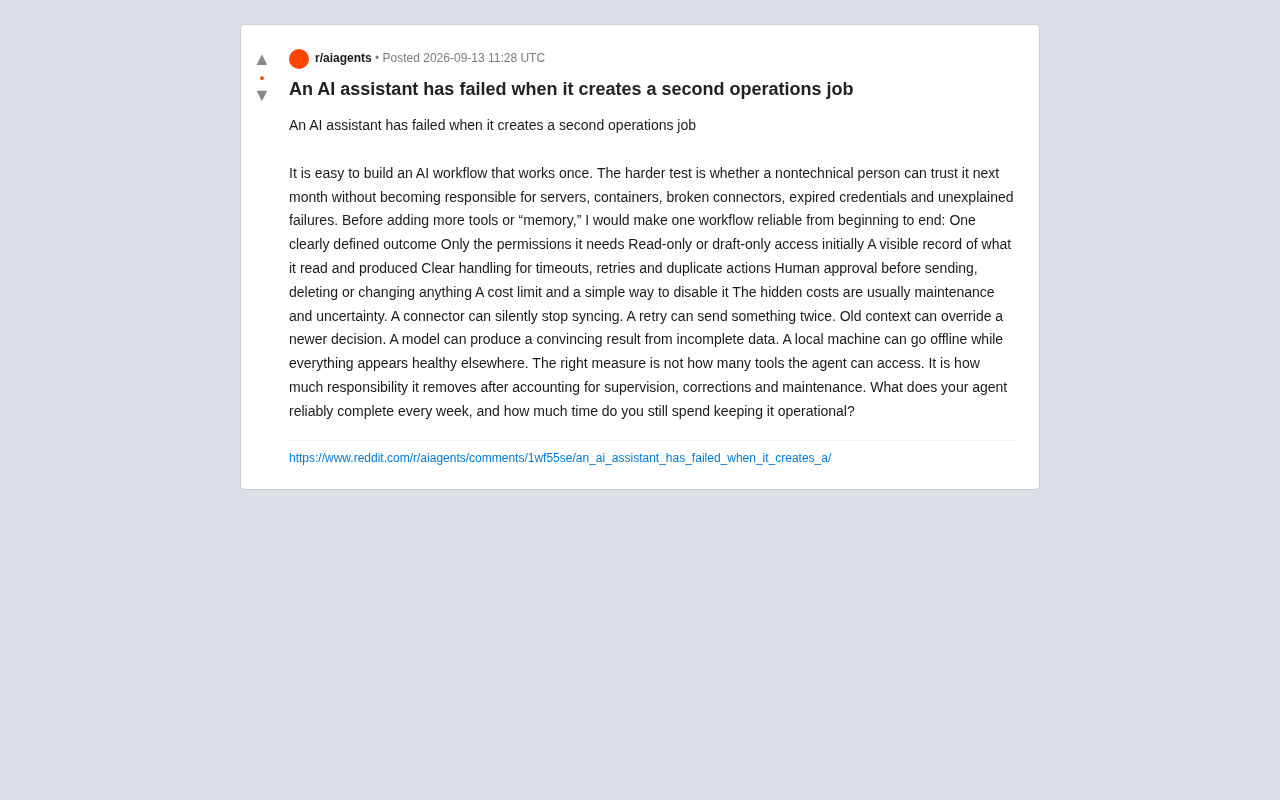
The True Failure of an AI Assistant: When It Creates a Second Operations Job
A Reddit user reframes how to judge AI assistants: they fail when they create a second ops job. Learn how to build end-to-end reliable workflows and measure Agent value by net benefit, not tool count.
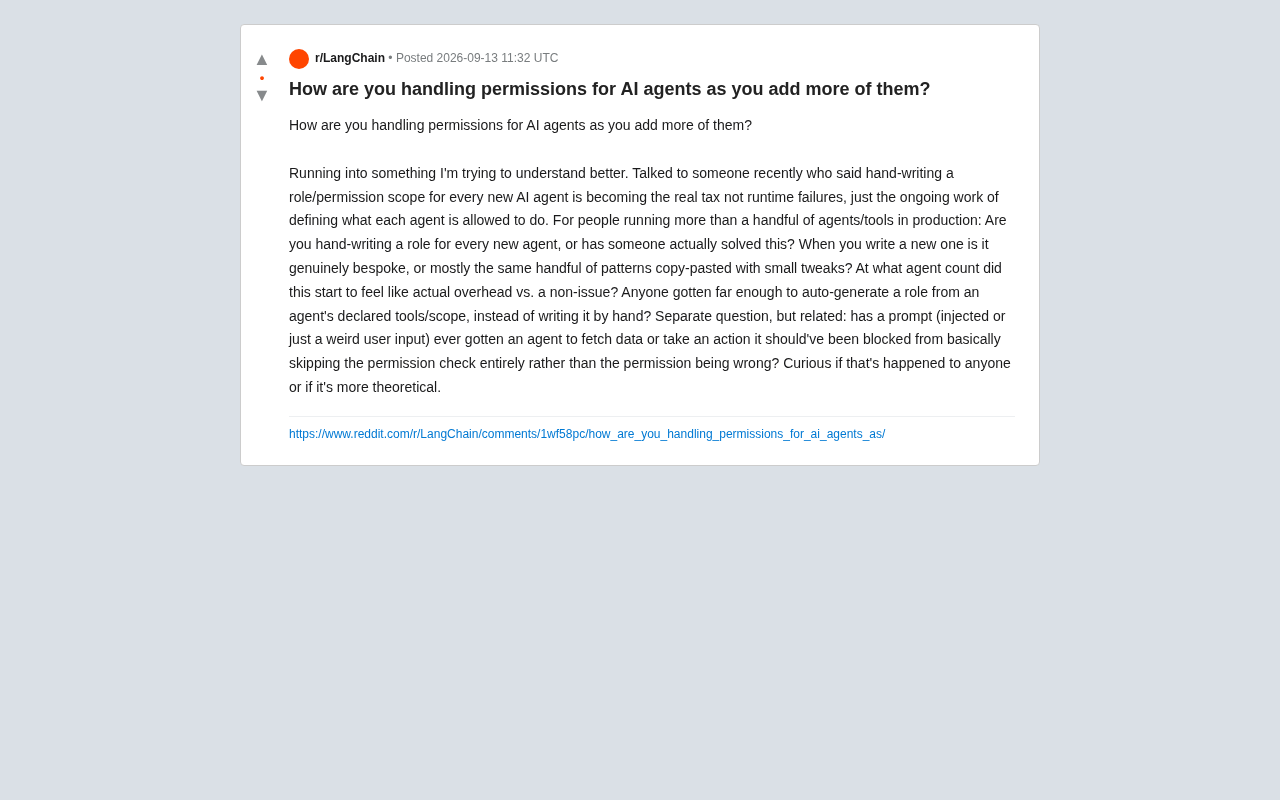
AI Agent Permission Management: Is Writing Roles Manually the New Hidden Tax?
As AI Agent counts grow, manually defining permission roles is becoming a hidden operational burden. This article explores scalability challenges, auto-generated roles, and the security risk of prompt injection bypassing permission checks.
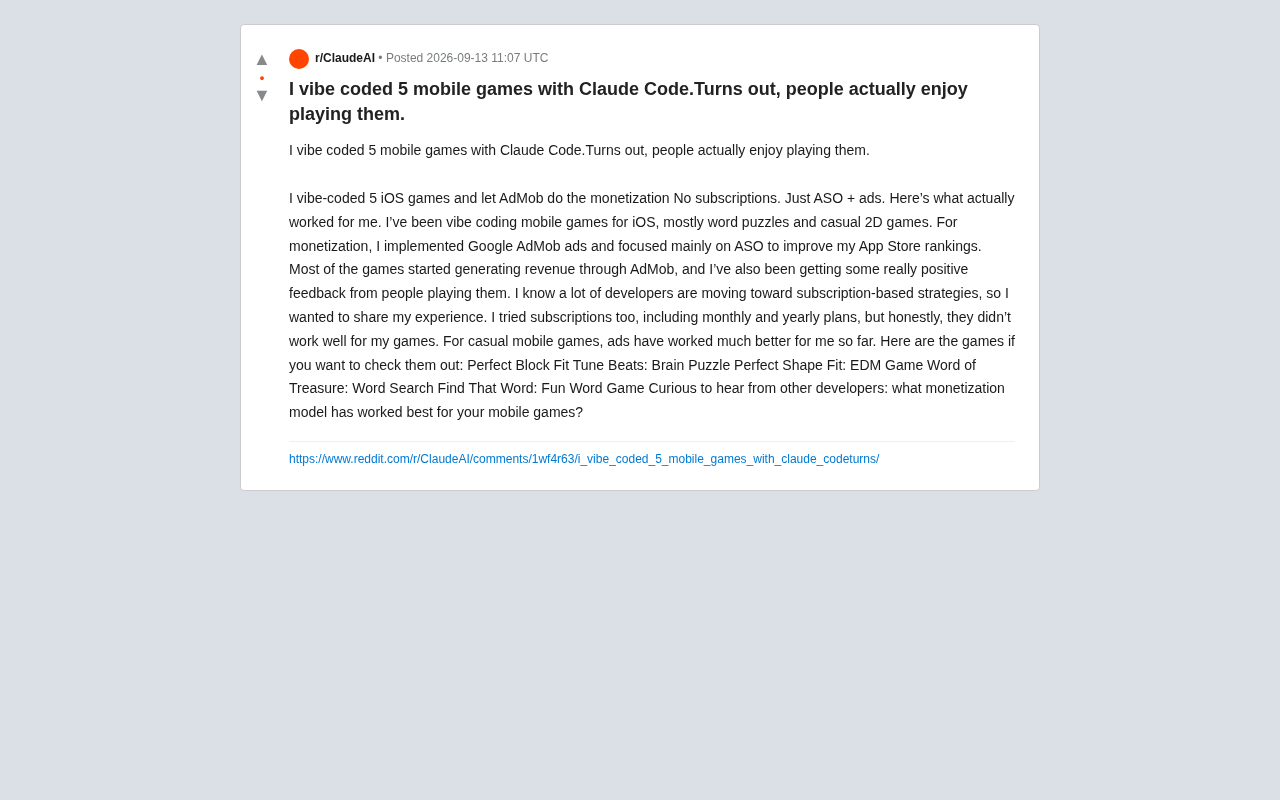
Vibe Coding 5 Mobile Games with Claude Code: Ad Monetization Beats Subscriptions
An indie dev built 5 iOS casual games with Claude Code vibe coding. His verdict: AdMob ads plus ASO optimization outperform subscriptions for casual games.