ChatGPT vs. AI Agent: One Word Apart, Worlds Apart

ChatGPT gives answers, AI Agents take action—the difference lies in task decomposition, tool calling, and the execution loop.
Using "plan a trip to Jaipur" as an example, the article contrasts ChatGPT and AI Agents: ChatGPT can recommend attractions, hotels, and food but cannot book tickets or reservations, while an AI Agent can search, compare prices, place orders, and arrange the entire trip. The author points out that this difference stems from architecture: ChatGPT is a conversational generative model that outputs text, whereas an Agent layers task decomposition, tool calling, and execution feedback on top of the model. The article warns that the term "Agent" is currently borrowed by many products, and the plain criterion for judging authenticity is whether it can complete tasks for the user rather than merely offer suggestions; for users and enterprises, this means being clear about needs and system integration depth when choosing tools.
ChatGPT vs. AI Agent: One Word Apart, Worlds Apart
You use ChatGPT every day to look things up, write emails, and make plans—but can it actually help you get things done? A recent short video from YouTube uses a travel-planning scenario to draw the line between ChatGPT and AI Agents with striking clarity.
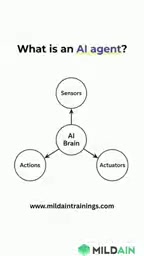
One Travel Scenario, Two Kinds of AI
The video poses a very concrete question: ask ChatGPT to help you plan a trip to Jaipur. What does it do? It recommends attractions, lists hotels, and provides a food guide—detailed and well-organized. But that's where it stops. It won't book a hotel, won't buy a plane ticket, and won't turn the itinerary into actual, executable reservations.

Give the same task to an AI Agent, and the result is completely different. It searches for hotels, compares prices, completes the booking, and arranges the entire trip end to end. The video sums up the difference in one line: ChatGPT gives answers; AI Agents take action.

This comparison holds up because it gets at the fundamental architectural difference between the two: ChatGPT is a conversational generative model whose output is text; an AI Agent is a system that layers planning, tool use, and an execution loop on top of the model.
What Exactly Does an AI Agent Add?
From a technical standpoint, an Agent capable of completing a trip needs at least three layers of capability. The first is task decomposition: breaking "arrange a Jaipur trip" into subtasks like searching hotels, comparing prices, booking tickets, and scheduling an itinerary. The second is tool use: integrating booking platforms, payment interfaces, and calendar systems so the model can not only "say" things but also "operate" them. The third is execution and feedback: adjusting the plan when a booking fails or a hotel is full, rather than getting stuck.
ChatGPT's strength lies in the first layer—it can explain a plan brilliantly. But lacking the second and third layers, it always stops at the "suggestion" stage. That's why the line "it won't handle bookings" is so crucial: it's not a matter of being less intelligent, but of having no hands or feet.
Tool Calling / Function Calling is the key mechanism that lets large language models actually "take action." The model itself can only generate text, but through tool calling it can output structured instructions (e.g., "call the booking API with hotel ID, dates, and number of guests"), which an external program executes and returns the results to the model. OpenAI introduced function calling for GPT-3.5/4 in June 2023, and it has since become the de facto industry standard. Tools can be search, calculators, database queries, payment interfaces—or even another Agent. This layer is precisely what takes the model from "saying" to "doing," and it's the technical watershed that separates a chatbot from an Agent.
Agent Loop means the Agent doesn't generate an answer in one shot, but rather cycles through "observe—think—act" until the goal is achieved. A typical flow: the model reads the current state (e.g., hotel is full), decides the next step (try another hotel or change dates), calls a tool, reads the result, and repeats. This loop requires state management, error handling, and termination conditions, or it will fall into infinite loops or give up halfway. ReAct (Reasoning + Acting) is one representative paradigm, alternating reasoning traces with tool actions. The execution loop determines whether an Agent can complete a task amid real-world failures and uncertainty, rather than just producing a pretty plan.
Why This Distinction Matters Now
The term "Agent" is being borrowed by a flood of products—nearly every AI assistant now calls itself an Agent. But the video offers a very plain and practical criterion: see whether it can complete the task for you, not just tell you how.
For ordinary users, this means being clear about your needs when choosing tools: if you want ideas, drafts, or information synthesis, a conversational model like ChatGPT is already enough; if you want "get this done for me," then you need to check whether the other party has genuine execution capability. For enterprises, this boundary matters even more in terms of system integration depth—which APIs are connected, whether there's a permission system, whether it can roll back on failure. These are the real measures of an Agent's value.

API (Application Programming Interface) is the "hands and feet" through which an Agent reaches the outside world. Services like hotel booking, flight search, payments, and calendars typically expose their capabilities via APIs. Only when an Agent has permission to call the corresponding APIs can it truly complete operations on the user's behalf. This means an Agent's capability boundary is largely determined by which APIs it integrates. At the same time, API calls involve authentication, permission scopes, and billing. When evaluating an Agent, enterprises must look at which systems it connects to, under what identity it calls them, and how it handles failures—rather than just listening to the marketing claim "we're an Agent too."
Don't Mistake "Can Chat" for "Can Work"
The short video doesn't elaborate much at the end, but the judgment framework it leaves behind is worth remembering: between answers and action lie three hurdles—task decomposition, tool calling, and the execution loop. Cross them and you have an Agent; fail to cross them and you still just have a very articulate chatbox.
Next time someone pitches you an "AI Agent," try asking: can it book that trip to Jaipur for me?
Related articles

Altman Declares: The Cybersecurity Crisis Is Unsolvable and There Are Too Many Vulnerabilities to Patch
OpenAI CEO Sam Altman publicly admits he can't fix all security vulnerabilities and that the cybersecurity crisis will keep worsening. This article analyzes the industry reality behind this statement: exploding software complexity, the double-edged sword of AI, and the need to shift security paradigms from "zero vulnerabilities" to resilient defense.

Product Hunt Launches Visual Launch Editor, Saying Goodbye to Tedious Form Filling
Product Hunt launches a Visual Launch Editor with in-place editing for name, tagline, gallery, and maker info, auto-saved drafts, and a checklist to guide creators.

Zelensky Speaks: How We Held Kyiv Against 200,000 Russian Troops
Zelensky recalls the early Russia-Ukraine war: 200,000 Russian troops drove on Kyiv while Ukraine's main forces were in the east. He explains how mobilization grew the army from 200,000 to 800,000 and how Kyiv and Chernihiv oblasts were recaptured.