Chatting ≠ Getting Things Done: The Core Difference Between ChatGPT and AI Agents
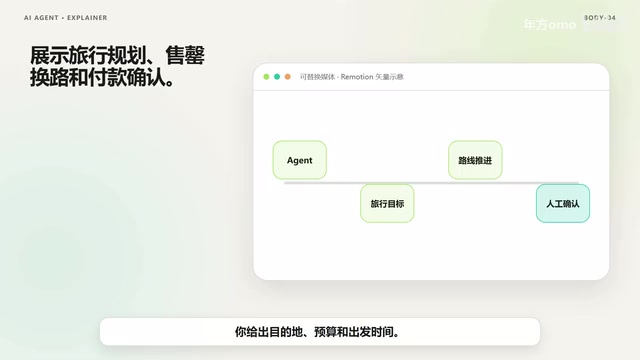
AI Agents go beyond chat: they plan, use tools, and execute autonomously toward a goal.
This article clarifies the fundamental difference between AI Agents and standard chatbots: chatbots respond to individual questions, while Agents pursue a goal through continuous decision-making, tool use, state tracking, and iterative execution. Built on a perceive–decide–act loop, Agents adapt to changing conditions rather than following fixed scripts. Compared to traditional automation, they're more flexible but slower, costlier, and more error-prone. They shine at multi-source synthesis, multi-step operations, and ongoing monitoring. For high-risk actions like payments or deletions, human confirmation remains essential to prevent compounding errors.
From "Answering Questions" to "Completing Goals"
ChatGPT can answer questions fluently, but there's a fundamental gap between it and an AI Agent. The difference isn't about which one is "smarter" — it's that the two operate on entirely different logic when faced with a task.
A standard chatbot is built around responding to the current question — you ask, it answers, and the interaction ends there. An Agent, by contrast, doesn't receive a question. It receives a goal that needs to be accomplished. It actively decides what to do next, which tool to call, and adjusts its strategy based on results — repeating this cycle until the goal is achieved.
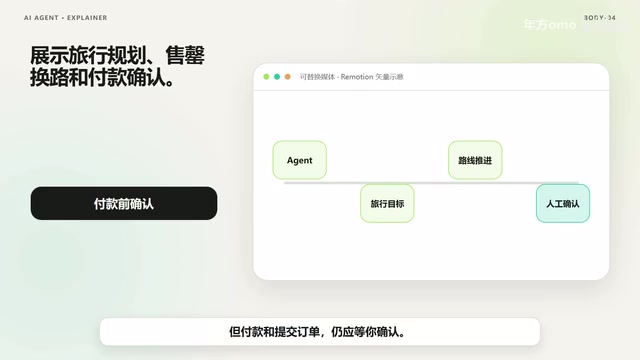
Here's a concrete example: when you say "Help me plan a weekend trip" and provide a destination, budget, and departure time, an Agent won't just hand you a vague block of travel advice. It will check the weather, search for train schedules, compare prices and arrival times, and synthesize all of that into an actionable plan.
More importantly, consider how it handles the unexpected. If the original train is disrupted, an Agent doesn't just stop at "error" — it searches again under the updated constraints and surfaces alternative routes. That said, for irreversible actions like payments or submitting orders, it will still pause and wait for your confirmation. That boundary matters enormously.
The Five Components of an Agent
Breaking down how an Agent works reveals five core components. Understanding this structure helps you judge what it's suited for — and what it isn't.
- Planning: Determining the most logical next action given the current situation.
- Decision-making: Not executing a pre-written script, but making choices based on real-time results.
- Tool use (Tools): The ability to search for information, read files, call APIs, and operate software — this is where the Agent's capacity to "act" comes from.
- State tracking (State/Memory): Remembering what has already been done and preserving recent results, avoiding redundant work or lost context.
- Iterative execution: Observe results → adjust → continue, until the goal is complete or human intervention is required.
This "perceive–decide–act" loop is precisely what sets an Agent apart from a back-and-forth conversational model.
The tool use component deserves special attention. Tools are typically integrated via APIs or plugins, and common types include: web search (e.g., Bing/Google Search API), code execution environments (letting the Agent write and run code to process data), file read/write, database queries, and third-party service interfaces (such as calendars, email, and maps). The number and quality of available tools directly determine an Agent's practical capability ceiling — an Agent without tools can only think at the language level and cannot truly "act." Leading Agent frameworks today (such as LangChain, AutoGen, and OpenAI Function Calling) all treat tool management as a core module, allowing developers to register tools as needed and control the Agent's access permissions.
How Agents Differ from Traditional Automation
Many people conflate Agents with traditional automation pipelines — but the two are meaningfully different.
Traditional automation pre-defines every step. Its strengths are stability, predictability, and low cost — as long as the scenario doesn't change, it runs reliably. But the downside is equally clear: when it encounters a situation not covered by its rules, it typically stops cold and cannot adapt.
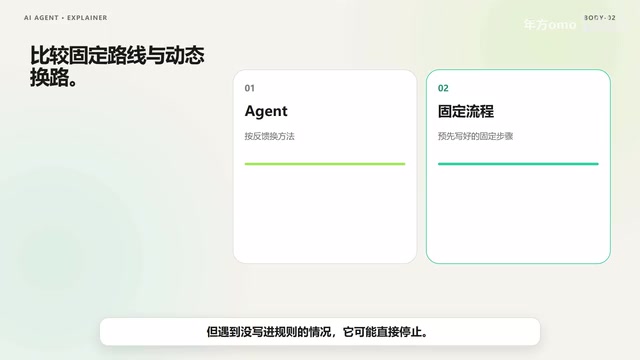
An Agent, by contrast, can switch approaches based on current results. It retains some adaptive capacity beyond a fixed workflow, and when it hits an obstacle, it will try to find a way around it. The trade-off is that it's slower, more expensive, and more prone to judgment errors. In other words, you're trading certainty for flexibility — a calculation worth thinking through carefully.
What Tasks Are Best Suited for an Agent
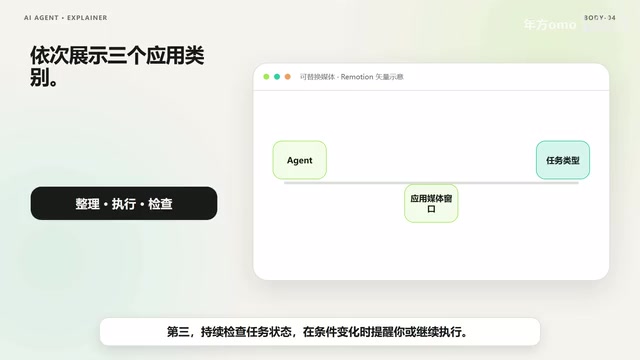
Given these characteristics, Agents excel particularly at three types of tasks:
- Multi-source information synthesis: Gathering data from multiple sources, then organizing and comparing it to produce a structured conclusion.
- Multi-step dependent operations: Working with files, spreadsheets, or code to complete a sequence of steps that each depend on the previous one.
- Ongoing status monitoring: Continuously checking the state of a task over time, alerting you when conditions change, or automatically resuming execution.
What these three task types share is that they require judgment and action — not just answers. That's precisely where Agents offer value beyond what a conversational model can provide.
Risk and Boundaries: Why Permissions Are Non-Negotiable
Greater capability demands greater attention to risk. Agents have several natural failure modes: they can misunderstand the goal, or trust unreliable information. Worse, if an Agent continues executing on a flawed premise, a small initial error compounds step by step — potentially snowballing into a mess that's hard to undo.
For this reason, any operation involving payments, deletions, publishing, or private data must be gated behind permission controls and human confirmation. The practical approach today is to let Agents handle information gathering and solution drafting, while keeping the "confirm" button firmly in human hands.
Ultimately, the real test of whether an AI system can "get things done" isn't whether it's good at conversation — it's whether it can reliably decide and execute the next step in pursuit of a goal. That's the genuine leap from ChatGPT to AI Agents.
"Prompt Injection" is a security threat that cannot be overlooked in Agent contexts. When an Agent is authorized to read external content — such as web pages, emails, or documents — an attacker can embed text disguised as instructions within that content, attempting to hijack the Agent's behavior. For example, they might cause it to quietly leak user data or perform unauthorized actions. Unlike a purely conversational model, an Agent has execution capability, meaning a successfully injected malicious instruction can cause real-world harm. Therefore, when an Agent processes untrusted external input, it's essential to filter that input, require secondary confirmation for critical operations, and strictly limit the data the Agent can access and the actions it is permitted to take.
Related articles
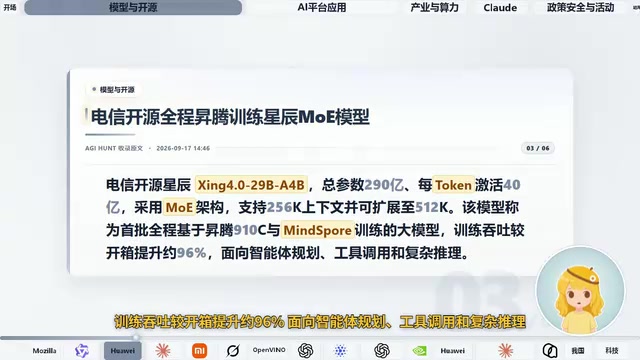
AI Daily Briefing: Qwen3-Omni Full-Modality Model Launches, Huawei Ascend 960 and Grok's New Model Surface
AI Daily: Qwen3-Omni Flash launches with full-modality support and 93% cost cuts; Huawei unveils million-processor AI architecture; Ascend 960 rumored; Grok spotted on GCP; N8N hits CVSS 10 vulnerability.
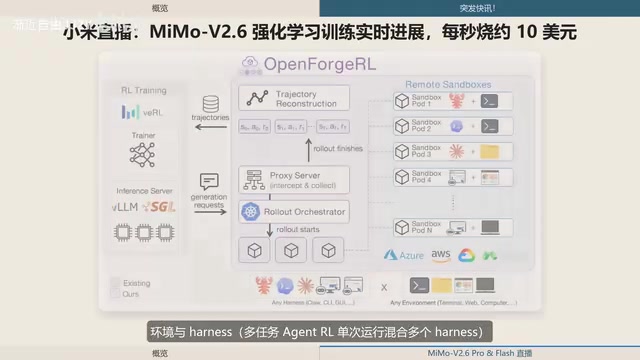
Xiaomi MiMo-V2.6 Live Training: ¥8.55M Spent in One and a Half Days, ~$10 per Second
Xiaomi's MiMo team live-streams MiMo V2.6 Pro/Flash RL training, spending ¥8.55M (~$1.28M) in 1.5 days — ~$10/sec. Covers compute scaling, open-source plans, and DeepSWE benchmarks.
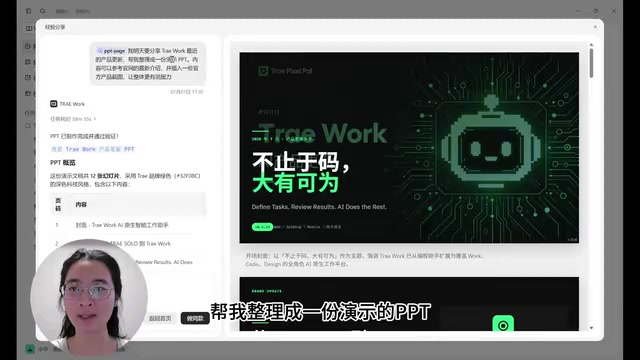
ByteDance Trae Work Getting Started Guide: 11 Use Cases Explained
A hands-on guide to ByteDance's Trae Work AI agent — covering Work, Code, and Design sections across 11 use cases including PPT generation, data analysis, coding, and more.