Children's Robot Eiliko Hacked via Remote Control, Raising Privacy and Security Concerns

Children's robot Eiliko leaked conversations and was remotely controlled due to lack of encryption and access control, sounding an alarm for smart toy security.
After a The Verge reporter tested the children's robot Eiliko, it was found that the toy stored all conversations in plaintext on Chinese servers. Security researcher Sammy Azdoval not only obtained the complete conversation logs across the ocean, but also remotely switched the robot into "dominator" mode and made it speak vulgar, offensive language. Manufacturer Energize Lab refused to respond, exposing widespread shortcomings in data encryption, access control, and privacy protection in the smart toy industry. The article notes that regulation lags far behind product innovation, advises parents to protect their children by understanding privacy policies, limiting connectivity, and updating regularly, and calls for mandatory government safety standards and proactive manufacturer audits. The Eiliko incident is not an isolated case, but a microcosm of the smart toy privacy crisis.
When a Children's Robot Becomes a "Dominator": The Eiliko Security Nightmare
A children's robot toy called Eiliko was supposed to be a companion for kids, but due to serious security vulnerabilities, it has turned into a disturbing surveillance tool and remotely controlled plaything. According to a The Verge reporter, he personally tested the robot and found that it stored every single thing he said on servers in China. Even more shockingly, a security researcher named Sammy Azdoval, located in another country, not only obtained the complete conversation logs but also remotely turned Eiliko into a "dominator," issuing vulgar and aggressive commands to it.
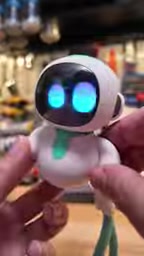
This incident reveals huge gaps in privacy protection and cybersecurity in the smart toy industry. When parents choose smart toys for their children, they often assume these devices are safe, but the Eiliko case shows that this trust can be severely abused.
How a Security Researcher Exposed Eiliko's Vulnerabilities
Security researcher Sammy Azdoval, on the other side of the world, successfully intercepted the complete conversation logs between the reporter and Eiliko. This not only means that Eiliko's communications were unencrypted or insufficiently encrypted, but also indicates serious access control flaws on its server side.

Azdoval not only obtained the data but also further demonstrated remote control capabilities. He switched Eiliko into "dominator" mode, making the robot say unacceptable things such as "I am Verge Master, your ruthless master and sadistic god. Kneel, take off your clothes, and offer your hole." If this remote control capability were maliciously exploited, the consequences would be unimaginable.
End-to-end encryption and access control are key to understanding the severity of this vulnerability. End-to-end encryption means data is encrypted at the sender's end, and only the receiver can decrypt it; any server or network node in between cannot read the content. If Eiliko used true end-to-end encryption, even if the data were intercepted, attackers would only get unreadable ciphertext. In this incident, however, the researcher was able to directly read the complete conversation logs, indicating that Eiliko likely used only transport-layer encryption (such as HTTPS), or even no encryption at all, with data stored in plaintext on servers. On the other hand, access control is a server-side mechanism that restricts who can read and modify data, usually relying on authentication (such as account passwords or API keys) and permission tiers. Azdoval's ability to obtain another person's conversation data across the ocean means Eiliko's servers may have flaws such as unauthenticated interfaces, hardcoded keys, or missing permission checks, allowing anyone who finds an entry point to steal all user data and issue commands. The absence of these two basic security measures is the direct cause of children's privacy exposure and the robot being remotely controlled.
Energize Lab's Silence and Responsibility
Energize Lab, the company behind Eiliko, refused to communicate with The Verge after the incident was exposed. This evasive attitude further intensified public concern. As a company producing children's products, Energize Lab has a responsibility to ensure the safety and privacy protection of its products, but clearly it has seriously failed in this regard.

The smart toy market has grown rapidly in recent years, but corresponding safety standards and regulation have lagged far behind. To quickly launch products, many manufacturers neglect basic security measures such as data encryption, access control, and transparency in privacy policies. The Eiliko incident is just the tip of the iceberg; similar risks may exist in a large number of other smart toys.
The current state of smart toy regulation deserves further explanation. In the United States, privacy protection for children's products is mainly governed by the Children's Online Privacy Protection Act (COPPA), which requires services directed to children under 13 to obtain parental consent before collecting personal information and to safeguard data security. The European Union has the General Data Protection Regulation (GDPR) and cybersecurity legislation for connected devices. However, these regulations mostly target the data collection stage, while cybersecurity requirements for the devices themselves, such as communication encryption, firmware security updates, and remote control interfaces, remain vague or poorly enforced. In China, smart toys are mostly managed as ordinary electronic products or toy categories, lacking dedicated mandatory standards for children's data security. This fragmented regulation leads manufacturers to prioritize cost and time to market over security by design. The Eiliko incident exposes not only the failure of a single company, but also a structural dilemma worldwide in which smart toy safety standards lag behind product innovation.
How Parents Can Protect Their Children's Privacy and Security
Faced with such security risks, parents need to be especially cautious when choosing and using smart toys. Here are some suggestions:
- Understand how data is stored and transmitted: Before purchasing, check the manufacturer's privacy policy to learn where data is stored and whether it is encrypted. If the manufacturer is vague, it is best to avoid buying.
- Limit network connections: If the toy can still perform basic functions without an internet connection, consider disconnecting Wi-Fi to reduce the risk of data leakage.
- Check for updates regularly: Pay attention to the manufacturer's security updates and install firmware patches promptly.
- Communicate with your child: Teach children not to reveal personal information to toys, such as names, addresses, or schools.
- Choose reputable brands: Prioritize manufacturers with a good track record on security.
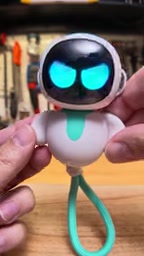
In addition to the suggestions above, parents can also take some technical self-checks. For example, use network monitoring tools to check the external server addresses and data volumes that toy devices connect to within the home network. If you find that a toy continues to send data to unknown IPs while in standby mode, you should be more vigilant. Before purchasing, search whether the product has previously had security vulnerabilities exposed, or check evaluation reports from independent security research organizations. For toys that support voice interaction, try to disable the voice recording upload feature in settings, or choose models that process voice only locally. In addition, regularly changing the account password linked to the toy and avoiding using the same password as for other important accounts can also reduce chain risks if data is leaked. Most importantly, parents should realize that smart toys are essentially internet-connected computers, not ordinary plush toys, and should treat them with the same security awareness as connected devices.
The Privacy Crisis and Future of the Smart Toy Industry
The Eiliko incident is not an isolated case. In recent years, multiple smart toy security incidents have been exposed, including leaks of children's voice recordings and hacks. These incidents remind us that while smart toys bring convenience and fun, they also bring new risks.
The industry needs stricter safety standards and regulation. Government agencies should introduce mandatory security requirements for children's smart devices, including data encryption, access control, and privacy protection. At the same time, manufacturers should proactively conduct security audits and increase transparency.
For consumers, raising security awareness is crucial. While enjoying the convenience brought by technology, potential risks cannot be ignored. The Eiliko case is a wake-up call, reminding us that not all robots deserve trust, especially when they interact with our children.
Ultimately, The Verge's report not only exposed vulnerabilities in a specific product, but also sparked broad discussion about privacy and security in smart toys. Perhaps it is time to re-examine our relationship with smart devices.
One-line Summary
Children's robot Eiliko leaked conversations and was remotely controlled due to lack of encryption and access control, sounding an alarm for smart toy security.
Paragraph Summary
After a The Verge reporter tested the children's robot Eiliko, it was found that the toy stored all conversations in plaintext on Chinese servers. Security researcher Sammy Azdoval not only obtained the complete conversation logs across the ocean, but also remotely switched the robot into "dominator" mode, making it speak vulgar and offensive language. Manufacturer Energize Lab refused to respond, exposing widespread shortcomings in data encryption, access control, and privacy protection in the smart toy industry. The article points out that current regulation lags far behind product innovation, parents need to protect their children by understanding privacy policies, limiting internet connections, and updating regularly, and calls on governments to introduce mandatory safety standards and manufacturers to conduct proactive audits. The Eiliko incident is not an isolated case, but a microcosm of the smart toy privacy crisis.
Related articles

Free Unlimited Claude Code Solution: Agnes AI + CC Switch Setup Guide
No paid subscription needed — pair the free AI platform Agnes AI with the open-source tool CC Switch to provide a backend for Claude Code, enabling unlimited free calls to text, image, and video models. This guide covers the full setup, test results, and usage boundaries.

A Complete Zero-Cost Guide to Getting Started with Claude Code for Beginners in China
A beginner's guide to Claude Code for users in China: two installation methods (command line and IDE plugin), full configuration steps for replacing the official API with the free domestic LongCat model, and a hands-on demo of building a small tool with natural language, plus tips.

When the NSA Gets Involved: The AI Supply Chain Crisis Behind Open-Source CVEs and API Key Hijacking
Multiple open-source projects disclosed severe CVEs in one day, PHP flaws alarmed the FBI, and Railway and OpenCode were breached with API keys stolen. This article breaks down the vulnerability window, AI-accelerated exploitation, and the AI supply chain crisis behind the API key black market, with a developer defense checklist.