Claude Writes Code to Reanimate 98 Oscar Best Pictures, 51 Art Styles from a Single Prompt

Open-source Lemo-Opuscar redraws 98 Oscar Best Pictures frame by frame with code, surpassing 4,700 GitHub stars.
Lemo-Opuscar is an open-source project that went viral on Bilibili. Instead of video models, it uses code to compute visuals, score, and voiceover frame by frame, redrawing 98 Oscar Best Pictures into a six-and-a-half-minute short. GitHub stars hit around 4,700 soon after launch, up over 2,200 in seven days. Its core idea is "code as film set": the script is the editing bay, enabling precise reproduction and targeted edits without gacha randomness. It ships with 51 styles in ten categories, each with real samples and prompts; the agent asks key info once, then proceeds automatically. The finale Opuscar 98 requires every on-screen number to be measured and sourced. MIT-licensed but Claude Opus-only, a single film takes 30–60 minutes with substantial token costs.
No video model contributed a single frame, yet the 1998 Oscar Best Picture winner was redrawn as a six-and-a-half-minute short film—with visuals, score, and voiceover all computed by code. The open-source project called Lemo-Opuscar quickly went viral after gaining attention on Bilibili, and its GitHub stars shot up to around 4,700 shortly after launch, surging by over 2,200 stars in the past seven days, with 500–600 new stars per day over the last two days and still accelerating.
Filmmaking by Code: Not Gacha, but Frame-by-Frame Computation
Mainstream AI short-film creation relies on video-model gacha—the same shot is hard to reproduce reliably. Lemo-Opuscar takes the completely opposite approach: every single frame is computed and generated by code, with no generated video and no calls to stock-asset libraries. The script itself is the editing bay; to change anything, you change one line of code and re-render, no longer gambling against randomness. According to a breakdown by a Bilibili creator, this "code as film set" approach turns creation from a game of probability into an engineering process that can be precisely reproduced.

One-Click Install, Two Commands to Start Shooting
The barrier to entry is kept very low. Prepare Node 20, FFmpeg, and Python 3.11 on your machine in advance; the agent installs the remaining dependencies itself. Users only need to enter two commands: first add the plugin from the plugin marketplace, then install the plugin. After that, you can "start shooting" in any folder, and the project runs like a small studio.
What is "gacha-style" video generation?
So-called "gacha" refers to users inputting a prompt into a video generation model, which then generates a video in one shot from random noise. Because the sampling process of diffusion models involves randomness, even with the exact same prompt, the visuals, composition, and motion trajectories differ each time. Creators often have to generate dozens of times before they land on a usable shot, and this "try your luck" way of working is jokingly called gacha. Its core pain point is irreproducibility: once you want to tweak a detail, the entire video may change completely, making it hard to edit at specific points the way traditional editing does.
How frame-by-frame computation is fundamentally different
The route Lemo-Opuscar takes treats every frame as the result of running a program: composition, element positions, colors, and motion parameters are all written as code, and the rendering engine computes and outputs image sequences frame by frame along a timeline, which are then composited into video by tools like FFmpeg. Because there is no random sampling step, rendering the same script at any time produces exactly the same result. Changes only require modifying the corresponding lines of code and re-rendering, which makes the creative process closer to traditional animation and procedural generation than to probability-dependent model inference.
51 Styles Across Ten Major Categories
The project ships with 51 art styles organized into ten major categories, each with sample clips and prompts. The hand-drawn camp includes watercolor, crayon, single-stroke drawing, and board art; print textures include woodcut, copperplate, and torn-poster designs; there are also holographic interfaces, building-block toys, and other styles leaning toward digital and designer-toy aesthetics. There are 77 2D styles and 17 3D styles (per the Bilibili creator's original wording), each paired with a real sample clip for comparison.
A Workflow of Stating Requirements in One Sentence
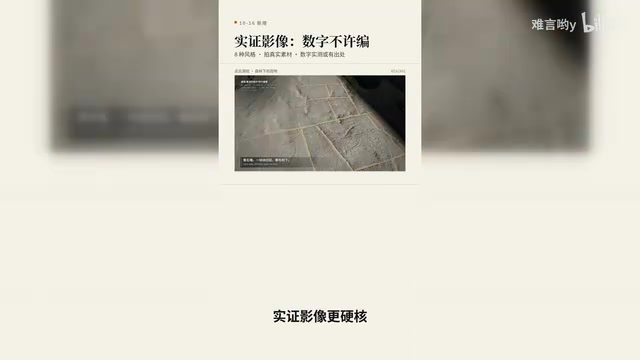
The filmmaking process is close to talking to a director: for example, "Shoot my orange cat waiting for me to come home from work in an oil-painting style, 30 seconds." Before starting, the agent asks for key information only once—what materials are missing, whether you have your own voiceover, and whether you want to see a storyboard first—then it reads three guides on its own and proceeds with production. For Chinese-style directions, you can shoot an ink-wash swordsman crossing a river on water, a shadow puppet show of Houyi shooting the suns, red window-paper cuttings and Mid-Autumn Festival scenes in paper-carved lantern light; for game directions, there's a 16-bit pixel RPG hero saving at a boss door, an HD-2D girl with a lantern venturing into the forest at night, and 1980s cel-animation rainy nights; for current-affairs visual directions, it's even more hardcore—every number in the frame is required to be measured and sourced.
The agent's role in all this
Here, "agent" refers to an AI agent with tool-calling and multi-step planning capabilities. Unlike one-shot Q&A, an agent breaks down tasks on its own, reads the project's guide documents, invokes rendering scripts, checks output results, and corrects itself when necessary. The article's mention of "reading three guides on its own and proceeding with production" is a typical agent workflow: it first understands the conventions agreed upon by the project, then executes step by step, rather than waiting for human instructions at every step. This also explains why it asks for key information only once before starting—decisions like materials, voiceover, and storyboard confirmation that can't be inferred from code are then left to the agent to drive forward autonomously.
The Oscar Sample Film: 98 Films, 98 Styles
The finale piece Opuscar 98 walks through 98 Oscar Best Picture winners in a single film, switching to a style that matches the temperament of each original. What's more noteworthy is the rigor of the research: a laser scan measured a 3.4-kilometer stone wall in the Forest of the Pack, blue differences were magnified 2.4 times under a microscope, and the Wright brothers' first flight archive was verified at 59 seconds. These numbers aren't decoration; they're the source of the image's credibility. When you want to change a style, you can directly propose "the costumes will be changed to my version," and the project will first clarify what can be changed and what would "lose its flavor" once changed, draft the modification approach and give it a name, then output style images and sample comparisons, and only after the user nods does it schedule a test film.
Ready-Made Templates for E-commerce and Product Videos
Scenes like glass earphone unboxing close-ups, holographic parameter scans of electric vehicles, and keyboard explosion teardowns for tech launch events all have ready-made styles available. For people making product content, this essentially turns "filmmaking" into a process of "pick a template + tweak parameters."
Where the name Opuscar 98 comes from
"Opuscar" is a portmanteau of Opus and Oscar: Opus refers to the Claude Opus model that the project depends on at its core, and Oscar refers to the Academy Awards. Opuscar 98 can therefore be understood as "98 Oscar Best Pictures shot with Opus." It's important to distinguish that this film was not generated with a video model but redrawn frame by frame with code, with each film corresponding to a style matching the original's temperament, and the 98 films strung together into one continuous visual thread. The title itself also points to the project's two key attributes: the model dependency and the subject of homage.
Cost and Licensing: Opus-Only, and Tokens Aren't Cheap
The project uses the MIT license, so sample clips can be used with attribution, and the copyright of finished films belongs to the creator. But the tool itself is Claude-exclusive and based on Opus generation, and a single film typically takes half an hour to an hour to run, with substantial token consumption requiring a paid Claude subscription or API quota.

Star Milestones Are Also Films
One of the project's most playful touches is turning every star milestone into a thank-you film: at 300 stars, a single continuous shot lights up 300 stars; at 800 stars, the frame is filled with viewers' names; at 2,000 stars, a single screen replays 17 days. This approach of directly converting community interaction into visual output is itself a demonstration of the project's philosophy.
Why token costs aren't low
A token is the basic unit of measurement for how large language models process text, and both input and output are billed by token. Every frame of Lemo-Opuscar requires the model to participate in generating code or parameters, so a half-hour to one-hour film means a large and continuous volume of model calls, with cumulative token consumption far exceeding ordinary conversation scenarios. Claude Opus itself is the most capable and most expensive tier in the series, so the project requires users to have a paid Claude subscription or sufficient API quota. This is also the fundamental difference in cost structure between the "code filmmaking" route and video-model gacha: the former bills continuously by computation volume, while the latter bills by number of generations.
Who Should Use It
Anyone who can write requirements can be a director, but only if they accept the "code editing" way of working and are willing to bear the cost of Opus calls. For creators who need reproducibility, fine-grained editing, and stylistic consistency, this toolkit offers a path fundamentally different from video models; for those who just want to quickly gacha out a film, it may not be "convenient" enough.
One-line Summary
Open-source project Lemo-Opuscar redraws 98 Oscar Best Pictures frame by frame with code, surpassing 4,700 GitHub stars.
Paragraph Summary
Lemo-Opuscar is an open-source project that went viral on Bilibili. Rather than relying on video models, it computes visuals, score, and voiceover frame by frame with code, redrawing 98 Oscar Best Pictures into a six-and-a-half-minute short film. Its GitHub stars reached around 4,700 shortly after launch, gaining over 2,200 in the past seven days. Its core idea is "code as film set": the script itself is the editing bay, enabling precise reproduction and targeted edits while avoiding the randomness of video-model gacha. The project ships with 51 styles in ten categories, each with a real sample and prompt; the workflow resembles giving a director requirements, with the agent asking key information only once before proceeding automatically. The finale piece Opuscar 98 emphasizes rigor, requiring every on-screen number to be measured and sourced. The project uses the MIT license but is Claude Opus-exclusive, with a single film taking half an hour to an hour and substantial token costs.
Related articles

Developer Naming Woes: The Technical Names That Drive Us Crazy
Why is technical naming so maddening? From Nginx and Vite to Qt and Sudo, a YouTube creator rants about the chaos of developer naming and pronunciation, revealing the tug-of-war between creators' intentions and community habits, and the cultural roots behind spelling traps like PyPI and GNOME.

Figma Workplace Scandal: Employee Sues CEO for Forcing Confrontation with Harasser
Figma and its CEO are sued by a current employee alleging sexual harassment and discrimination, and forcing the victim to confront her harasser. This article outlines the background, potential impact, and industry reflection.

Jensen Huang and Nvidia: Elite Privilege Behind the Revolving Door of Business and Politics
An opinion piece uses Jensen Huang's reappointment as Nvidia CEO to examine business-government ties and elite impunity, questioning free-market ideals and AI industry governance.